 10Dec

The single phase vs three phase UPS decision starts with two facts: the supply available at your site and the output your equipment needs. A 1:1 UPS takes single-phase input and supplies single-phase output. A 3:1 unit accepts three-phase input but delivers single-phase output. A 3:3 unit has three-phase input and output.
Capacity matters after those connections match. Count the load in both kilowatts (kW) and kilovolt-amperes (kVA), check each output phase, and review the bypass supply. The number of devices alone won’t tell you which system fits.
For a useful single phase vs three phase UPS comparison, separate phase from topology, runtime, and redundancy. Each answers a different question about the power system. This guide explains those choices and shows how to compare a Banatton configuration against your project requirements.
Single phase vs three phase UPS: input and output
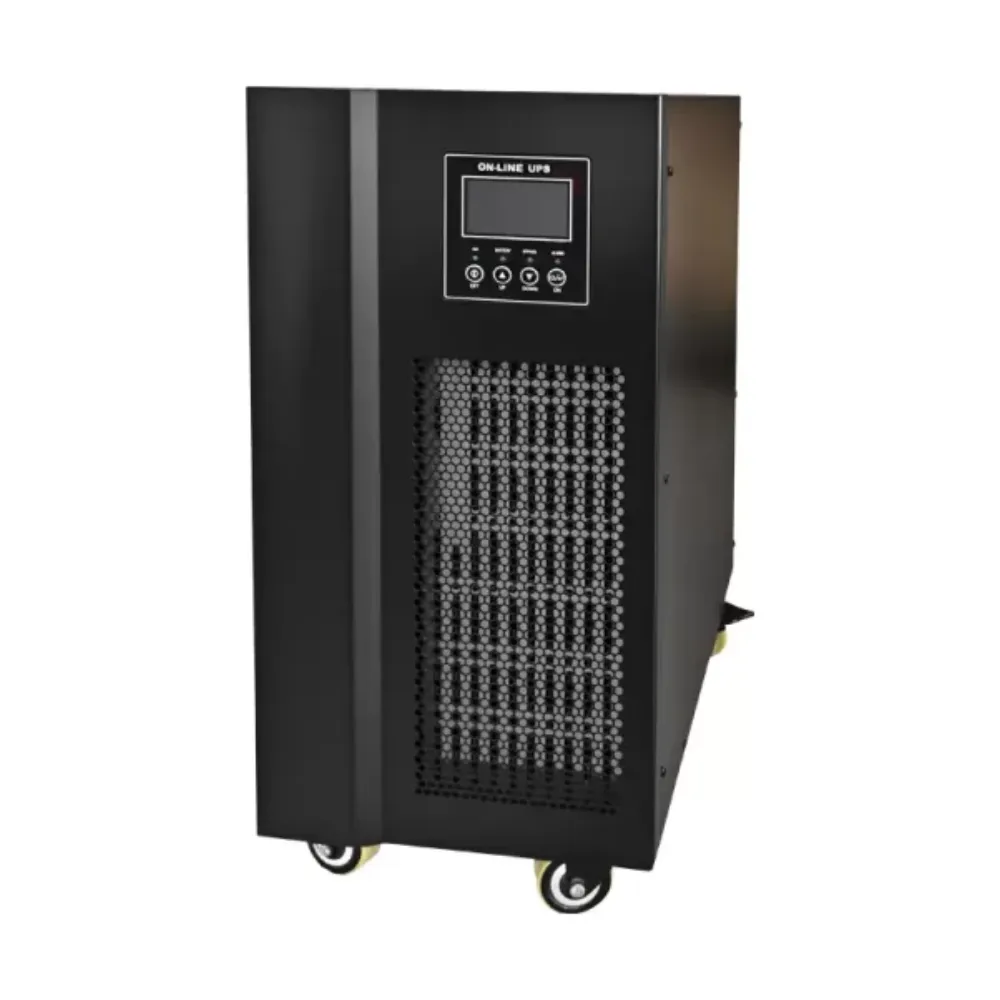
Phase describes the AC electrical supply. In a balanced three-phase system, the three voltage waveforms are spaced 120 electrical degrees apart. UPS phase labels tell you what enters the unit and what leaves it.
Read the first number as input and the second as output. This simple distinction resolves much of the confusion in single phase vs three phase UPS proposals.
| Configuration | UPS input | Protected output | Main selection check |
|---|---|---|---|
| 1:1 | Single-phase | Single-phase | Supply circuit, voltage, load and branch capacity |
| 3:1 | Three-phase | Single-phase | Input compatibility, output current and bypass arrangement |
| 3:3 | Three-phase | Three-phase | Output distribution, phase loading and neutral requirements |
A three-phase building can contain many single-phase loads. Servers, network switches, and control power supplies may use single-phase branches even when the main switchboard is three-phase. Their connection to the protected distribution system still needs checking.
Follow the complete electrical path
Think of the path as site supply → UPS input → UPS output → distribution → equipment. The bypass is another supply path that needs its own review. This is a concept map, not a wiring diagram.
Schneider Electric’s phase FAQ explains that three-phase systems can use three-wire or four-wire arrangements. The choice depends on the equipment, earthing system, and local code. Don’t assume that every three-phase output provides a neutral for single-phase branches.
Voltage also needs a separate entry on the specification. A phase label doesn’t establish the required voltage or whether a stated value is line-to-line or line-to-neutral. Record both the input and output requirements before comparing equipment.
This makes single phase vs three phase UPS selection a compatibility check first. A larger kVA rating cannot correct an unsuitable output arrangement.
Match the site supply to the protected loads
Start with a load list and a site survey. Record each critical load’s voltage, phase, normal demand, peak demand, and role during an outage. Identify which loads must keep running and which can shut down in a controlled way.
Next, check how those loads receive power. A small rack may use one branch circuit. A larger room may distribute single-phase branches across a three-phase output panel. A process machine may require a three-phase supply directly.
The single phase vs three phase UPS answer can therefore differ between two projects in the same building. Protecting a control cabinet is a different task from protecting the entire production line.
Illustrative scenario: a small server room
A facilities manager needs to protect a server, storage equipment, and network switches. All use single-phase inputs. The building has three-phase service, but the protected rack has a suitable single-phase circuit.
The team begins by checking a 1:1 online UPS against the measured load, available circuit, and required runtime. It doesn’t select a 3:3 unit simply because the building has three-phase power. This single phase vs three phase UPS review follows the protected load’s actual connection.
Illustrative scenario: factory controls on a three-phase site
A factory wants backup for its control computers and communications equipment, while large motors remain outside the protected load. The controls use single-phase power, but the proposed UPS supply is three-phase.
A 3:1 configuration may be worth evaluating. The project team must confirm a suitable model, output current, and bypass design. It cannot assume that a 3:3 model converts to 3:1 through a setting. This single phase vs three phase UPS case needs model confirmation before procurement.
Have different input and output requirements? Ask Banatton to review the site and load details before requesting a model quotation.
For environmental and application checks beyond phase, use the industrial UPS selection guide. The wider selection also includes temperature, ventilation, access, and the load’s electrical behavior.
Single phase vs three phase UPS: capacity and balance
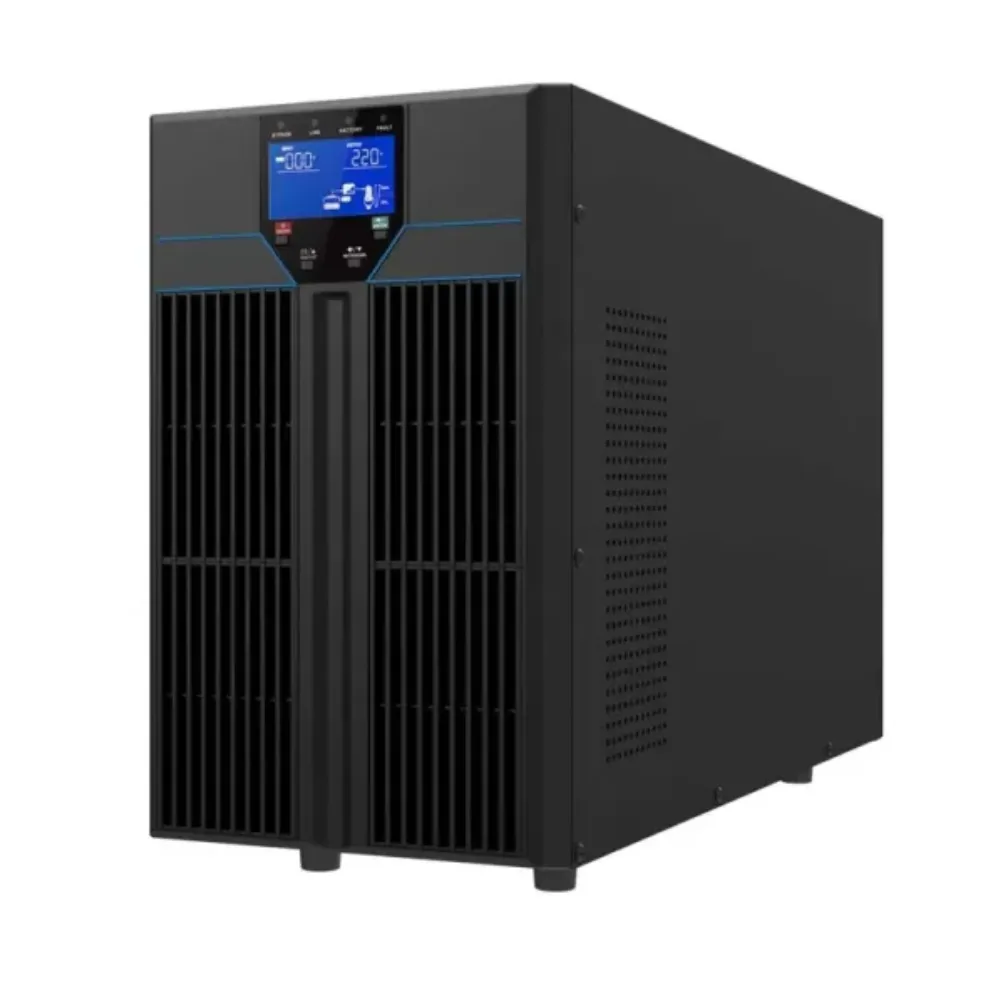
Check both UPS ratings. The kW rating limits real power; the kVA rating limits apparent power. A load must stay within both, with allowances appropriate to the project and selected model.
There is no universal rule that single-phase UPS selection ends at 10 kVA. Product ranges overlap. Riello’s phase-selection FAQ discusses fully single-phase units and three-phase-input units with single-phase output. It also highlights the bypass implications of the latter.
A single phase vs three phase UPS capacity comparison should use actual product ratings. For example, the Banatton BT9100H-33 public table lists 100 kVA and 90 kW. That does not mean every 100 kVA UPS has a 90 kW rating.
Check the most heavily loaded phase
Total demand is only part of a three-phase output review. Single-phase branch loads can draw uneven amounts from the three output phases. Check each phase against the model’s rating and permitted imbalance.
Illustrative scenario: total capacity hides an uneven load
Assume a hypothetical 30 kVA UPS allows 10 kVA on each output phase. Its branch loads draw 12, 6, and 6 kVA. Total demand is 24 kVA, yet the first phase exceeds the assumed limit.
This is arithmetic for an illustrative model, not a BT900-33 specification. It shows why a single phase vs three phase UPS checklist needs a phase schedule. Adding up the room’s total demand would miss the constraint.
Record branch currents, expected growth, and the worst operating state. With nonlinear loads, assess harmonic current and neutral loading as part of the distribution design. Don’t assume that balancing real power alone resolves every neutral-current issue.
Also check startup current and sudden load steps. Motor-driven equipment and other demanding loads need a review of the UPS overload and dynamic response data. A matching steady-state kVA figure is only one part of that assessment.
Keep battery runtime separate from this single phase vs three phase UPS calculation. Runtime depends on the load and approved battery system, including discharge conditions and battery condition. Phase count does not establish backup minutes.
Compare topology, bypass, redundancy and cost
An online double-conversion UPS normally feeds the load through its rectifier and inverter. Both single-phase and three-phase products can use this topology. The phrase “three-phase UPS” alone doesn’t establish power conditioning or transfer behavior.
In single phase vs three phase UPS comparisons, request the operating-mode details alongside the phase specification. Normal operation, battery operation, static bypass, maintenance bypass, and ECO mode can have different power paths.
Review bypass as a separate operating state
A bypass can keep a load supplied while the inverter path is unavailable. That does not mean the load retains the same conditioning or battery protection. Schneider Electric’s bypass explanation distinguishes static bypass from maintenance bypass and describes the loss of battery backup on the maintenance bypass path.
For a 3:1 system, review the single-phase bypass demand even if normal input loading uses three phases. Riello specifically highlights this issue when a generator supplies the installation. The generator and bypass must suit the relevant operating state.
This single phase vs three phase UPS check should happen before the final quotation. Confirm voltage, source compatibility, protection coordination, and the manufacturer’s transfer conditions. Avoid promises that every fault or operating-mode change produces zero interruption.
Define what redundancy must survive
Parallel capacity and redundancy have different purposes. Adding units can increase total output, while redundancy requires enough supported capacity to remain after a specified unit becomes unavailable.
For example, suppose two compatible 90 kW units share a 70 kW load. One remaining unit could cover the steady real-power demand, subject to kVA, phase, overload, and system limits. At 120 kW, one 90 kW unit could not carry the whole load. This is a capacity illustration, not a guarantee of fault survival.
Single phase vs three phase UPS reliability depends on the full system. Check approved parallel operation, fault isolation, batteries, bypass, distribution, and common failure points. Independent UPS outputs must not be connected together without an approved design.
Compare costs at the expected load
Include equipment, distribution changes, installation, service access, batteries, and energy losses in the cost review. Use efficiency data for the relevant load level and operating mode. A headline ECO efficiency figure isn’t a substitute for normal online efficiency.
A sound single phase vs three phase UPS cost comparison uses equivalent requirements and supported configurations. Phase count alone cannot establish which option has the lowest lifetime cost.
Need capacity after a unit outage or during service? Send Banatton the required load and operating states so the quotation can address those conditions.
Match a Banatton model to the project
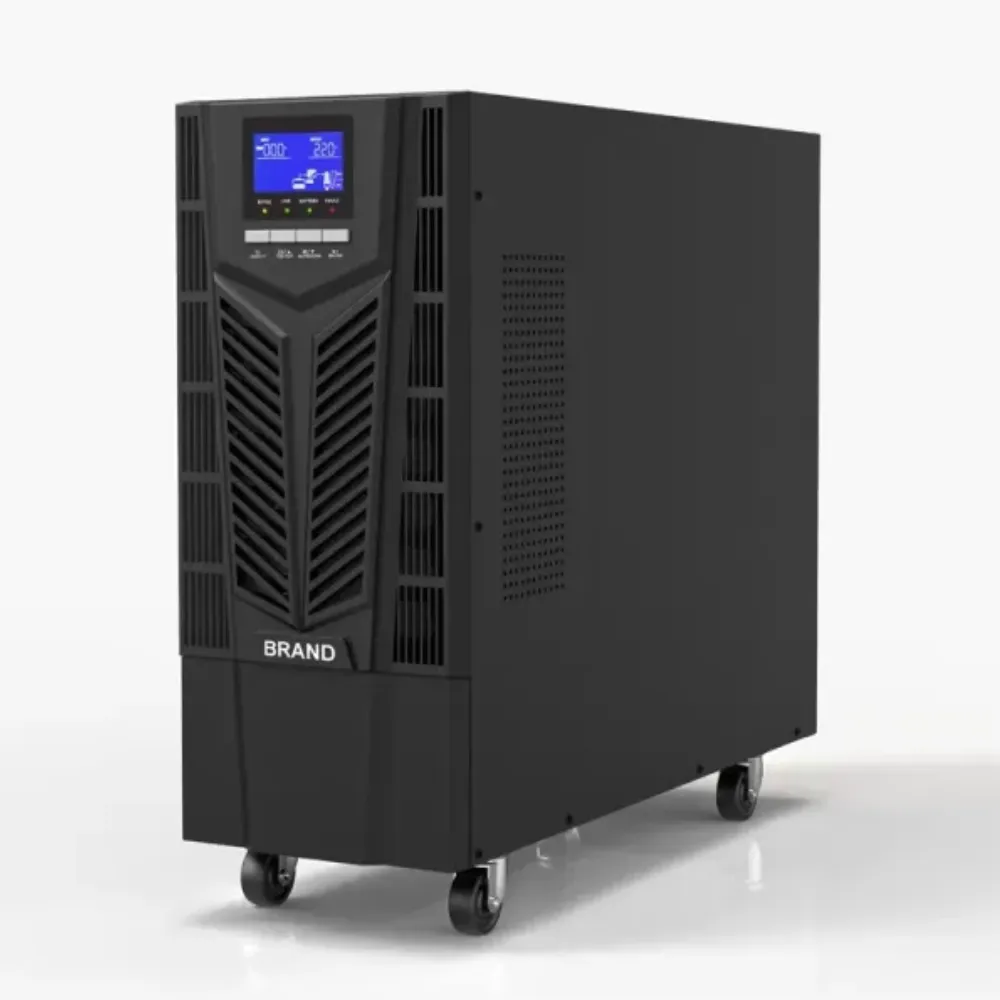
Banatton Group’s UPS systems range provides a starting point for comparing configurations. Review the single-phase online UPS category for suitable single-phase projects. Confirm the exact input, output, battery, and installation requirements for the selected model.
For three-phase input and output, the BT900-33 product table lists models from 10 kVA/9 kW to 200 kVA/180 kW. This is a product-family range, not a universal range for three-phase UPS systems.
The single phase vs three phase UPS shortlist should retain the exact model number. Several BT900-33 specifications differ between the table’s capacity groups.
| Public table group | Parallel capability listed | AC-mode efficiency listed | ECO-mode efficiency listed |
|---|---|---|---|
| 10, 20, 30, 40, 60, 80 kVA | Up to three units | 95.5% | 97% |
| 100, 120, 160, 200 kVA | Up to two units | 94% | 98% |
These are published table values checked on October 20, 2026. Confirm the current datasheet, test conditions, accessories, and approved configuration before using them in a design. Do not apply one group’s specification to every model.
Battery charging also varies by model. A family maximum doesn’t establish the charger fitted to a particular unit. Request the approved battery arrangement and recharge requirements alongside the runtime calculation.
For a larger project, the 100 kVA UPS buying guide expands the model and installation questions. Keep the single phase vs three phase UPS decision tied to the electrical path while checking those details.
Questions about single phase and three phase UPS systems
Can a single-phase UPS work in a three-phase building?
Yes, where the available circuit, voltage, protection, and selected UPS are compatible. The building’s main service does not determine every branch circuit. A single phase vs three phase UPS review should identify the exact circuit supplying the UPS.
Can a three-phase UPS feed single-phase equipment?
A compatible three-phase output distribution system can supply single-phase branches. Confirm output voltage, neutral availability, branch protection, permitted imbalance, and each phase’s load. The label 3:3 alone isn’t enough to approve the arrangement.
Does a three-phase UPS always provide better protection?
Protection depends on topology, operating mode, performance limits, and system design. Single-phase online products also exist. Compare the relevant specifications and bypass behavior when assessing single phase vs three phase UPS protection.
Can batteries always be replaced without shutting down the load?
That depends on the model, battery arrangement, service procedure, and available supply paths. Verify the manufacturer’s instructions. Neither single-phase nor three-phase labeling establishes hot-swap capability or permits a particular service task.
What should a quotation request include?
Provide the site input phase and voltage, required output, normal and peak kW/kVA, and a phase-by-phase load schedule where applicable. Add runtime, generator and bypass details, growth plans, and the service or fault state the system must support.
Prepare a phase and load checklist before ordering
Use the comparison to assemble a short project record:
- Confirm the site supply and bypass source.
- Identify each protected load’s voltage and phase.
- Record kW, kVA, peak demand, and phase loading.
- State the required battery runtime and growth allowance.
- Define capacity needs during faults and maintenance.
- Match those requirements to a specific approved model.
This gives purchasing and engineering teams the same basis for reviewing proposals. It also makes gaps visible before installation planning begins. A missing output-phase requirement can change the shortlist; a missing load schedule can hide a capacity constraint.
Request a configuration review: Contact Banatton with your supply and load schedule. Use those project facts to turn the single phase vs three phase UPS comparison into a model, battery, bypass, and distribution specification.