 26Nov

A 100kVA UPS has a 100 kilovolt-ampere apparent-power rating. Its usable load also depends on its kW rating, operating limits, and the connected equipment. Battery runtime is a separate choice and cannot be read from the kVA label.
For example, Banatton Group lists the BT9100H-33 as a three-phase online 100kVA/90kW model. That is a starting point for a configuration enquiry, not proof that every 100kVA unit supplies 90kW or provides a particular number of backup minutes.
This guide explains how to check load capacity, three-phase current, batteries, installation, and model options. Use it to prepare comparable quotations rather than choosing a system from its capacity label alone.
Key takeaways
- Check both kW and kVA limits against the load.
- Request a runtime curve for the proposed batteries and load.
- Keep output current calculations separate from input and cable sizing.
- Confirm model-specific parallel, charging, communication, and bypass options.
- Compare the complete installation and service scope before ordering.
What a 100kVA UPS rating tells you
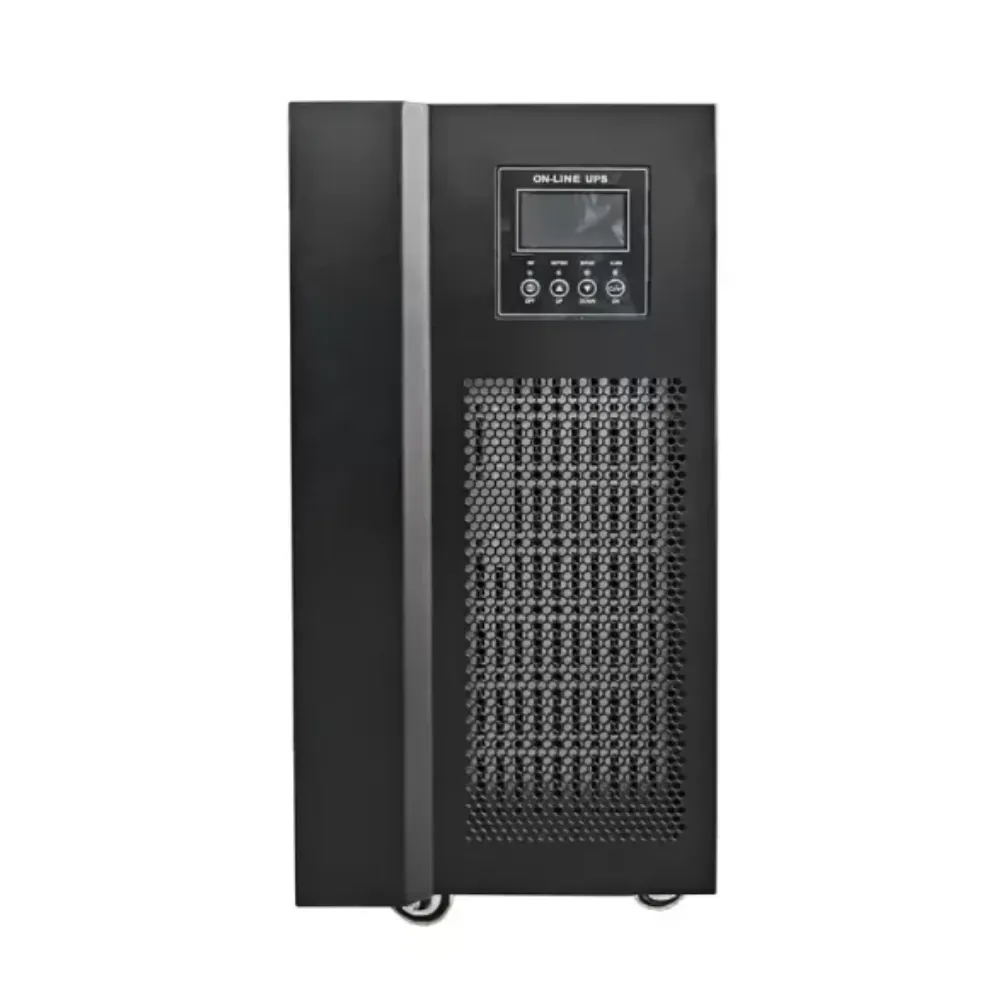
A 100kVA UPS rating describes apparent-power capacity. It doesn’t define the conversion topology, battery size, output voltage, or maintenance arrangement. Those belong in the selected model’s specification.
The BT9100H-33 is identified in Banatton’s BT900-33 three-phase online UPS product table. The public table lists 100kVA/90kW and three-phase input/output for this model. Ask for the current datasheet and installation manual for the exact version being quoted.
Other manufacturers publish different kW ratings at the same apparent-power capacity. For instance, Fuji Electric’s UPS6000DX-T3 specifications include a 100kVA/100kW model. This illustrates why a capacity enquiry needs both ratings; it does not change the Banatton model’s published rating.
Separate the UPS rating from the load power factor
The ratio between a UPS’s rated kW and kVA describes its rated output capability. The actual load’s power factor is a different input. Do not assume a load has a power factor of 0.9 simply because the UPS is listed at 100kVA/90kW.
For a 100kVA UPS proposal, record measured load kW and kVA where available. Identify starting loads, repeated load changes, and planned additions. The design needs to remain within both limits under the relevant operating conditions.
Build a shortlist around those inputs. Compare the available UPS systems, then request the matching model documents. Keep any growth allowance and redundancy requirement explicit in your enquiry.
Check kW, kVA and three-phase current
How much equipment a 100kVA UPS supports depends on the load, not its industry name. Start with the circuits that must stay powered. A machine’s control supply and its main motor circuit may have very different requirements.
Eaton’s UPS sizing guide separates capacity from runtime and advises allowing for growth and redundancy. Use those as distinct decisions. Adding battery capacity does not by itself increase the inverter’s power rating.
Illustrative scenario: the kVA limit matters too
Assume a hypothetical 80kW load and a UPS rated 100kVA/90kW. If the load power factor is 0.8, apparent power is 80/0.8 = 100kVA. If the load power factor is 0.7, it is approximately 114.3kVA.
The second case exceeds the 100kVA limit even though 80kW remains below 90kW. The first reaches the apparent-power rating before any growth allowance. These calculations are illustrative, not an approval for a particular load or installation.
For a 100kVA UPS system, check startup, temperature limits, phase loading, and any required derating as well. A steady-state calculation cannot establish that a motor start or downstream fault will be supported.
Calculate output current with the right assumptions
For a balanced three-phase output, apparent power relates to line current as:
I = S / (√3 × VLL)
Here, S is apparent power in VA and VLL is line-to-line voltage. At an assumed 400V output and 100,000VA, line current is about 144.3A. At the same apparent power and 415V, it is about 139.1A.
These are balanced, full-apparent-load output examples. They are not the 100kVA UPS input-current rating, a breaker selection, or a cable schedule. Input calculations must account for the actual input conditions, efficiency, input power factor, battery charging, and manufacturer limits.
Ask the installation designer to check phase balance, neutral requirements, protection, and applicable local rules. If site measurements are incomplete, identify the missing inputs instead of treating a rounded current figure as a construction instruction.
Specify battery runtime and charging separately
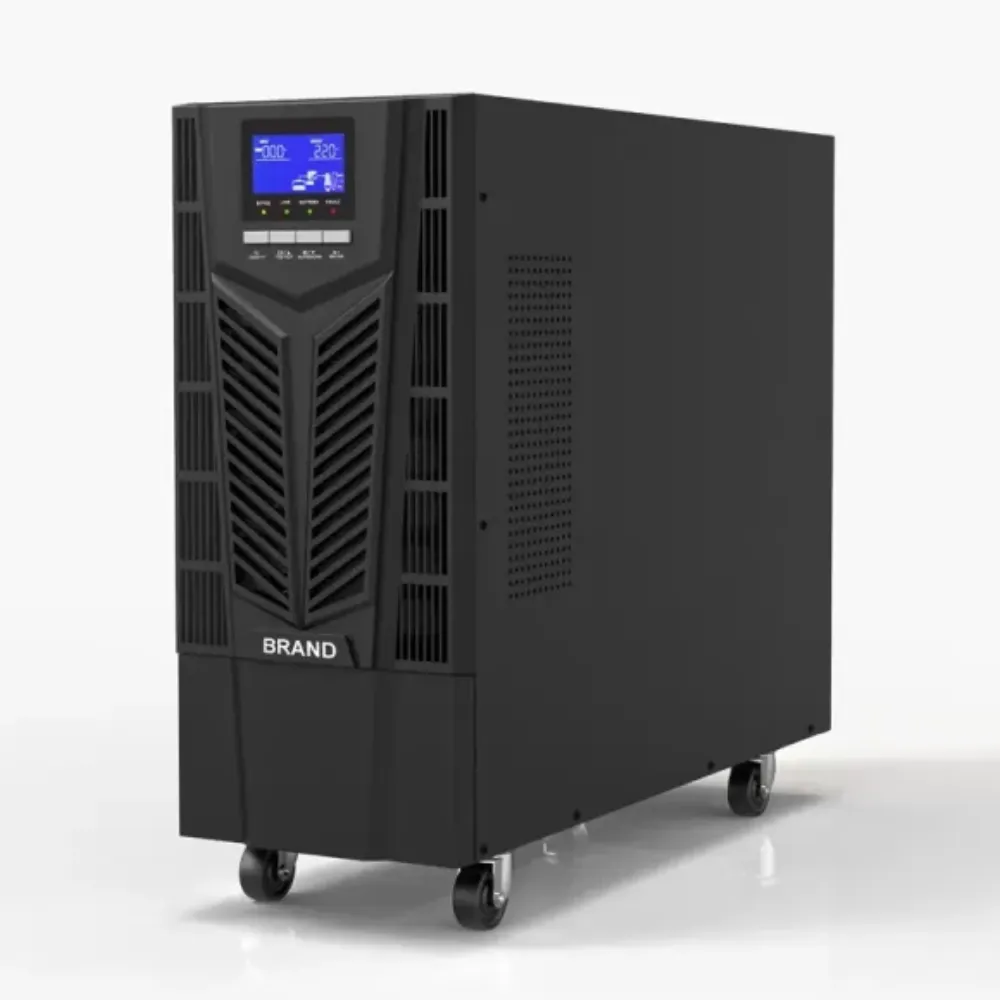
A 100kVA UPS battery backup requirement should state the supported load and the time needed for a defined event. Examples include orderly shutdown or bridging to another source. The required sequence matters as much as the number of minutes requested.
Request a runtime curve for the proposed battery configuration at the specified load. Record battery type, series and parallel arrangement, discharge limit, temperature assumptions, and how aging is addressed. A generic battery brochure does not establish the runtime of the quoted system.
Illustrative scenario: a 15-minute requirement
Assume a buyer asks for 15 minutes of support at 60kW. The load-side energy over that interval is 60 × 15/60 = 15kWh. This is a hypothetical energy calculation, not the required battery nameplate capacity.
The battery proposal must also address conversion losses, discharge behavior, cutoff limits, temperature, aging assumptions, and the approved configuration. Do not turn 15kWh directly into a battery order or infer runtime from a simple Ah calculation.
The useful next step is a documented runtime proposal for that load and event. State whether the load will remain constant or follow a shutdown sequence. Ask what happens if the alternative source starts later than planned.
Verify charging against the actual model column
For the 100kVA UPS model BT9100H-33, the public product table’s long-run charging-current row lists 24A. The smaller models’ adjustable 1A/2A/3A/4A values should not be copied into this model’s quotation. Confirm the current version, charger arrangement, and applicable battery configuration with the supplier.
A charging-current figure alone does not guarantee recharge time. Ask for the recharge target, starting state, load condition, charging method, and battery limits. Also distinguish battery runtime, battery service life, and contractual warranty; they answer different questions.
Before comparing prices, put the same battery duty into every 100kVA UPS enquiry. Otherwise, different battery scopes can make apparently similar offers difficult to compare.
Review installation, bypass and parallel operation
A 100kVA UPS installation includes more than the cabinet. Request drawings for the UPS, batteries, protective devices, bypass equipment, and any external transformer. Include access routes and service clearance when comparing the available space.
Record the site’s supply voltage, phase arrangement, grounding, temperature, ventilation, contamination, and access constraints. Ask for the proposed configuration’s mass, dimensions, heat output, cable entry, and clearances. Do not borrow installation dimensions from another brand’s 100kVA model.
Distinguish operating modes
For a three-phase online proposal, identify normal double-conversion operation, battery operation, static bypass, and maintenance bypass. Ask which transition any zero-transfer statement describes and what source or synchronization conditions apply.
Schneider Electric’s bypass explanation distinguishes static and maintenance bypass and explains that bypass does not provide the same conditioning as the double-conversion path. This is a useful mode distinction, not evidence of the BT9100H-33’s transfer performance.
A 100kVA UPS enquiry should also identify any required isolation. Double conversion and galvanic isolation are separate requirements. If a transformer is proposed, request its location and the power paths in which it remains effective. Have the design reviewed for the specific installation.
Confirm parallel capacity and redundancy
Banatton’s public product table places BT9100H-33 in the group described as supporting up to two units in parallel. Treat this as a published reference to confirm in the current parallel-operation manual. Do not substitute a different series’ eight-unit claim.
For a parallel 100kVA UPS arrangement, request the permitted models, accessories, load-sharing conditions, battery arrangement, and common bypass scope. Distinguish added capacity from redundancy, then check what remains available after one unit is unavailable.
Illustrative scenario: two units with one required spare
Assume two compatible units, each rated 100kVA/90kW. Their summed nameplate capacity is 200kVA/180kW. If the design requires either unit to carry the protected load alone, that load must fit within one unit’s applicable limits.
This arithmetic does not certify an installation’s N+1 design or account for shared components and transfer conditions. It shows why the sum of installed ratings is not automatically the supported load after a failure.
For wider application selection, continue to the industrial UPS guide. Keep this page focused on the fixed-capacity configuration rather than a full modular expansion plan.
Compare the BT9100H-33 configuration and quotation scope
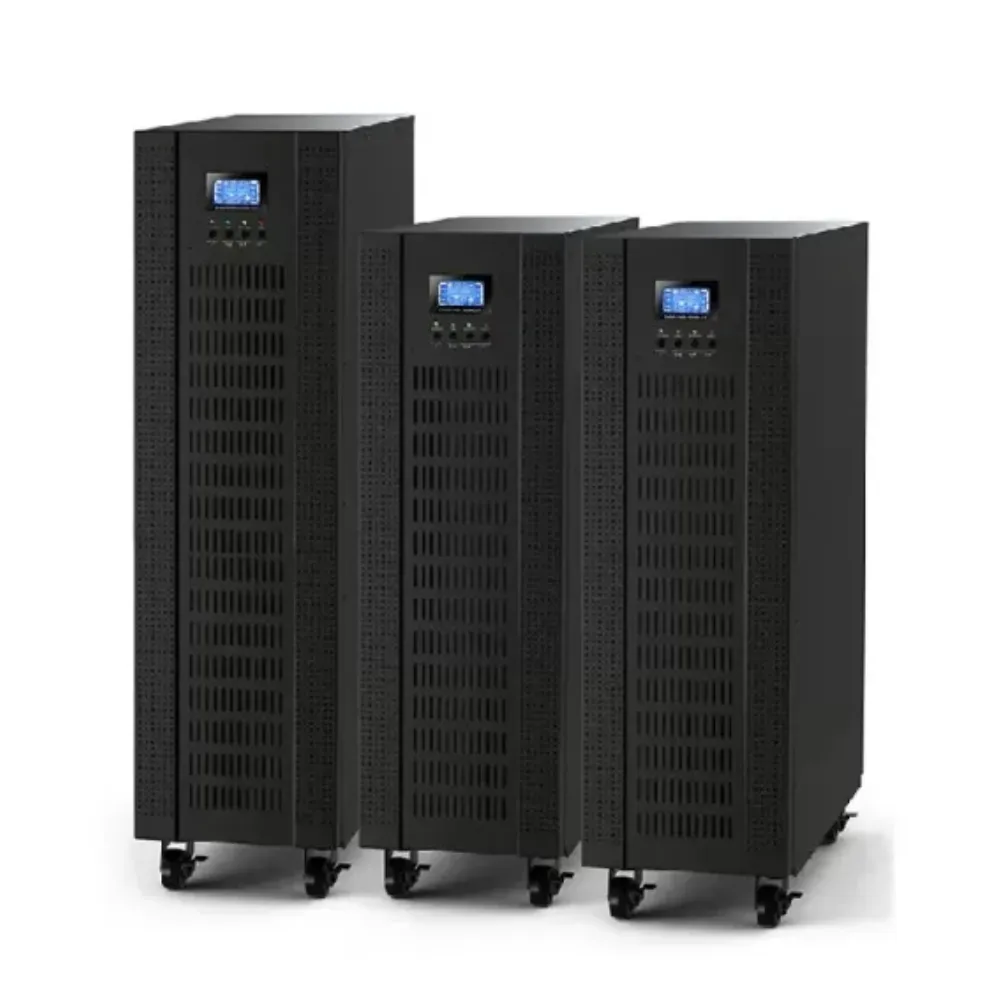
Use a model-specific checklist for every 100kVA UPS quotation. A public product page helps identify options; the current documents and agreed configuration define what is being offered.
| Item | Public reference or enquiry point | What to confirm |
|---|---|---|
| Model and rating | BT9100H-33, 100kVA/90kW | Version, operating limits, load suitability |
| Input/output | Three-phase input and output | Site voltage, neutral and grounding arrangement |
| Battery | Long-run configuration | Type, configuration, load-specific runtime |
| Charging | Public long-run row lists 24A | Current charger and battery compatibility |
| Parallel operation | Public model group lists up to two units | Current manual, accessories, remaining capacity |
| Communication | Product page lists USB/RS-232 and optional SNMP | Included hardware, protocol, monitoring integration |
| Installation | Configuration-dependent | Dimensions, mass, heat, clearances, bypass and protection |
| Compliance/service | Request supporting documents | Applicable model declarations, terms and local support |
Do not assume RS485 or CAN is included in this model because another range offers those interfaces. Ask whether the chosen monitoring option includes the required hardware, software, and integration work. Match the answer to the quotation’s model and option codes.
Send a complete request for quotation
For a 100kVA UPS request, provide:
- Protected equipment and measured kW/kVA, including relevant load events.
- Incoming supply, required output, and available alternative sources.
- Required runtime, shutdown sequence, and acceptable interruption.
- Environment, available space, access, and maintenance constraints.
- Redundancy, isolation, monitoring, and service requirements.
- Expected growth and any project-specific acceptance tests.
Request an itemized scope covering UPS equipment, batteries, cabinets, bypass, monitoring, installation responsibilities, commissioning, and service. Ask suppliers to identify exclusions. A low equipment-only price is not comparable to a complete installed proposal without reconciling those differences.
Narrow the configuration before comparing totals. Review the industrial UPS category, then request a 100kVA UPS proposal against the same requirements sheet and supporting-document list.
Evaluate the supplier’s evidence
Use the Banatton company overview for business context, but request model-applicable declarations, test information, warranty terms, and service scope separately. A company management-system statement does not replace product documentation or prove fit for a medical, mining, or other specific application.
If architecture is still undecided, see the low frequency vs high frequency UPS comparison. Keep that broader trade-off separate from the exact ratings, batteries, and options in your order.
100kVA UPS questions before the final decision
How much load can a 100kVA UPS support?
Check its kW rating as well as 100kVA. Banatton’s public BT9100H-33 listing states 100kVA/90kW. The actual load must satisfy both limits and the relevant operating conditions, including startup and any required reserve.
How long will the battery last during an outage?
There is no fixed runtime from the capacity label. Request a load-specific curve for the proposed batteries and operating assumptions. Runtime during one event is different from service life and warranty.
What is the full-load current at 400V?
At a balanced three-phase 100kVA output and 400V line-to-line, the calculated line current is approximately 144.3A. This output example is not an input rating, cable selection, or breaker instruction.
Can this model be paralleled with eight units?
Do not assume that. The public table places BT9100H-33 in an up-to-two-unit group. Obtain the current model-specific parallel documentation and confirm the intended capacity or redundancy arrangement before ordering.
What should a supplier quote include?
It should define the model, ratings, battery duty, installed options, supporting documents, responsibilities, and service terms. Batteries, bypass, monitoring, installation, and commissioning should be explicitly included or excluded so competing scopes can be compared.
Choose a 100kVA UPS using the load’s kW/kVA requirements, verified runtime, site plan, and matched model documents. Keep unresolved charging, parallel, interface, and transfer questions visible until the proposed configuration answers them.
Ready to prepare a configuration enquiry? Send your 100kVA UPS load and runtime requirements through Banatton’s contact page and request the current model documents with an itemized scope.