The Power of Modular UPS Systems in Commercial Infrastructure
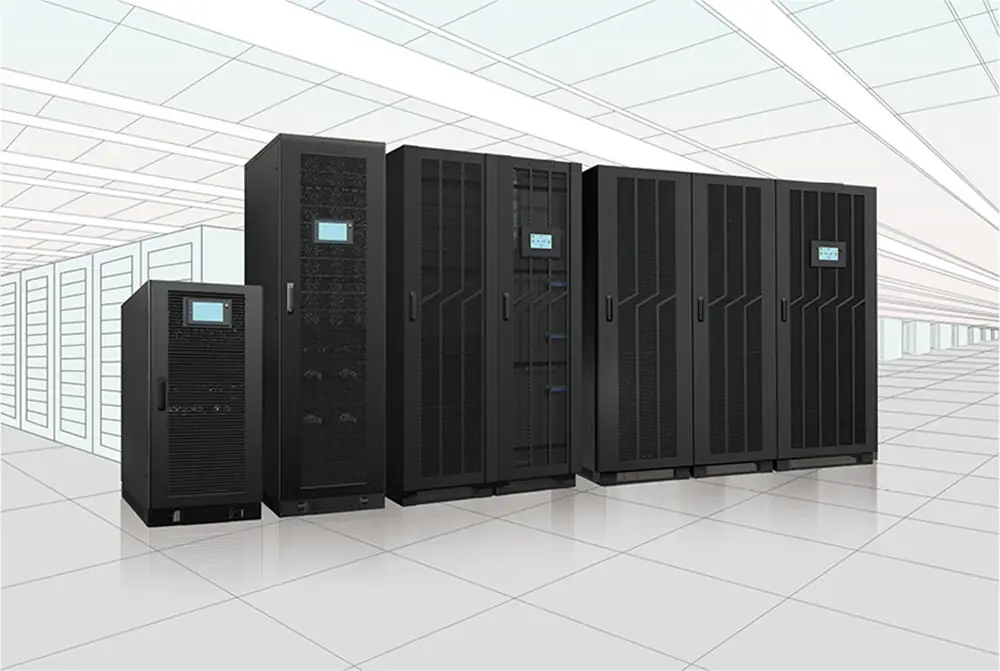
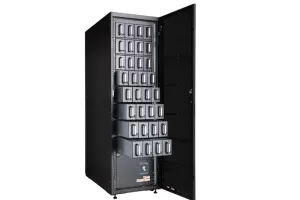
Today, businesses rely heavily on uninterruptible power to protect their critical infrastructure. To meet this demand, modular uninterruptible power supply (UPS) systems are becoming increasingly popular. These systems, built from interconnected modules, offer numerous advantages over traditional standalone UPS units. Six key features of modular UPS systems have earned them a dominant position in the market.
1. Six Key Features of Modular UPS Systems:
1.Risk Diversification: With a monolithic UPS unit, a single point of failure can compromise the entire power supply. Modular UPS systems mitigate this risk by distributing it across multiple modules. If a module fails, it can be easily replaced without impacting the entire system.
2.Redundancy Packages: Modular UPS systems excel in providing redundancy. In the event of a module failure, redundant modules within the rack seamlessly take over power requirements. This eliminates the need to build redundant power protection into the entire system, resulting in flexibility and cost-effectiveness. By implementing appropriate monitoring and warning systems, failed modules can be quickly replaced without significantly impacting backup time.
3.Easier Serviceability: With a modular UPS system, maintenance and repair become hassle-free. Modules are hot-swappable, allowing for easy removal, replacement, and testing while the system remains operational. The ability to service components without shutting down the system makes maintenance convenient during normal business hours, eliminating the need for after-hours service interruptions.
4.Strong Scalability: Modularity inherently allows for easy expansion. As power requirements increase, additional modules can be added to the existing UPS system. This scalability ensures businesses can expand their power capacity without requiring additional floor space or extensive wiring. A modular UPS system can adapt to the changing needs of a growing business, making it a future-proof investment.
5.Smaller Footprint: The compact design of the modular UPS solution optimizes space utilization. By stacking modules in a rack, businesses can minimize the floor space required for their power infrastructure. This advantage is particularly valuable for companies of all sizes, as it frees up space for other essential equipment and maximizes the use of available space.
6.Cost Savings: Modular UPS systems offer long-term cost savings. These systems allow users to better control energy consumption by shutting down or hibernating modules when load is lower than expected. This energy efficiency reduces operating costs and ensures that each module operates at peak efficiency.
Furthermore, upgrading a modular system is often more cost-effective than replacing an entire standalone unit, making it a financially prudent choice for businesses in the long run.
2. What are the Components of a Modular UPS System?
The components of a modular UPS system typically include:
1.Rectifier: Converts input AC power from the utility or generator to DC power, charging the UPS batteries and powering the inverter.
2.Inverter: Converts DC power from the batteries or rectifier to clean, stable AC power for connected devices.
3.Battery Converter: Controls the charging and discharging of the UPS batteries, ensuring optimal performance and lifespan.
4.Static Bypass Switch: Allows for seamless transfer of power from the UPS system to a bypass source (mains or generator) in the event of a UPS failure or maintenance.
5.Feedback Protection: Protects against utility power being fed back into the UPS system, ensuring proper isolation and safety.
6.Battery Module: Contains UPS batteries, providing backup power during utility power outages.
7.Control and Monitoring Module: Manages and monitors the operation of the UPS system, providing real-time information on power status, battery health, and system performance.
These components work together to provide reliable and uninterruptible power, protecting critical infrastructure from power outages and ensuring continuous operations.
In an increasingly digital world, the operational continuity of enterprises, hospitals and basic services depends on a basic resource: a clean and continuous power supply....
Key Takeaways In the era of rapid digital transformation, the demand for stable and efficient power supply is increasing in industrial environments such as data...
Introduction: Why Your Networking Room Demands a Rack Mount UPS In today’s digital priority environment, the networking room is the central nervous system of any...
Introduction Whether you are configuring power protection systems for data centers, hospitals, factories, or communication networks, understanding the components of a high-quality modular UPS is...