Why Lithium Batteries Have Become the First Choice for Modern Energy Storage?
In today’s era, energy efficiency, reliability and sustainability are the top priorities of industrial and commercial development, and the demand for high-performance energy storage solutions is also growing continuously. From data centers that need uninterruptible power supply to renewable energy projects that need to store excess power, appropriate battery technology can significantly improve operational efficiency and cost-effectiveness. Among the various available energy storage options, lithium batteries are the first choice because of their advanced performance, versatility and long-term reliability. This paper will answer key questions about lithium batteries, discuss their core advantages, technical specifications and practical applications, and solve common problems to help you understand why they are becoming the pillars of modern energy storage systems.
1. What are lithium batteries and their main variants?
The definition of lithium battery
Lithium batteries are rechargeable energy storage devices, which relies on lithium ions to promote the current to flow between the anode and cathode in the process of charging and discharging. Unlike traditional lead-acid batteries, they offer higher energy density, lower self-discharge rates, and a longer service life, making them suitable for a wide range of applications—from small consumer electronics to large-scale industrial systems. The core principle of Lithium Batteries lies in the movement of lithium ions, which store and release energy as they move between the two electrodes, enabling efficient and repeated energy transfer.
Within the family of Lithium Batteries, two variants stand out for industrial and commercial use: Lithium-Ion Batteries and LiFePO4 battery. Lithium-Ion Batteries are the most widely used type, known for their high energy density and lightweight design, making them ideal for applications where space and weight are critical. On the other hand, LiFePO4 battery (lithium iron phosphate battery) is a special variant, giving priority to safety and durability. Its unique chemical composition can reduce the risk of thermal runaway and prolong the cycle life. The 48 V lithium battery is a standard configuration designed for medium voltage applications, and typically lithium-ion batteries or LiFePO4 batteries are used to meet the needs of industrial systems.
Authoritative sources of data
In order to emphasize the growing importance of lithium batteries in global energy storage, BloombergNEF (BNEF), the world’s leading energy research institution, reports that in 2025, LiFePO4 battery accounted for 76.8% of the global fixed energy storage battery market, up 47.2% year-on-year. This growth is driven by the excellent safety performance and long cycle life of the technology, making it the first choice for industrial energy storage, electric vehicles and renewable energy projects. Source: BloombergNEF. (2026). Global Energy Storage Market Outlook 2025. https://www.bnef.com/reports/global-energy-storage-outlook-2025.
2. Key advantages of professional-grade lithium batteries
Professional-grade Lithium Batteries, including LiFePO4 battery and 48 V lithium battery, are engineered to meet the rigorous demands of industrial and commercial applications. The following are the core benefits based on actual product specifications and performance.
2.1 Strong scalability
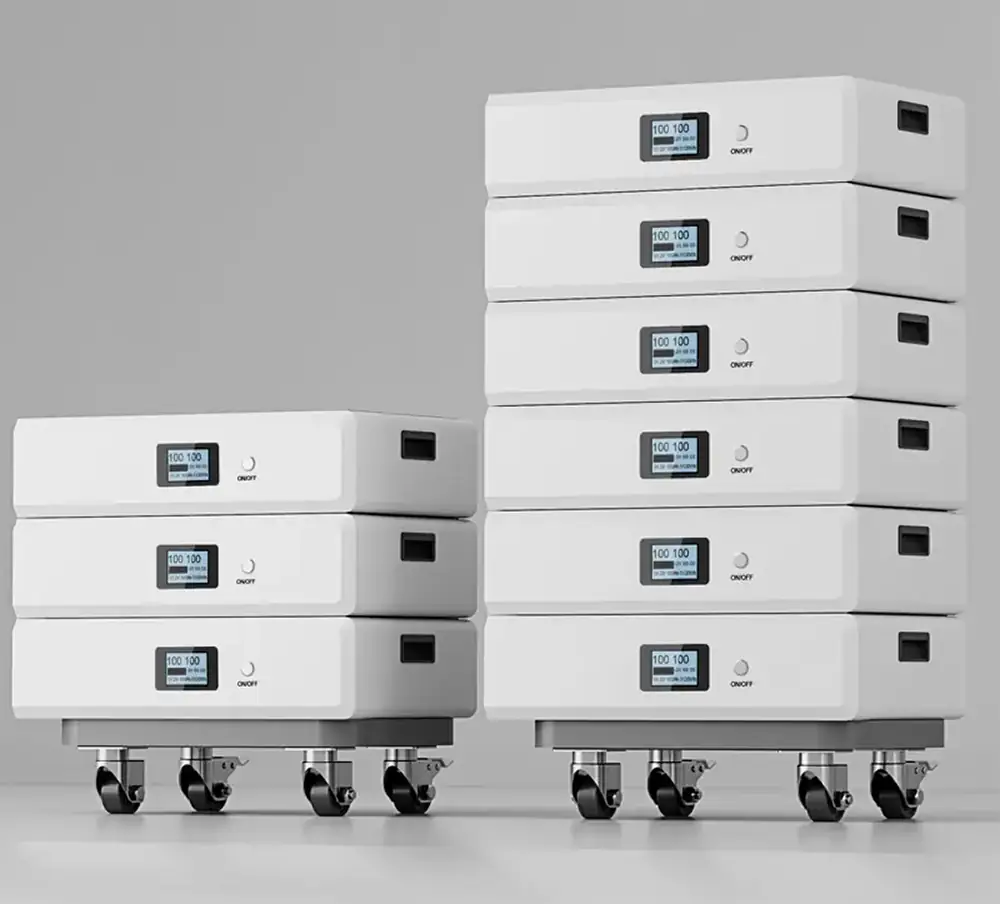
The 48 V lithium battery is designed with modularity in mind, supporting up to 16 modules in parallel. This function allows users to easily expand the capacity of their energy storage system according to their own needs, from small-scale UPS systems to large data centers or solar storage projects. The modular design can ensure the expansion of capacity without interrupting existing system, providing flexibility and cost-effectiveness for future development.
2.2 Meticulous care for system safety
Each module of lithium batteries can be managed and operated independently. This means that if a module needs maintenance or encounters problems, the rest of the system can continue to run normally, thus minimizing downtime and ensuring the overall safety and stability of the energy storage system. This independent management function is particularly important for mission-critical applications such as data centers and telecommunication base stations, in which uninterruptible power supply is very important.
2.3 Easy management
In order to simplify operation and maintenance, lithium batteries are equipped with user-friendly functions: a pulley bottom for easy movement and installation, a manual switch for safe operation, and a visual monitoring interface for providing real-time data on battery status (e.g., Voltage, temperature, remaining power). These functions reduce the demand for professional technicians and maintenance costs, making the batteries suitable for a wide range of users.
2.4 Greater compatibility
The design of 48 V lithium battery is highly compatible with existing industrial systems. It covers all major communication protocols and is compatible with most major inverters that support 1C discharge. This wide compatibility eliminates the need for costly system modifications, allowing for seamless integration with solar and wind energy systems, UPS, and electric power systems.
2.5 Long service life
Through strict quality control process, including 4 long-term static tests and 8 consistency screening, lithium batteries have achieved excellent durability. These tests can ensure the consistent performance of each battery cell for a long time, reducing the risk of premature failure, and prolong the overall service life of the battery system. Compared to traditional lead-acid batteries, lithium batteries do not need to be replaced frequently, thus reducing the long-term costs.
2.6 Safety and reliability
For professional lithium batteries, especially LiFePO 4 batteries, safety is a top priority. The batteries use nano-coating and self-healing technology to construct an LFP (Lithium Iron Phosphate) channel, which acts as a “firewall” to prevent thermal runaway and enhance stability under extreme conditions (e.g.,High temperatures, overcharging). This technology ensures that the batteries can remain safe and reliable even in harsh industrial environment, and meets international safety standards such as IEC 62133.
3. Product specifications and key performance indicators
According to the actual product parameters, the following table summarizes the core specifications of the 48 V lithium battery and LiFePO4 battery. This table provides a clear overview of their performance and capabilities, helping users evaluate their suitability for specific applications:
Performance Indicator
Specification
Nominal Voltage
48V
Battery Chemistry
LiFePO4 / Lithium-Ion
Parallel Expansion Support
Up to 16 modules
Discharge Rate
1C (compatible with most mainstream inverters)
Module Management
Independent module management and operation
Quality Control
4 times long static testing; 8 consistency screenings
4. Step-by-step guide to measuring battery performance
In order to ensure the expected performance of lithium batteries, it is very important to measure key parameters correctly. The following is a step-by-step guide to measuring battery capacity and internal resistance, which are two key indexes of battery performance.
Step 1: Measuring battery capacity
1. Charge the battery fully under standard conditions: constant current (1C) and constant voltage (4.2 V) at room temperature for 3 hours (per the standard for Lithium – Ion Batteries).
2. Let the battery stand for 1 hour to stabilize the temperature and voltage.
3. The battery is discharged at a constant rate (for example,Until the cut-off voltage is reached (specified by the manufacturer).
4. Record the total discharged power, which is the actual capacity of the battery. Please note that actual capacity may vary according to the discharge rate and temperature.
Step 2: Measuring battery internal resistance
1. Ensure that the battery is charged (according to industry standards, the internal resistance is usually measured during charging).
2. Use a dedicated internal resistance meter (a multimeter’s ohmmeter function is not sufficient, as it can not accurately measure the low internal resistance of Lithium Batteries).
3. Connect the internal resistance meter to the anode and cathode of the battery according to the manufacturer’s instructions.
4. Record the internal resistance measured. A lower internal resistance is, the better performance is, because it leads to higher discharge voltage and longer discharge time.
5. Main application scenarios of lithium batteries
Lithium Batteries, particularly 48 V lithium battery and LiFePO4 battery, are versatile and suitable for a wide range of industrial and commercial applications. Their high performance, security and compatibility make them ideal choice for the following scenarios.
5.1 Data centre
Data centers need uninterruptible power supply to protect critical data and ensure continuous operation. Lithium Batteries provide fast response times, high energy density and long cycle life, making them an ideal backup power supply solution. Their modular design is easy to expand, and independent module management ensures that maintenance will not be interrupted.
5.2 Power system
In power systems, lithium batteries are used for peak regulation, frequency modulation and power grid stability. They store excess power during off-peak hours and release it during peak demand, helping to balance the power grid and reduce dependence on fossil fuels. LiFePO4 battery is especially suitable for this kind of application because of its safety and long service life.
5.3 Solar and wind energy storage
Renewable energy sources, such as solar energy and wind energy, are intermittent, so energy storage is very important to ensure continuous power supply. 48 V lithium battery systems store the surplus energy generated by solar panels or wind turbines for use when there is no sunshine or the wind. Their compatibility with mainstream inverters and strong scalability make them very suitable for renewable energy projects.
5.4 Telecom base station
Telecom base stations need reliable standby power supply to ensure uninterrupted communication. Lithium Batteries are compact, lightweight, and require minimal maintenance, making them suitable for both urban and remote base stations. Their long service life and safety characteristics ensure that they can run reliably in harsh environments.
5.5 UPS (uninterruptible power supply)
UPS systems can protect sensitive equipment from power failure and voltage fluctuations. Compared with the traditional lead-acid battery, lithium Batteries has the advantages of faster charging times, longer cycle life and higher energy density, and is a more efficient and economical choice for UPS. The 48 V lithium battery is particularly well-suited for industrial UPS systems due to its compatibility and expandability.
5.6 All-purpose applications
Beyond the above scenarios, Lithium Batteries are also used in a variety of general-purpose applications, including industrial machinery, emergency lighting, security systems, and mobile equipment. Their versatility and reliability make them a flexible energy storage solution, which is suitable for almost all application that need portable or fixed power supply.
6. Frequently asked questions (FAQ)
In order to solve the common problems about lithium batteries, the following are detailed answers based on product specifications and industry standards.
Q1: What is battery capacity?
A1: The capacity of storage battery is divided into rated capacity and actual capacity. The rated capacity of a battery refers to the minimum discharge capacity specified or guaranteed during the design and manufacturing process of the battery under specific discharge conditions. For Lithium-Ion Batteries, the specification is to charge for 3 hours under constant current (1C) and constant voltage (4.2 V) conditions at room temperature. The actual capacity of a battery refers to the amount of electricity it actually releases under certain discharge conditions, which is mainly affected by the discharge rate and temperature (therefore, strictly speaking, battery capacity should clearly specify the charge and discharge conditions). Common capacity units are mAh and Ah (1000 mAh)
Q2: What is the internal resistance of the battery?
A2: Internal resistance refers to the resistance encountered when current flows through the battery when the battery is working. It is composed of ohmic resistance and polarization resistance. High internal resistance will lead to low discharge voltage and short discharge time. The internal resistance is mainly affected by the battery materials, manufacturing process, battery structure and other factors. It is an important parameter for measuring battery performance. Note: Generally, the internal resistance of charging state is taken as the standard. The internal resistance of a battery must be measured with a special internal resistance meter, not by the ohmmeter function of a multimeter.
Q3: What is the difference between lithium batteries and lithium-ion batteries?
A3: Lithium batteries are a broad category, including all batteries that use lithium as the main ingredient. Lithium-Ion Batteries are a specific type of rechargeable Lithium Batteries that use lithium ions to transfer energy between the anode and cathode. Although all lithium ion Batteries are lithium batteries, not all lithium Batteries are rechargeable (e.g., The original lithium batteries is disposable). For industrial and commercial applications, Lithium-Ion Batteries are the most commonly used type due to their recharge ability and high performance.
Q4: Why is LiFePO4 battery considered safer than other lithium batteries?
A4: LiFePO4 battery uses Ferrous lithium phosphate as the cathode material, and its chemical structure is better than that of other lithium battery chemicals (for example. Cobalt oxide). This stability reduces the risk of thermal runaway—even in extreme conditions like overcharging, short-circuiting, or high temperatures. In addition, the nano-coating and self-repairing technology used in our LiFePO4 battery further enhances safety by building LFP channel, which acts as a firewall to prevent internal damage and ensuring reliable operation.
Q5: Can the 48 V lithium battery be integrated with my existing inverter?
A5: Yes. The design of 48 V lithium battery is highly compatible with most mainstream inverters, and it supports 1C discharge. It covers all major communication protocols and allows seamless integration with existing solar energy, wind energy or UPS systems. This compatibility eliminates the need for costly modifications to current settings, making it easy to upgrade to lithium batteries.
Summary
Lithium Batteries has completely changed the energy storage industry, providing performance, safety and versatility that traditional battery technologies can not match. Lithium-Ion Batteries provide high energy density for portable and compact applications, LiFePO4 battery delivers exceptional safety and long life for industrial use, and the 48 V lithium battery serves as a universal solution for mid-voltage industrial and renewable energy systems. With strong expandability, independent module management, simple operation, wide compatibility and strict safety features, these batteries can meet the needs of modern energy storage applications-from data centers and power systems to solar farms and telecommunications.
Supported by authoritative data and conforming to international safety standards, lithium batteries are not only a trend, but also a reliable long-term investment for enterprises seeking to improve operational efficiency, reduce costs and adopt sustainable energy solutions. As the global demand for clean and efficient energy storage continues to grow, lithium batteries will continue to be at the forefront, providing power for future energy development.
An uninterruptible power supply (UPS) is an electrical device that provides emergency power to loads when the main power source (usually utility power) fails. When...
Today, businesses rely heavily on uninterruptible power to protect their critical infrastructure. To meet this demand, modular uninterruptible power supply (UPS) systems are becoming increasingly...
An industrial UPS is a device that provides temporary power to large electrical equipment during power outages. Because it uses three-phase power, which is common...
The supply of electricity has brought us great convenience and provided energy security for social development, people’s livelihoods, and industrial growth. However, power supply has...