Why Do Modern Industries Need a Reliable Voltage Regulator? A Complete Guide
1. Introduction
Automatic Voltage Regulator (AVR) is a kind of electronic equipment, which can stabilize fluctuating input voltage into constant and safe output for electrical equipment. Global power grid fluctuations are a persistent threat to precision industrial equipment and data centers, often leading to catastrophic consequences such as irreversible hardware damage, critical data loss, and unplanned downtime. According to the data of the International Energy Agency (IEA), voltage fluctuations cause losses of more than $ 15 billion to various industries around the world every year, among which data centers and manufacturing facilities account for 60% of these losses (IEA Power System Flexibility Report). For enterprises that rely on continuous operation, investing in a high-quality automatic voltage regulator is not an option, but a necessary condition. It is the cornerstone of equipment protection and operation stability, ensuring that sensitive and heavy equipment can operate in the best way even under the unstable power grid.
2. What Is an Automatic Voltage Regulator (AVR)?
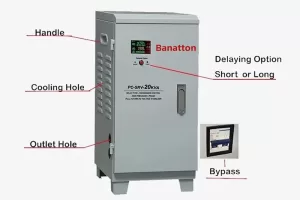
Automatic voltage regulator is an important power management equipment, which aims to automatically detect and correct fluctuations of input voltage, provide stable and consistent output voltage, and meet the requirements of connected equipment. Its working principle is simple and effective: built-in sensors continuously monitor the input voltage from the grid. When fluctuations (overvoltage, undervoltage or voltage spikes) are detected, the AVR uses servo motor or relay technology to adjust the voltage by raising the low voltage or lowering the high voltage until the output reaches the preset stable level.
The core functions of automatic voltage regulator is not only simple voltage stability. It provides powerful surge protection to protect equipment from sudden voltage spikes caused by lightning, grid switch or electrical failure. In addition, by maintaining a stable voltage supply, it significantly prolongs the life of heavy machinery and precision electronic equipment, reduces the maintenance costs, and minimizes the risk of accidental equipment failure. For industrial and commercial users, these functions can improve operating efficiency, reduced downtime and reduce long-term costs.
3. Single-phase and Three-Phase Voltage Regulators: Comprehensive Comparison
Choosing between a single phase and a Three-Phase Voltage Regulator depends on the power requirements of your equipment, application scenario, and load capacity. While single-phase regulators are suitable for small-scale, low-power needs, three-phase voltage regulators are designed to handle high-power, heavy-duty applications—making them indispensable for modern industries. The table below makes a comprehensive comparison between these two types, highlighting their main differences and ideal use cases:
Suitable for medium and low power (usually below 50kVA)
Suitable for high-power heavy loads (100kVA, 200kVA, 300kVA and above)
Core Technology
Relay control or single-phase servo motor
Advanced three-phase servo motor (Servo Motor)
Target Applications
Home energy storage, small commercial equipment, single-phase IT equipment
Large data centers, industrial manufacturing, medical equipment, mining industry
Load Balancing
Not applicable
Able to balance three-phase loads and provide higher energy efficiency
As highlighted in the table, Three-Phase Voltage Regulators excel in high-power applications, offering load balancing capabilities that single phase regulators can not match. This makes them the first choice for industries that depend on heavy machinery, precision equipment and continuous operation, such as data centers, manufacturing plants and medical facilities.
4. Key Applications of Three-Phase Voltage Regulators in Modern Industries
Three-phase voltage regulators play a key role in ensuring the stability and reliability of key equipment across various modern industries. Their ability to handle high power loads, maintain precise voltage levels, and resist interference makes them indispensable in the following key sectors (data sourced from the Institute of Electrical and Electronics Engineers).
Data Centers: Data centers house thousands of servers and storage devices that are extremely sensitive to voltage fluctuations. Even minor voltage variations can cause server crashes, data corruption, or permanent hardware damage. A Three-Phase Voltage Regulator ensures that the power supply to these servers remains stable, preventing unplanned downtime and protecting critical data. Its efficiency is over 99%, and its response time is 20 milliseconds. It can quickly correct voltage fluctuations without interrupting operations.
Manufacturing and mining: Heavy machinery, CNC machine tools and mining equipment need continuous high-power voltage to run efficiently. Voltage fluctuations can cause machinery to malfunction, leading to production delays, damaged components, and increased maintenance costs. Three-Phase Voltage Regulators with strong overload capacity (capable of continuous operation under 100% rated load) and phase loss protection ensure that these heavy-duty devices run smoothly, even in harsh industrial environments.
Medical Facilities: Hospitals and medical centers rely on precision instruments, such as nuclear magnetic resonance apparatus, CT scanners and life support system, all of which require a pure and stable power supply. Even the smallest voltage fluctuation can damage the accuracy of medical readings or damage life-saving equipment. Three-Phase Voltage Regulators with distortion-free waveform technology (achieved through zero-crossing current switching) and adjustable voltage regulation accuracy (± 1%, ± 3%, ± 5%) ensure that medical equipment operates reliably, safeguarding patient safety.
Other Industries: Beyond these core sectors, Three-Phase Voltage Regulators are also widely used in the textile industry (for computerized flat knitting machines), printing industry (for printing presses), and transportation sector (for ships, docks, and airports), providing stable power to critical equipment and ensuring uninterrupted operations.
5. How to Select a Reliable Voltage Regulator Manufacturer?
For the buyer of 2B, it is very important to choose the right manufacturer of voltage regulator to ensuring the quality, performance and reliability of the voltage regulator. Poor quality regulator can lead to equipment damage, operation downtime and cost increase, thus offsetting the benefits of stable investment voltage. The following are four core criteria to consider when selecting a reliable voltage regulator manufacturer.
R&d and Core Technology: The manufacturer should have strong r&d capabilities and master the core technologies of power electronics and intelligent control. This includes advanced technologies such as three-phase independent regulation, zero-crossing current switching, and high-frequency filtering—all of which are critical to the performance of a Three-Phase Voltage Regulator. Look for those manufacturers who have patents and certificates to prove their technical expertise.
Customizability: Different industries and applications have unique requirements on voltage. A reliable regulator manufacturer should provide OEM/ODM services and customized solutions for specific scenarios (such as mining PDU or power supply for medical equipment) This ensures that the regulator is tailored to your specific needs, providing the best performance and protection.
Global Certification and quality control: The manufacturer should meet the international standards and hold relevant certifications, such as CE (certificate number: M.2021.206.C67628). In addition, they should provide factory acceptance testing (FAT) services to ensure that the voltage regulator meets your specifications before delivery. Strict quality control process is very important to ensuring the durability and reliability of the product.
After-sales and technical support: A reliable regulator manufacturer should provide technical support for 7 * 24 hours, including project consultation, on-site implementation and maintenance services. This can ensure that any problems of the regulator can be solved quickly, minimizing downtime and ensuring continuous operation. In addition, they should also provide spare parts services to ensure that replacements parts can be obtained at any time when needed.
6. Banatton: Your Trusted Global Voltage Regulator Manufacturer
Banatton Group is a global leader in power management solutions when choosing a reliable manufacturer of voltage regulators. As a high-tech enterprise, Banatton has exported its products to more than 100 countries around the world, winning the reputation for quality, reliability and innovation. With a number of patents and a strong research and development team, Banatton is committed to providing cutting-edge voltage regulation solutions to meet the diverse needs of modern industries.
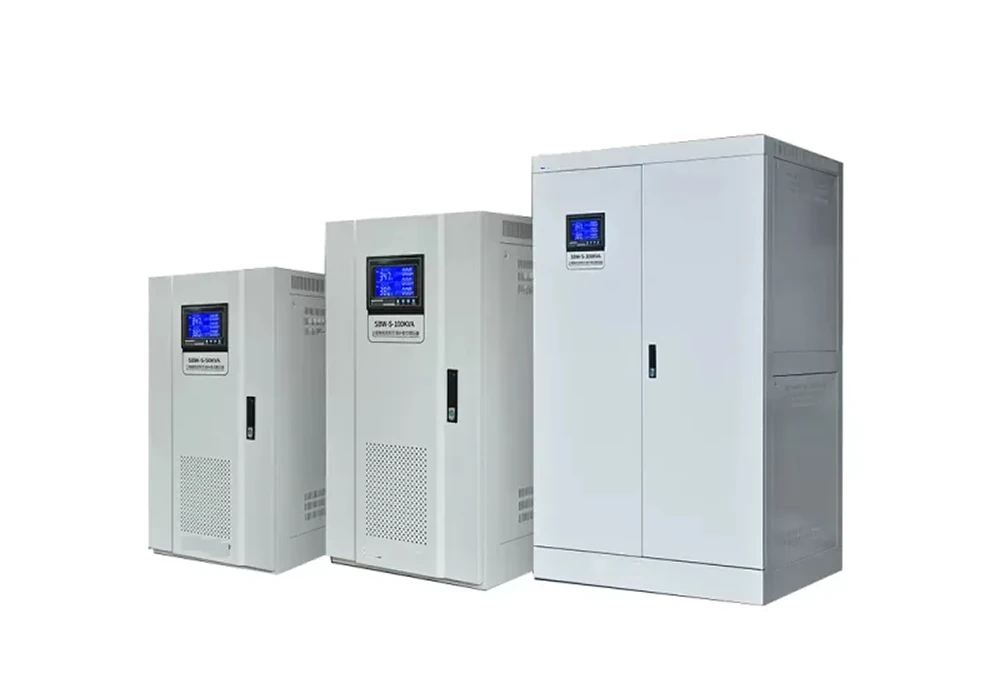
Banatton’s flagship product—the SBW industrial-grade Three-Phase Voltage Regulator (100 kVA 300 kVA series) —is designed to handle the most demanding industrial environments. The regulator has advanced functions, such as large-scale touch screen display (dynamic display of working voltage, current and working state), three-phase independent adjustment (1% accuracy), fast response time (20 ms) and strong anti-interference ability (resistance to pulse interference above 2000 v), ensuring stable and reliable power supply for heavy equipment. It also features a modular design for easy maintenance, high efficiency (over 99%), and multiple protection functions (overload, overvoltage, undervoltage, phase loss, short circuit, and overheat protection), providing comprehensive protection for your equipment within 5 seconds.
Banatton is committed to providing exceptional customer service, including free power solution design, factory visits, and spare parts services. Whether you need a standard Automatic Voltage Regulator or a customized Three-Phase Voltage Regulator for a specific application, Banatton’s team of experts will work with you to find the perfect solution. With CE certification (certificate number: M.2021.206.C67628) and strict quality control process, Banatton ensures that each product meets the highest international standards.
7. FAQs
Q1: Can I use a surge protector instead of a voltage regulator?
A: While surge protectors can block sudden power surges, they cannot regulate voltage. A voltage regulator, on the other hand, provides comprehensive protection against high and low voltage fluctuations.
Q2: How do I choose the right voltage regulator for my appliances?
A: Match the power rating of the voltage regulator to the power needs of your appliances. For example, a 1.5-ton air conditioner typically requires a 2000–3000VA voltage regulator.
Q3: Will voltage regulators be noisy?
A: Modern voltage regulators operate quietly. Older models may produce a slight humming sound during voltage regulation, but this is usually not a problem.
Q4: Will voltage regulators increase my electricity bill?
A: No. Voltage regulators help optimize voltage, reduce energy waste caused by power fluctuations, and ultimately achieve more efficient energy use.
Q5: How much do voltage regulators cost?
A: Basic voltage regulators for televisions start at around a thousand yuan, while heavy-duty models for air conditioners range from 1,000 to tens of thousands of yuan depending on the specifications.
Q6: Can a voltage regulator repair damage that has already occurred to electrical appliances?
A: No. A voltage regulator helps prevent future damage caused by voltage instability, but it cannot reverse existing damage.
8. Conclusion
In today’s fast-paced industrial environment, a stable voltage supply is critical to business success. Voltage fluctuations can lead to costly downtime, equipment damage and data loss, thus threatening the productivity and profitability of your enterprise. Investing in a high-quality automatic voltage regulators, especially three-phase voltage regulators for industrial applications, is a wise investment, which can reduce maintenance costs, prevent downtime and prolong the life of equipment, thus bringing considerable investment returns.It is equally important to choose the right voltage regulator manufacturer. With its global reputation, advanced technology and commitment to quality, Banatton Group is your reliable partner for all voltage regulation requirements. Our SBW industrial-grade Three-Phase Voltage Regulators are designed to handle the most demanding industrial environments, providing reliable, efficient, and customized solutions.
An uninterruptible power supply (UPS) is an electrical device that provides emergency power to loads when the main power source (usually utility power) fails. When...
Today, businesses rely heavily on uninterruptible power to protect their critical infrastructure. To meet this demand, modular uninterruptible power supply (UPS) systems are becoming increasingly...
An industrial UPS is a device that provides temporary power to large electrical equipment during power outages. Because it uses three-phase power, which is common...
The supply of electricity has brought us great convenience and provided energy security for social development, people’s livelihoods, and industrial growth. However, power supply has...