 07Jan
07Jan

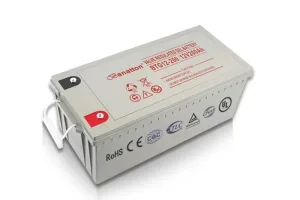
In the era of global energy transformation, solar energy has become one of the most widely used renewable energy sources. The core of an efficient solar energy storage system is a high-quality solar battery. For residential, commercial, and industrial users alike, choosing a reliable, durable, and high-performance battery is crucial for ensuring a stable power supply and maximizing solar energy utilization. Among the various battery types available, the 12V 65AH, 100AH, and 200AH Rechargeable Storage AGM Lead Acid Solar Battery distinguishes itself with its excellent performance and broad applicability. What are the differences between the three capacity models? Why choose an AGM battery? How can you match it with your solar system? This article provides detailed answers, supported by authoritative data and practical guides, to help you make the most appropriate choice.
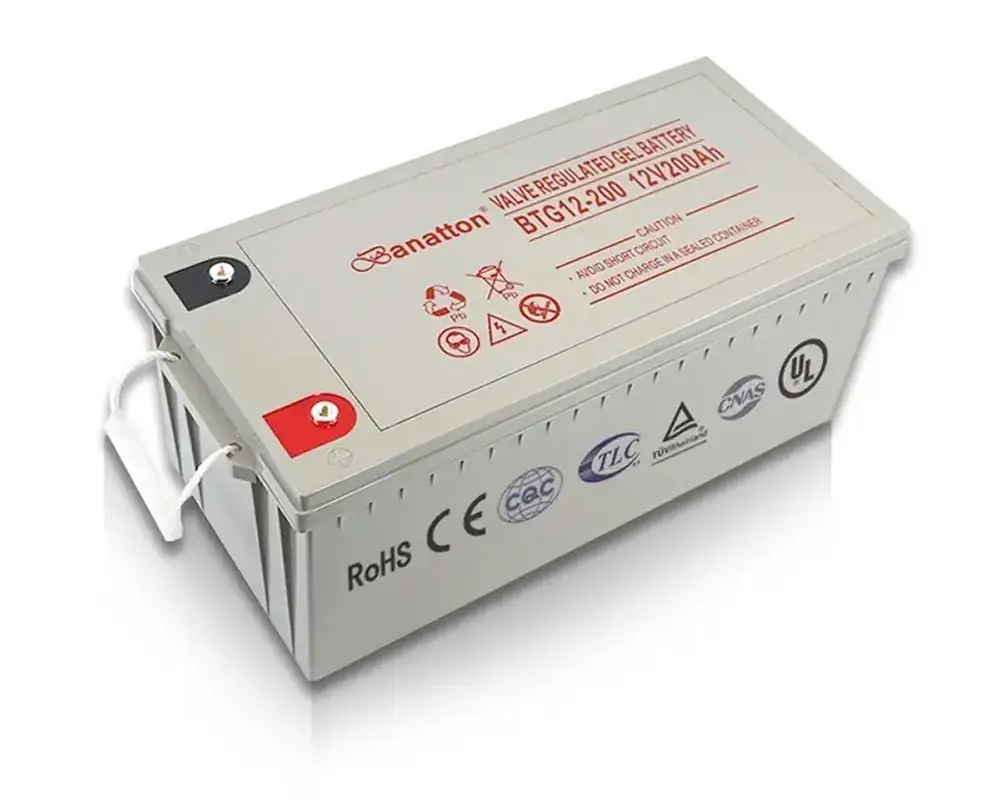
1. Understanding the Core Technology
First of all, let’s clarify the key terms:
- AGM Battery (Absorbed Glass Mat Battery): This is a type of valve-regulated sealed lead-acid battery. It uses a glass fiber mat separator to absorb all the electrolyte, employing a “starved-electrolyte” design. This makes the battery sealed, leakproof and completely maintenance-free, which is different from the traditional lead-acid batteries.
- Rechargeable Battery: This series is designed for repeated charge-discharge cycles. It converts the electric energy generated by solar panels into chemical energy for storage, and then converts it into electric energy when necessary.
- Deep Cycle Battery: These batteries are engineered to withstand repeated deep discharges (often down to 80% of capacity) and subsequent recharges. Their plates are 2-3 times thicker than standard starting batteries, ensuring long-term stable power transmission and resisting damage caused by deep cycling. This is very important for solar energy systems, because the available energy of the solar energy system will fluctuate with weather and time changes.
The rated voltage of 12V is the most common standard in solar energy storage, and it is easy to configure in series (for example, 24V, 48V) are used for different system voltages. Capacities—65Ah, 100Ah, and 200Ah—represent the available energy storage, meeting the needs of users with different power consumption and solar cell array sizes.
2. The Core Advantages (9 Key Points)
1. High stability and reliability: High-purity lead-calcium alloy grids and advanced AGM separator technology are adopted to minimize grid corrosion and electrolyte loss.
2. Long Service Life & Superior Cycle Performance: As a premium deep cycle battery, it offers an excellent cycle life at 25 °C: ~ 1,700 cycles at 30% Depth of Discharge (DOD), ~ 800 cycles at 50% DOD, and ~ 400 cycles at 100% DOD—exceeding standard lead-acid deep-cycle specifications. At 25 °C, the battery’s float design life can reach up to 15 years.(Data Source: IHS Markit, 2026 Solar Energy Storage Batteries Market Outlook).
3. Maintenance-Free Operation: The sealed AGM design eliminates the need for watering, electrolyte checks, or specific gravity adjustments throughout its service life.
4. Good energy density: Optimized internal structure improves energy density. The model of 12V 200AH reaches about 35 Wh/kg, which is about 15% higher than the traditional sealed lead-acid batteries, providing more storage space under the same size/weight.
5. Low self-discharge Rate: It has ultra-low self-discharge rate, which is lower than 2% per month at 25 degrees Celsius (industry average is 3-5%). This minimizes the capacity loss of long-term storage.
6. Strong discharge recovery: Excellent recovery performance after deep discharge. After discharging to 10.5 v, 80% rated capacity can be recovered within 12 hours and 100% within 24 hours after charging.
7. Wide Operating Temperature Range: Performs reliably across a broad temperature spectrum from -20°C to 50°C, with an applicable ambient range of -15°C to 50°C, ensuring stable operation in diverse climates.
8. Certified for Safety and Compliance: Passed CE certification (Certificate No.: M.2021.206.C67563), meeting the EU safety, health and environmental standards. It has flame-retardant shell and a low-pressure ventilation system to enhance safety.
9. Cost-effective: Compared with lithium-ion batteries with the same capacity, it has a price advantage of 30-50%, and at the same time, due to mature technology, long service life and low long-term maintenance costs.
3. Product Specifications
| Parameter | 12V 65AH | 12V 100AH | 12V 200AH |
| Nominal Voltage | 12V DC | 12V DC | 12V DC |
| Nominal capacity (at 25 degrees Celsius) | 65AH | 100AH | 200AH |
| Cycle Life (at 25°C, 100% DOD) | 400 cycles | 400 cycles | 400 cycles |
| Self-Discharge Rate (at 25°C) | ≤ 2% per month | ≤ 2% per month | ≤ 2% per month |
| The designed float life (at 25 degrees Celsius) | 15 years | 15 years | 15 years |
| Working temperature range | -20°C to 50°C | -20°C to 50°C | -20°C to 50°C |
| Suggested operating temperature | 25°C | 25°C | 25°C |
| Certification | CE | CE | CE |
4. Main Application and Capacity Selection Guide
Solar/Wind Energy Storage System:
- Residential roof system (500 W-2000 W): Proposal: 12V 65AH or 100AH. Suitable for lighting, television, refrigerator and other daily loads.
- Small commercial/large residential system (2000 W-5000 W): 12V 200AH is recommended. During the period of low power generation, provide greater energy storage for extended backup.
- Telecommunications & Signal Systems: Serves as backup power for communication base stations and signal towers. Recommended: 12V 100Ah or 200Ah to extend the running time.
EPS/UPS Backup Power:
- Small UPS (1000 VA-3000 VA): Recommendation: 12V 65AH.
- Large UPS/ critical EPS (hospitals, data centers): Recommended: 12V 100AH or 200AH.
Emergency Lighting and Security Systems:
- Small Buildings (residence, office): Recommended: 12V 65AH.
- Large buildings (shopping malls, factories): Recommended: 12V 100AH.
Fire safety equipment and power station: used for standby of fire pump/alarm or power grid stability. Recommended: 12V 200AH, for high capacity and long duration.
5. Step-by-Step Installation & Usage Guide
1. Pre-Installation:
- Choose a dry, well-ventilated place, and avoid direct sunlight. The ambient temperature should be between -15°C and 50°C.
- Check the battery for physical damage, leakage or corrosion of terminals.
- Use cables with proper cross section: ≥2.5mm² for 65Ah/100Ah, ≥4mm for 200AH.
2. Install:
- Fix the battery on a smooth surface.
- For system configuration: Connect batteries in series to increase voltage (e.g., 24 v); In parallel to increase capacity (e.g., 400 ah). Extreme warning: do not reverse polarity.
- Connect the solar battery to the solar charging controller (battery terminals), and then connect the controller to the panels and inverter. Make sure all connections are tight and properly insulated.
3. Operation and Maintenance:
- Charging: Use a compatible solar charger. Recommended voltages: 14.4 V-14.8 V (cyclic use) and 13.6 V-13.8 V (for floating). Avoid over-charging and under-charging in depth.
- Discharge: Avoid long-term deep discharge below 10.5 V, and limit discharge depth to 80% of capacity in order to get the best life.
- Routine inspection: Monthly visual inspections for damage, terminal inspection and voltage measurement (fully charged: ~ 12.8 V-13.0 V).
- Long-Term Storage: If storing for > 3 months, fully charge the battery first. Store in a cool and dry place (10-20℃) and charge once every 3 months to keep the capacity.
6. Frequently Asked Questions (FAQ)
Q 1: What is the expected lifespan of these AGM Solar Batteries?
A 1: Under standard conditions (25 degrees Celsius), the design float life is up to 15 years. The actual cycle life depends on depth of discharge, frequency, temperature, and maintenance. If properly maintained, a service life of 12-15 years can be achieved.
Q 2: Can I store the battery fully charged for a long time?
A 2: Yes, but correct storage is key. Because of the low self-discharge rate, it can be stored after being fully charged. For storage exceeding 3 months, place it in a cool, dry environment and perform a recharge every 3 months to prevent damage from excessive self-discharge.
Q 3: How to choose the appropriate capacity for my system (65AH, 100AH, 200AH)?
A 3: Consider four main factors: 1) Solar Array Power Output; 2) your daily load consumption (Kwh); 3) required number of days of autonomy (backup days without sun); 4) available installation space. For example, for a 5 kW daily load that needs 5 day’s standby, two 12V 200AH batteries in series (providing about 4.8 kWh) would be a suitable starting point.
Q 4: How should I dispose of a used AGM Lead Acid Battery?
A 4: Never throw it into the ordinary garbage can. Used lead-acid batteries contain harmful substances and must be recycled. Return them to authorized battery retailers, recycling centers or hazardous waste collection agencies for proper and environmentally friendly recycling and material recycling.
7. Summary
The 12V 65AH, 100AH, and 200AH Rechargeable Storage AGM Lead Acid Solar Battery integrates the proven benefits of AGM technology, deep-cycle capability, and lead-acid reliability. It provides excellent stability, long service life, minimal maintenance, wide temperature tolerance and excellent value. Whether for a home solar setup, a commercial energy storage project, or critical backup power, this product series provides a dependable and cost-effective solution. With CE certification, its quality and safety have been guaranteed.If you are seeking a reliable, durable, and high-performance battery for your solar storage or backup power needs, this series of AGM Solar Batteries is a compelling choice worthy of serious consideration, promising to deliver stable and safe power for your applications.