What is a solar inverter? Core selection guide and B2B application value
Critical points
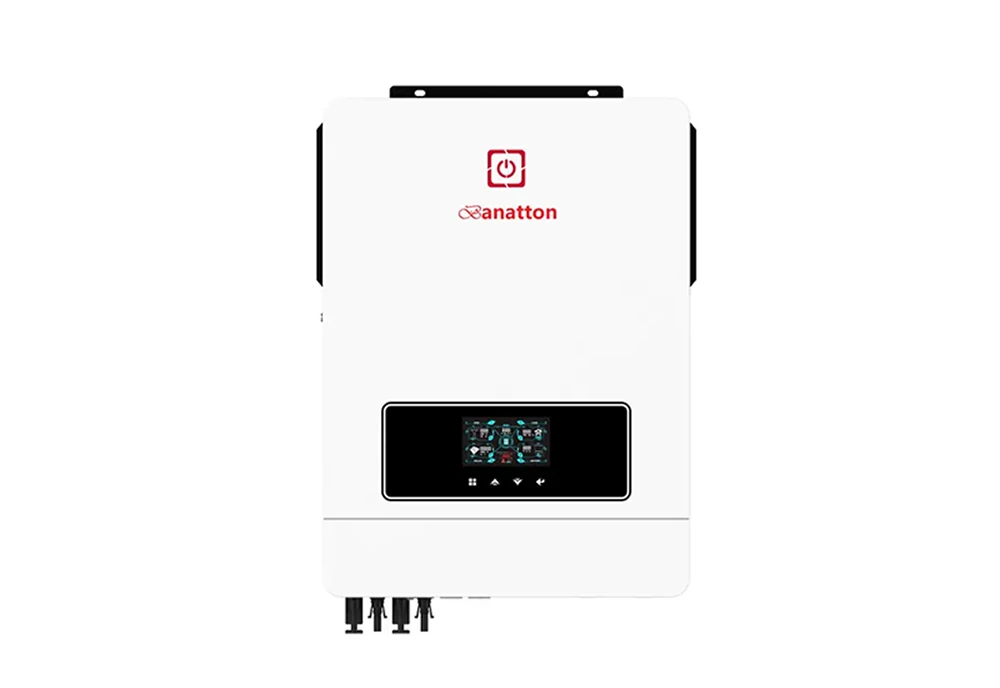
Solar inverter is a core conversion equipment in photovoltaic (PV) systems, which converts the DC electric energy of solar panels to usable alternating current. Variants such as hybrid inverter and off-grid inverter are suitable for different scenarios. Its core value lies in improving the utilization rate of photovoltaic energy, ensuring the stability of power supply and solving the pain points of B2B in energy conversion and energy storage adaptation. Select the requirements that need to be clear, confirm the core parameters, match the industry standards and verify the suppliers. It is suitable for new energy, manufacturing and other industries, and its normal service life is 10-15 years.
What Is a solar inverter?
Definition: A Solar Inverter is a core power conversion device in PV systems, whose main function is to convert DC power generated by solar panels into AC power directly usable by household appliances and industrial equipment. It not only undertakes the core task of power conversion, but also has auxiliary functions such as charging control and power protection. Mainly used to solve the pain points of B2B in photovoltaic energy utilization, such as power adaptation, energy storage coordination, stable power supply and so on.
Industry Standards/Common Nomenclature: Commonly known as PV inverter in the industry, it mainly complies with international standards such as IEC 62109 and UL 1741. Domestic standards such as GB/T 19939-2020 “Technical Requirements for Grid Connection of Photovoltaic Systems” are followed.
Synonyms: Power inverter, photovoltaic conversion inverter, solar power generation converter. The derivatives include hybrid inverter and off-grid inverter.
Why are solar inverters important in the new energy industry?
Problems to be solved: it mainly solves the core contradiction that DC power generated by photovoltaic systems can not directly adapted to conventional electrical equipment. At the same time, it solved the fluctuation and instability of photovoltaic energy supply. Through built-in control modules, efficient energy allocation and energy storage coordination can be realized, which is suitable for the hybrid power supply scene of hybrid inverter and independent power supply scene of off-grid inverter.
Risks of Non-Use: Without a Solar Inverter, DC power generated by solar panels can not be directly used by conventional AC loads, resulting in ineffective utilization of PV energy. Lack of its protection functions may easily lead to electrical equipment damage due to voltage fluctuations and short circuits, and make it impossible to manage the charge and discharge of energy storage systems. In extreme cases, it may lead to circuit failures, energy waste and other problems, increasing the operating costs and security risks of B2B users.
Core Benefits after Use: significantly improve the utilization rate of photovoltaic energy, reduce dependence on the traditional power grid or generators, and reduce the cost of energy procurement; The stable conversion function of the power inverter ensures the quality of power supply and prolongs the service life of electrical equipment. According to Solar Power Europe’s technical guide for solar inverters in 2024, modern solar inverter variants (such as hybrid inverters) can also be seamlessly integrated with energy storage systems, further improving the energy self-sufficiency for B2B users. Some models support parallel operation, enabling flexible capacity expansion to adapt to different power requirements. At the same time, the intelligent charging design optimizes energy storage performance, and improves the flexibility and reliability of energy scheduling.
Main specifications
Core Specifications/Features
Detailed Description
Waveform-Type
Pure sine wave inverter ensures stable power supply and adapts to precision electrical equipment
Charging Control Module
Built with MPPT/PWM solar charging controller, which improves the photovoltaic charging efficiency
Input Voltage Range
Selectable input voltage range for home use, adapting to different household and small commercial scenarios
Charging Current Adjustment
Selectable charging current based on applications, enhancing scenario adaptability
Input Priority Setting
Configurable AC/Solar input priority via LCD setting, enabling intelligent energy deployment
Compatible Power Types
Compatible with mains voltage or generator power, improving power supply reliability
Auto-Restart Function
Auto restart while AC is recovering, reducing manual intervention
Safety Protection
Overload and short circuit protection, ensuring the safety of equipment and circuits
Battery Optimization
Smart battery charger design for optimized battery performance, extending the service life of energy storage batteries
Cold Start Function
Cold start function, suitable for operation in low temperature environment
Parallel Operation
Up to 9 units run in parallel, which supports power expansion
The application of solar inverter
New Energy Industry: As a core equipment of PV power plants, it is suitable for centralized and distributed PV projects, realizing efficient conversion of solar energy to electrical energy and grid-connected or off-grid power supply. Off Grid Inverter is especially suitable for PV power plants in remote areas, while Hybrid Inverter is suitable for integrated PV-storage-charging projects. The Technical Guide of Solar Inverter points out that hybrid inverter can effectively reduce the peak power consumption cost because of its dual power supply mode and intelligent energy management ability, and become the mainstream choice for commercial and industrial photovoltaic projects.
Manufacturing Industry: photovoltaic energy utilization systems used in factory workshops, which supplies power for auxiliary production equipment such as washing machines, air conditioners and microwave ovens, as well as some production line loads. The stable conversion of solar inverter ensures the normal operation of production equipment and reduces the cost of industrial electricity.
Commercial Building Industry: Suitable for PV energy storage systems in commercial places such as shopping malls and office buildings, supplying power to public electrical equipment such as lighting, air conditioners, televisions, and refrigerators. The flexibility and adaptability of power inverter can meet the ever-changing requirements of power load in commercial places and improve energy self-sufficiency rate.
How to Choose the right solar inverter
Step 1: Define the Requirements: First, determine whether the application scenario is grid-connected or off-grid (off-grid scenarios gives priority to off-grid inverter), total load power, and whether energy storage coordination is needed (hybrid inverter is given priority to mixed scenarios). At the same time, it is clear whether it is used for family development or industrial scale applications.
Step 2: Confirm parameters: check key performance indicators such as waveform type (preferably pure sine wave), input voltage range, charging current adjustment range, parallel operation capability, etc. To ensure matching with photovoltaic module parameters and load requirements.
Step 3: Match Standards: confirm that the product meet the core industry standards such as IEC 62109, GB/t 19939-2020, so as to ensure the safety and compatibility of the equipment and avoid the use risks caused by non-compliance.
Step 4: Verify Suppliers: Check the supplier’s production qualifications, technology research and development capabilities, after-sales support system and so on. Give priority to suppliers with mature project cases and customized solutions to ensure follow-up equipment operation support.
Standards, certification and compliance
Industry Standards: Internationally, it implements IEC 62109 “Safety Requirements for Photovoltaic Inverters” and UL 1741 “Safety Standards for Static Inverters, Charge Controllers, Battery Chargers and Power Conditioning Equipment”. Domestically, it implements GB/t 19939-2020 “Technical Requirements for Grid Connection of Photovoltaic Systems” and GB/t 20046-2019 “Grid Interface Characteristics of Photovoltaic Systems” .
Test Methods: Core test items include conversion efficiency test, voltage fluctuation test, overload protection test, high and low temperature environment adaptability test and electromagnetic compatibility test. Testing and certification is completed by professional third-party testing organization according to standard procedures.
Certification Description: Basic certifications includes CE certification (EU market), UL certification (North America market) and CQC certification (China market). For specific industry scenarios, additional industry-specific certifications is needed to ensure legal and compliant circulation and use in the target market.
Who Should consider solar inverter solutions?
Suitable Companies: developers of new energy photovoltaic project and operators of photovoltaic power stations; High-energy-consuming manufacturing enterprises and industrial park operators; Commercial buildings (shopping malls, office buildings) property management company; Mining and agricultural enterprises in remote areas without a stable municipal electricity supply; Various B2B enterprises are committed to energy transformation and carbon reduction.
Inappropriate Scenarios: small and micro enterprises with extremely small load and no photovoltaic energy utilization plans; Short-term temporary power consumption projects (equipment investment cost is higher than energy saving benefits); Local solar energy resource are extremely scarce and the photovoltaic energy collection efficiency is too low.
Brief introduction of our Advantages: We focus on the research and development and production of the full range of solar inverter products, covering core categories, such as hybrid inverter, off-grid inverter and power inverter. Our products strictly follow the international and domestic double standards, have mature parameter customization ability and perfect after-sales operation and maintenance system, and can accurately match the individual needs of different B2B scenes.
Frequently asked Questions (FAQs)
Q: How long is the life of the solar inverter?
Answer: According to the service life of electronic components, the normal service life of solar inverters is expected to be 10-15 years. Proper installation and regular maintenance can effectively extend its service life.
Q: What is the optimal installation location for Solar Inverters?
Answer: Inverters are generally designed for outdoor use, and can withstand wind and rain. However, in order to prolong their service life, direct sunlight should be avoided as much as possible, especially for the walls facing west and north. If it is inevitable to install on a wall facing north or west, it is suggested to install a sunshade to protect the solar inverter.
Sum up
As the key hub of photovoltaic energy utilization, solar inverter directly determines the energy conversion efficiency and power supply stability of photovoltaic system. Sub-categories such as hybrid inverter and off-grid inverter can accurately adapt to different B2B application scenarios. Choosing a solar inverter that meets standards and meets the requirements can not only effectively reduce the energy costs of enterprises, but also improve the autonomy and reliability of energy supply. For B2B enterprises committed to energy transformation and green development, rational allocation of solar inverter solutions is an important way to achieving sustainable management.
An uninterruptible power supply (UPS) is an electrical device that provides emergency power to loads when the main power source (usually utility power) fails. When...
Today, businesses rely heavily on uninterruptible power to protect their critical infrastructure. To meet this demand, modular uninterruptible power supply (UPS) systems are becoming increasingly...
An industrial UPS is a device that provides temporary power to large electrical equipment during power outages. Because it uses three-phase power, which is common...
The supply of electricity has brought us great convenience and provided energy security for social development, people’s livelihoods, and industrial growth. However, power supply has...