 26Sep

The servo vs relay stabilizer difference starts with the correction mechanism: a relay design switches transformer connections in steps, while a servo design uses motor-driven adjustment. Choose between actual models by matching their output behavior, input range, load duty and service needs to your equipment.
A comparison can look clear until two suppliers use different meanings for accuracy or response time. One quotation may describe a switch event, while another describes the time to reach a settled output. Those numbers do not answer the same question.
This guide gives your servo vs relay stabilizer review a common basis. It explains the mechanisms, separates the performance measures and shows how to turn a load record into a shortlist. For the wider selection process, start with the voltage stabilizer guide.
Key takeaways
- Compare model data, not a claim that one mechanism always wins.
- Separate steady output tolerance from behavior during correction.
- Check input coverage and supported load together.
- Keep restart delay separate from correction speed.
- Request a current manual and matched rating conditions for each offer.
Have two proposals to compare? Send Banatton your load and voltage requirements, including the equipment’s allowed input, so a proposed configuration can be reviewed against a clear duty.
Servo vs relay stabilizer: how correction differs
Both designs regulate AC voltage within their stated operating conditions. They sense voltage, compare it with the required condition and control a correction mechanism. The mechanism affects what you need to ask about the output, but it does not establish every performance limit.
Relay-controlled adjustment
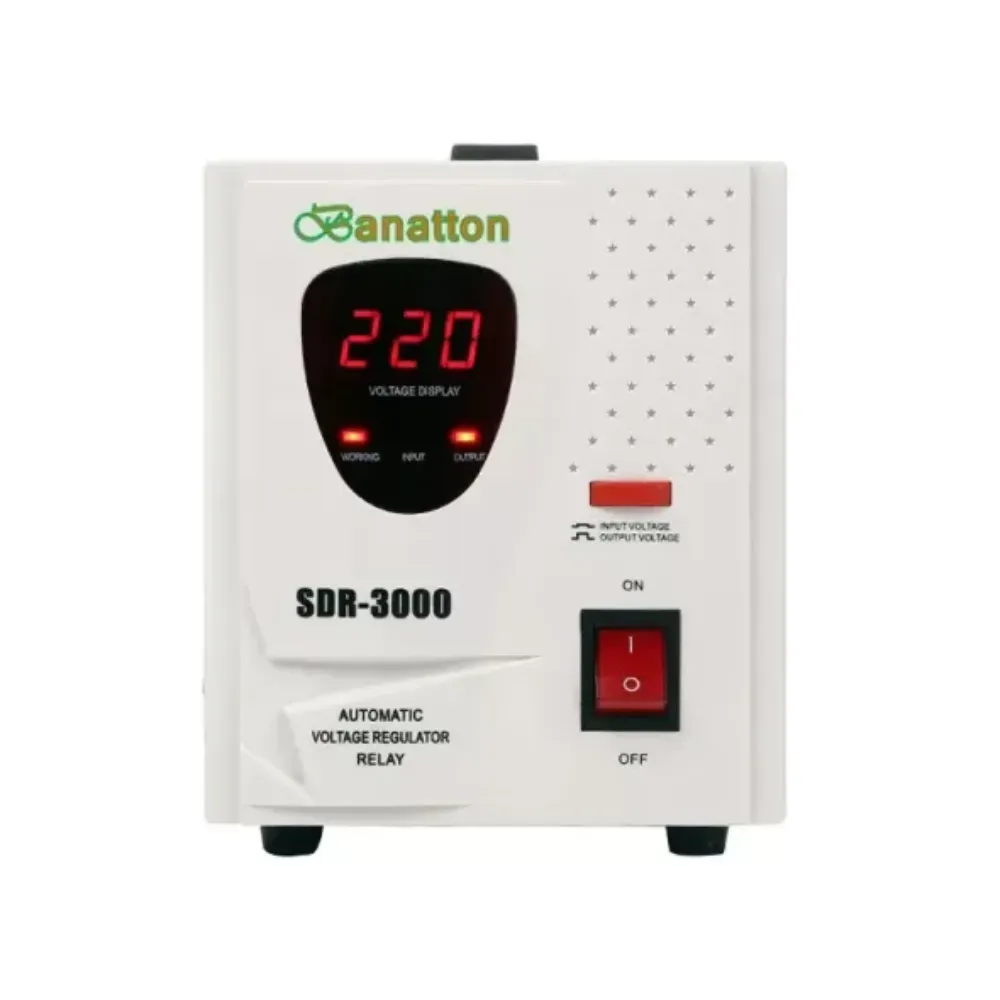
A relay-controlled design selects between available transformer connections. Its correction follows those available steps and the control logic. Ask how large an output change can occur, under which conditions and how the connected equipment responds to it.
In a servo vs relay stabilizer comparison, do not assign one universal step size to all relay models. Tap arrangements and control settings vary. A published example from one manufacturer cannot establish the behavior of another manufacturer’s product.
Likewise, do not assume that a relay label sets an industry-wide capacity ceiling. Review the product family and the proposed model. The useful question is whether that model meets the documented duty, not whether its mechanism belongs to a broad market category.
Servo-controlled adjustment
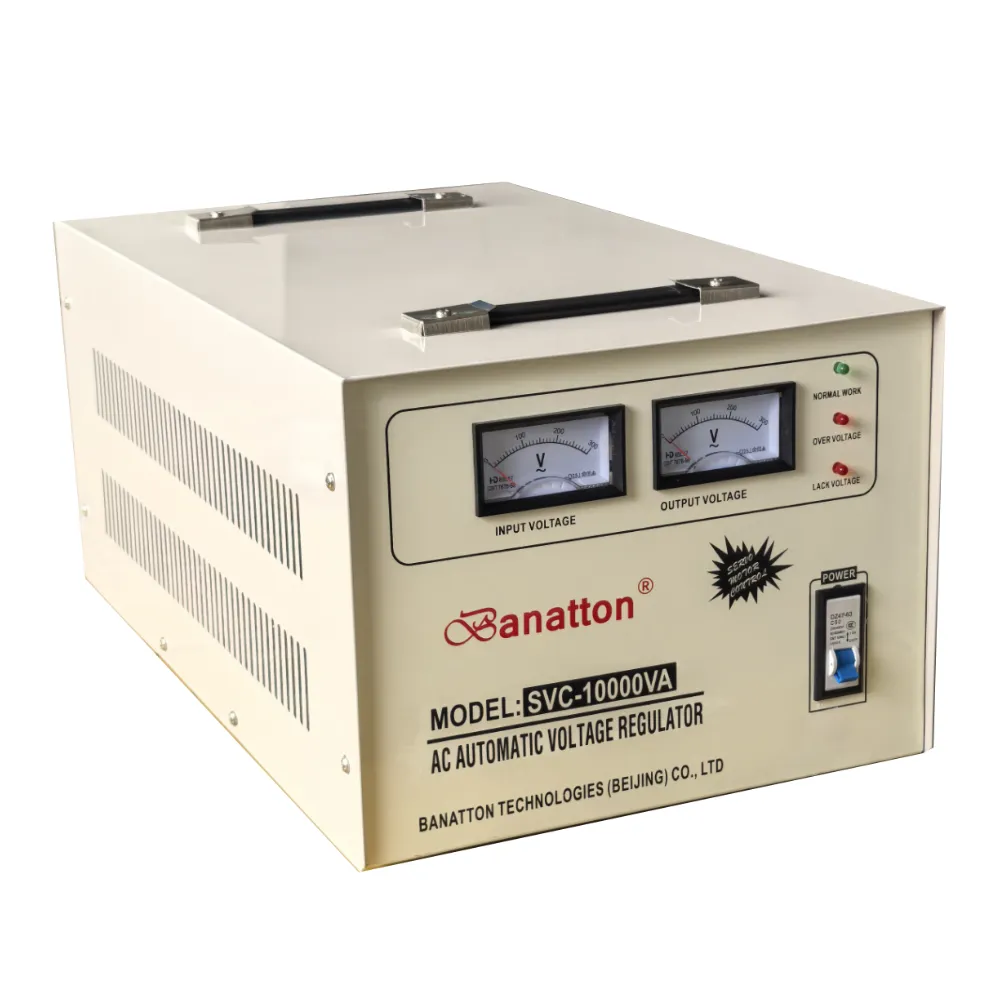
A servo design uses a motor to move an adjustment mechanism. In common arrangements, that movement changes the transformer adjustment used for voltage correction. The Fuji Electric technical guide provides background on this operating principle.
Motor-driven adjustment does not mean correction has no time limit or output deviation. Ask how the proposed model behaves while the input changes and after the output settles. Keep its stated accuracy attached to its test conditions.
The servo vs relay stabilizer choice therefore starts with a mechanism difference and continues with a model review. Neither the word servo nor the word relay proves suitability for every industrial, office or household load. Equipment requirements still define the comparison.
Begin with the load’s permitted input
Illustrative scenario: A buyer prefers a servo model because its adjustment sounds smoother. The equipment maker, however, provides specific voltage limits and operating conditions rather than a preferred mechanism. The buyer uses those limits to request comparable output data from both suppliers before choosing.
This scenario illustrates a better starting point, not a recommended product or an achieved result. A servo vs relay stabilizer shortlist should identify what the equipment accepts, then establish which offer supports it. Keep any missing input data visible.
Compare output tolerance and response definitions
Output tolerance describes a permitted deviation under stated conditions. It does not necessarily describe every instant during a voltage change. Ask whether a figure applies after settling, over a defined load range or under another test condition.
For a useful servo vs relay stabilizer review, give each supplier the same required output and operating events. Then ask for a response using the same boundaries. Percentages are not enough. Check that they describe the same duty.
Separate timing measures
Detection time, relay switching, motor adjustment and settling are different measures. A small switching-time number cannot be compared directly with a complete correction time. A restart delay serves another purpose and should have its own row.
Record the initial input voltage, the size of the change, the connected load and the required final output band. Ask what starts and stops the timing measurement. Without those details, the servo vs relay stabilizer speed comparison remains incomplete.
| Comparison item | Ask the relay supplier | Ask the servo supplier |
|---|---|---|
| Output behavior | What steps and residual deviation apply? | What deviation applies during and after adjustment? |
| Timing | Is the value detection, switching or settling? | Is the value initiation, adjustment speed or settling? |
| Test condition | Which input change and load were used? | Which input change and load were used? |
| Rating boundary | What input and load limits apply? | What input and load limits apply? |
| Protection | When does the output disconnect? | When does the output disconnect? |
| Restart | What delay and return conditions apply? | What delay and return conditions apply? |
Make the test question repeatable
Write one test question for both offers. State the input before and after the change, the load state and the output band to be checked. In a servo vs relay stabilizer review, this keeps a short headline number from hiding a different test.
Ask the supplier to name the document behind its answer. If the answer is based on a different load or input range, record that difference. You can then decide whether more data is needed before the two offers are comparable.
Keep protection separate from regulation
The output tolerance and protection thresholds answer different questions. Regulation aims to keep the output within the specified conditions. Protection may disconnect the load when a limit is reached.
In a servo vs relay stabilizer comparison, ask what happens outside the input window and after a protective trip. Confirm the permitted operating modes and the applicable restart instructions. Do not treat a cut-off threshold as the normal regulation target.
Check input range, phase and load duty
A stabilizer needs to match the supply and the connected equipment. Record the nominal supply, representative voltage conditions and load states. A single display reading does not establish the full operating envelope of a site.
The Arnav selection guide offers a useful framework for relating voltage conditions to load duty. Use that framework to organize questions for the proposed model. It does not prove a Banatton product’s performance.
Distinguish operating and regulation ranges
A document may list a working window and a separate regulation window. Ask how each is defined and what output capability applies at the limits. Do not assume that operation throughout a voltage range also means full-rated load and the same accuracy throughout it.
That distinction is central to a servo vs relay stabilizer review. The two offers should address the actual input conditions at the site. A wider headline range is not enough if the supported load or output conditions remain unclear.
Include starts and changing demand
Record simultaneous electrical demand, starts and load steps separately. Include the source of the data and the operating sequence. Ask the supplier to assess the magnitude and duration of an event against the proposed model’s limits.
Illustrative scenario: A workshop has a normal running-load record but no detail about a machine start at low supply voltage. It asks both suppliers what event data they need and whether their rating applies at that input. The next step is to fill the evidence gap, rather than declare a servo vs relay stabilizer winner from the running kVA alone.
Keep phase requirements separate from the mechanism choice. Confirm single-phase or three-phase configuration, output requirements and relevant load distribution. A technology label does not establish the phase arrangement supplied with a quotation.
For a single-phase project, the 220 V AC selection guide helps organize voltage-specific questions. Keep the detailed capacity calculation in the sizing review. This servo vs relay stabilizer comparison focuses on whether the proposed correction behavior and rating conditions fit that duty.
Review maintenance, protection and ownership inputs
Service requirements belong in the comparison before ordering. Ask for the applicable manual, inspection needs, access requirements and support terms. Do not assign one maintenance interval or service life to every product using the same mechanism.
Compare the actual service plan
Relay contacts and servo adjustment components raise different service questions. The relevant task and interval must come from the particular design, manual and operating conditions. This article does not provide internal inspection or adjustment instructions.
A servo vs relay stabilizer cost comparison should use actual quoted inputs. Identify the scope of maintenance, expected access needs and any proposed spares. If the supplier has not supplied a service plan, leave that cost item unresolved instead of filling it with a generic annual figure.
Record what the service quote covers
Keep tasks, parts and access needs on separate lines. Ask whether the quoted scope covers the installed configuration and the planned duty. This gives a servo vs relay stabilizer cost review a clear starting point without guessing how long parts will last.
You do not need a lifetime forecast to ask a useful service question. Start with the manual, the actual site and the scope of support offered. Leave unquoted work open until the supplier explains it.
Include operating modes and interruptions

Ask what the equipment receives during normal regulation, protective disconnection and restart. If a bypass arrangement is offered, request its documented role and limits. Installation, switching procedures and protection coordination require the approved project method.
Neither mechanism provides stored-energy backup merely because it regulates voltage. If continuity through a supply outage is required, define that function separately. Do not count an unconfirmed backup capability as a benefit in the servo vs relay stabilizer table.
Price alone also leaves scope questions unanswered. Check what each offer includes: configuration, documents, applicable options and service terms. A valid servo vs relay stabilizer decision compares offers that meet the same stated requirement, with remaining assumptions clearly recorded.
If those inputs are available, request a Banatton configuration review. Include your required output behavior, input records and service expectations rather than asking for the mechanism alone.
Build a servo vs relay stabilizer shortlist
Banatton has published relay-controlled SDR and single-phase servo SVC product information. The pages can help identify questions for a quotation. They do not constitute a matched performance test between two equally rated configurations.
Read the SDR and SVC fields carefully
The SDR relay product table lists AC 140–260 V input and 220 V ±8% adjustable output. Confirm the applicable output and supported load under the input conditions required by your project. Keep protection thresholds separate from that output description.
The SVC single-phase servo product page separates an operating input range of 120–275 V from a regulation range of 140–260 V described as custom made. Ask which configuration the quotation actually covers. Do not merge the two windows into one full-performance claim.
Its public descriptions also need clarification: the short description and regulation table do not use identical percentage values. Request the current versioned data sheet rather than selecting the more favorable number. The listed optional safety-cycle delays must not be used as correction-speed figures.
For your servo vs relay stabilizer review, attach the supplier’s clarification to the quotation. Resolve a document mismatch first. Do not build a new specification from separate fields. Name the model and options beside each confirmed requirement.
Put both offers on the same worksheet
| Requirement | Buyer input | Evidence requested for each offer |
|---|---|---|
| Equipment tolerance | Permitted input and relevant modes | Output behavior under matching conditions |
| Supply | Nominal voltage, range and event records | Regulation window and applicable rating |
| Load duty | Running demand and starts | Continuous and event capability |
| Phase | Supply and load arrangement | Exact input/output configuration |
| Protection and restart | Required operating behavior | Manual, settings scope and mode descriptions |
| Service | Access and support requirements | Maintenance plan and quoted service scope |
| Open questions | Missing or conflicting information | Written answer or stated assumption |
Illustrative scenario: A buyer receives one offer with a relay switching time and another with a servo settling time. Before ranking them, the buyer asks both suppliers to define the event and final output criterion. The servo vs relay stabilizer comparison can proceed once the responses describe the same requirement.
Give each worksheet item a simple status: confirmed by a named document, based on an agreed assumption, or still open. Add a date and an owner for the next action. A servo vs relay stabilizer decision is easier to check when those statuses stay with the offer.
Keep a dated worksheet with the approved proposal. If the load, supply or site conditions change, identify which rating assumptions need another review. This preserves the basis of the servo vs relay stabilizer choice for installation and later service.
Servo vs relay stabilizer questions
Is a servo model always more accurate?
Check the proposed models’ output limits and conditions. Mechanism names alone do not establish a matched accuracy comparison. Use the equipment’s permitted voltage to decide what is required, then request evidence against that requirement.
Does faster relay switching mean faster total correction?
Not necessarily. Switching is one event; reaching a defined settled output is another measure. In a servo vs relay stabilizer review, compare the same timing definition, input change and load condition before drawing a conclusion.
Can relay regulation be used with industrial equipment?
Assess the actual model against the equipment and site duty. An application label does not confirm load capacity, output behavior or event capability. The same evidence is needed before approving a servo model for industrial use.
How often does each design need maintenance?
Follow the manual and the applicable operating conditions. Request the service plan for the model offered rather than adopting a universal replacement interval. Use those documented tasks and real quotations in the ownership comparison.
Does either design keep the load running during an outage?
Voltage regulation alone is not stored-energy backup. If the equipment must continue during loss of supply, specify the required continuity and review the appropriate system function. Do not infer it from servo or relay control.
The useful servo vs relay stabilizer choice is the one supported by a clear duty and comparable model evidence. Keep output tolerance, response, input range and service needs visible through quotation review. Contact Banatton with your comparison worksheet to discuss the proposed configuration and the information still needed for approval.