 26Sep

A modular UPS commissioning checklist should cover scope, readiness, factory tests, site tests, evidence, and defect closure. Each check needs an agreed pass rule and a signed result tied to the unit tested.
A green display cannot replace a test record. Your uninterruptible power supply (UPS) may run without an alarm while a remote signal points to the wrong cabinet. A factory test may use a simulated battery instead of the batteries shipped to site.
You need to know what the evidence proves before you accept the system. This guide helps you build a test plan, ask for the right records, and track failed checks through to closure. It includes a witness matrix and a worked defect example that you can adapt to your project.
Use the modular UPS commissioning checklist as a review framework for qualified teams. Use the approved electrical design, exact-model manuals, local rules, and site procedures for the work. Agree those inputs before a test date, so the witness team can assess results without inventing limits during the test.
Key Takeaways
- FAT proves agreed factory conditions; SAT verifies the installed system and its site interfaces.
- Record each power module’s slot, serial number, and firmware against the configuration used for the test.
- Spare power capacity and battery runtime need separate evidence at the approved load.
- Keep failed and deferred checks open until the required retest or approved disposition is signed.
Set the modular UPS commissioning checklist scope
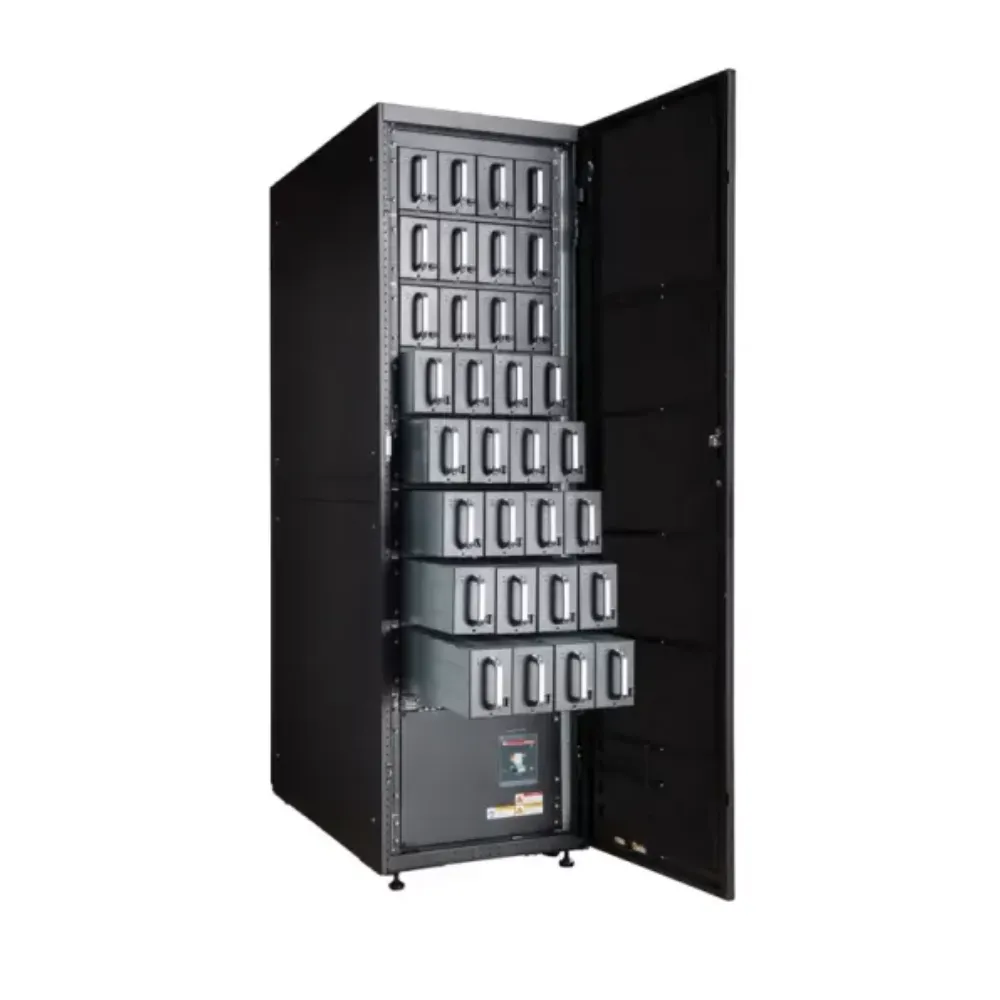
Start with the system you intend to accept. List the frame, installed power modules, controls, bypass, batteries, and output path in the modular UPS commissioning checklist. Mark the scope on the approved single-line drawing, which shows the power paths.
The modular UPS architecture guide explains shared paths and spare capacity. Your test plan should turn the selected design into checks for specific operating states.
Preparing a proposal? Explore Banatton Group’s UPS systems and identify the exact offered configuration before agreeing its test scope.
Separate the three acceptance stages
A factory acceptance test (FAT) checks agreed functions before the unit ships. A site acceptance test (SAT) checks the unit once it is in place. Integrated systems testing checks its operation with other plant, such as generators, switchgear, and monitoring.
Give each required test its own test record. A simulated generator signal at FAT does not prove that the real generator can support the UPS at site. Carry that gap into the site test plan with an owner and due date.
Put the source of pass criteria beside every row in the modular UPS commissioning checklist. Use the approved specification, drawing, model manual, or agreed test procedure, with its revision. IEC 62040-3:2021 addresses UPS performance and test requirements; its title alone supplies no project pass values.
The modular UPS commissioning checklist also needs clear authority. Name who runs and witnesses each test. State who can approve a change or release the system for use. Agree which defects block energization, shipment, or handover before testing starts.
Clear the prerequisites before testing
Clear the readiness checks in the modular UPS commissioning checklist before the team starts the tests. Hold the affected work if drawings, battery data, or a safe test supply are missing.
Check equipment and site readiness
Use the modular UPS commissioning checklist to request these records before the witness session:
- Approved drawing, equipment schedule, installation manual, and test procedure revisions.
- Frame and module identities, slot locations, firmware, settings, and approved battery arrangement.
- Installation inspection, cable and earthing checks, protection settings, and termination records as required by the design.
- Battery condition, polarity, connection checks, charge state, and readiness under the battery maker’s instructions.
- Meter IDs, calibration records, measuring points, and a common clock for event logs.
- Permits, isolation plan, abort conditions, responsible personnel, and return-to-service procedure.
For a manufacturer example, Schneider Electric’s Galaxy VS installation checklist lists modules, power cables, signal cables, and external communications. Those are Galaxy VS instructions; request the equivalent documents for your selected UPS.
Hypothetical scenario: Jordan checks the shipped configuration. At a four-slot installation, Jordan compares the delivery register with the FAT test record. Slot 3 contains a replacement module whose serial number and firmware are missing from the approved list. Jordan holds the affected test.
The supplier confirms compatibility, updates the register, and agrees the checks that must be repeated. The witness session then proceeds against a known configuration, with the change attached to the result.
Plan the temporary load and its heat
A load bank creates a controlled electrical demand. Plan its cables, power feed, airflow, and heat discharge before it arrives. The test plan must also show how any live customer load stays protected during the load bank session.
Eaton’s load-bank testing scope, revised May 12, 2015, calls for a suitable way to reject heat and a check of the site power system. It also assigns the load bank connections to a certified electrician. Its service procedure is an attributed example, not a universal switching sequence.
Add load bank readiness to the modular UPS commissioning checklist. Do not let a booked witness date override missing approval for temporary cables, added demand, or heat removal.
Modular UPS commissioning checklist for FAT
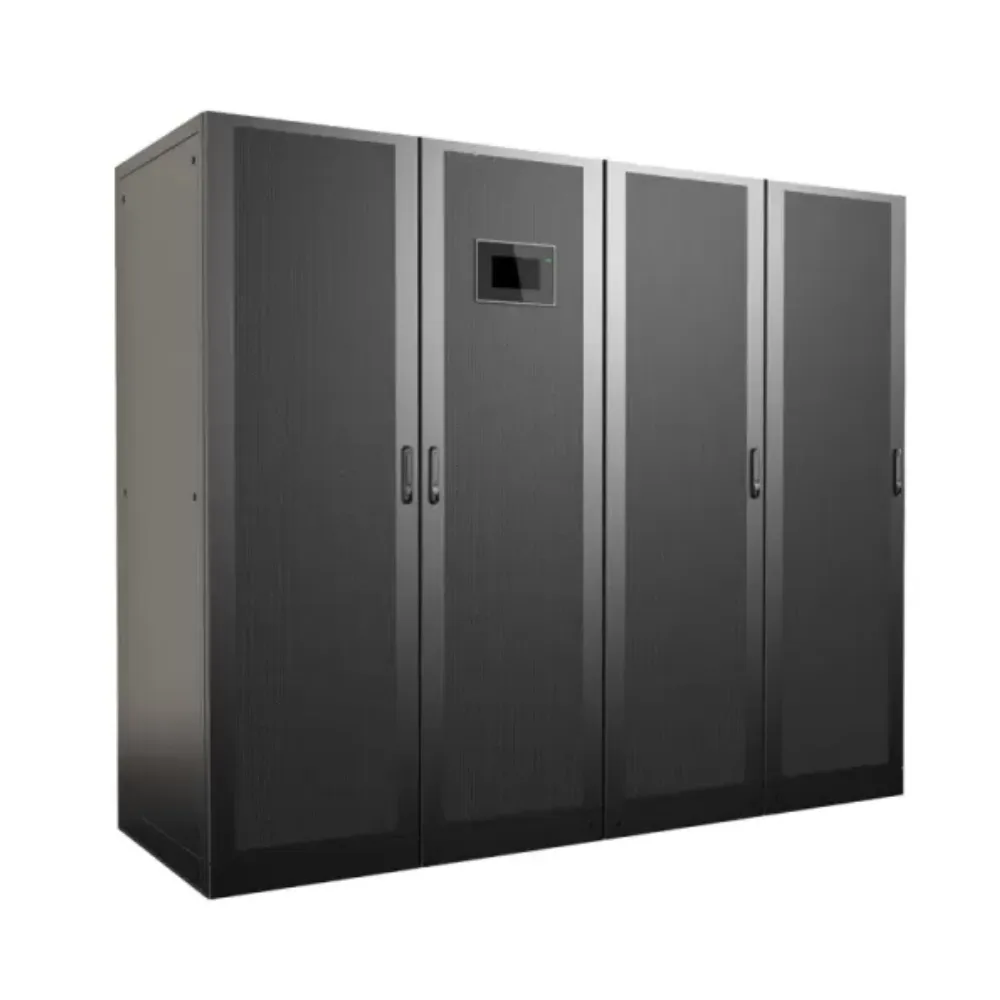
Agree which checks in the modular UPS commissioning checklist the factory will perform and which need the installed site. Use the table below to plan which tests you need. The engineer must turn each required row into an approved test script. It needs clear pass criteria, numerical limits where relevant, safe methods, and rules for when to stop. Include the load bank type and its limits in that script.
Copyable witness matrix
| ID | Objective and condition to define | Acceptance basis to enter | Evidence to retain |
|---|---|---|---|
| F01 | Match frame, slots, modules, firmware, and settings to the order | Approved equipment schedule and revisions | Identity register, settings export, inspection signatures |
| F02 | Check output at the agreed steady and changing loads | Exact-model performance limits and approved load steps | Measured kW, kVA, voltage, frequency, and relevant waveforms |
| F03 | Verify sharing and the specified module-unavailable state | Permitted remaining capacity and sharing limits | Module readings, total load, alarms, and output response |
| F04 | Check applicable inverter and bypass transfers | Approved modes, source conditions, and response limits | State trace, event logs, and suitable output recording |
| F05 | Verify the specified battery interface or actual battery test | Approved battery arrangement and test scope | Battery identity, conditions, readings, and simulation limits |
| F06 | Verify required alarms and remote indications | Approved point list and cause-and-effect schedule | Source event, destination display, timestamps, and reset result |
For every row in the modular UPS commissioning checklist, the test record should state the starting mode and load. State the load bank type, such as resistive, and how much load it supplied. Meeting a kW target with a load bank does not prove that it matches every power factor or fast load change.
Preserve the factory boundary
For each row in the modular UPS commissioning checklist, record the evidence basis as actual equipment or an approved simulation. Separately record the disposition as pass, fail, deferred, or not applicable. A simulation proves only the scope it was approved to represent. If the factory used a temporary battery or signal simulator, identify it. State what remains to be verified with the shipped equipment.
A claim of module redundancy needs the actual load, approved spare capacity, and response evidence. Do not infer it from a slot count. Use the maker-approved procedure to isolate a module or simulate a fault. This checklist gives no permission to remove a live module.
Keep the raw readings from the load bank session with the signed results. The modular UPS commissioning checklist should point to files a second reviewer can open and understand.
Make remote witnessing usable
Schneider Electric’s video below provides context for remote FAT witnessing of Gutor systems. It is third-party material, not evidence of Banatton product performance.
For a remote test, use the modular UPS commissioning checklist to agree how the witness identifies the equipment, sees meter readings, and links each event to the test record. Use camera views with raw data. A video view cannot replace the approved test plan or missing readings.
Verify the installed system during SAT
At site, first match what arrived to what passed FAT. Check for shipping damage, disturbed cables, reassembly errors, and changed parts. The modular UPS commissioning checklist must match the modules now in place. Check whether they differ from those in the factory report.
Confirm operating states and available capacity
The site test plan should cover the approved normal, battery, and bypass states. Include the agreed states with parts out of service. Record real power in kilowatts (kW) and apparent power in kilovolt-amperes (kVA), including phase loading where relevant. Both must fit the limits for that mode.
For an approved load-sharing or module-unavailable test, keep readings from before, during, and after the event. Check the remaining modules, alarm state, load response, and recovery. A steady load result does not prove how the system will react to each fast change or further fault.
If a load bank is used, put its measuring points and connection boundary in the test record. State which load bank readings belong to each test. Show where you took each reading. The UPS output and the final load feed are different test points.
Verify battery time and recovery separately
For battery acceptance, specify the starting charge state, battery condition, load, temperature, endpoint, and required duration. Log the actual values and the reason the test ended. The runtime shown on a screen is an estimate. A discharge test gives a measured result.
The UPS runtime calculation guide explains how to match load and battery curves. Keep those design inputs with the test record. That lets the reviewer compare the result with the same test conditions.
Include recharge and return to the agreed ready state in the test plan. Check the allowed charge current and spare supply capacity while other loads are present. The modular UPS commissioning checklist should show any recovery work still outstanding before another outage test.
Check the real site interfaces
Use the test plan to check each required alarm at its actual destination, including the equipment tag, state, acknowledgement, and reset. Use the test plan for loss-of-communications checks within the approved scope. Record the receiver’s response, not only the UPS display.
Use the modular UPS commissioning checklist to track generator or wider plant scenarios that cannot yet run. Mark them deferred with a completion condition. If the load bank setup bypasses an interface, state that exclusion rather than calling the whole system accepted.
Preparing an acceptance inquiry? Send Banatton your proposed model, load, battery arrangement, and required operating states. Ask for the model-specific documents and test scope to be listed in the proposal.
Link each failure to its retest evidence
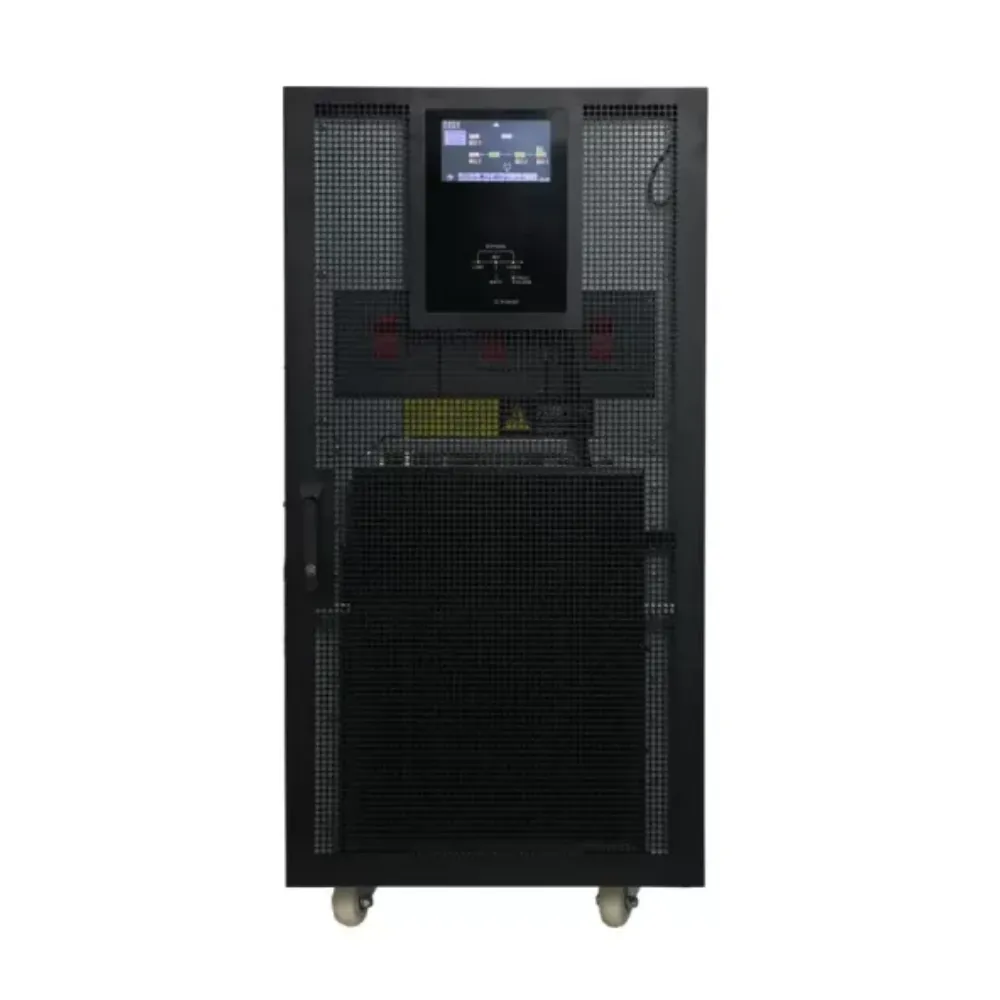
The modular UPS commissioning checklist becomes useful after a failure only if it preserves the evidence chain. Keep the first result, describe the fix, and link the retest to the same requirement. Do not erase the failed test record when you update the summary.
Minimum test record fields
| Field | What to enter |
|---|---|
| Identity | Project, test ID, date, location, and equipment tag |
| Configuration | Frame, module slots and serials, firmware, settings, drawing revision |
| Method | Approved script, starting mode, load bank setup, and safety release |
| Pass criterion | Required value or state, units, source document, and revision |
| Measurement | Actual values, conditions, instruments, timestamps, and raw file references |
| Disposition | Pass, fail, deferred, or not applicable, with reason |
| Closure | Defect ID, correction, affected checks, retest ID, approver, and date |
Copy these fields into the modular UPS commissioning checklist and fill them for each required scenario. Give the test record a fixed ID so later reports can cite it. Keep raw files with units, channel names, and clock details. Link each file to the equipment and test record.
Worked example: an alarm fails at the destination
Hypothetical scenario: Avery witnesses a site alarm check. On November 18, 2026, Avery reviews test S06-01 against point list PL-04. An approved test input raises the right local alarm. The site screen, though, labels it as UPS-B instead of UPS-A.
Avery records a failure and opens defect D-07.
The controls specialist fixes the point mapping. Avery witnesses the retest and related clear/reset checks. The owner signs closure once the records show the right alarm location and equipment tag.
This teaching example uses assumed names, dates, and IDs. It describes no Banatton customer or measured product result.
| Record | Example entry |
|---|---|
| Requirement | PL-04: the approved alarm input must identify UPS-A at the agreed destination |
| Original result | S06-01: local alarm correct; destination identifies UPS-B; FAIL |
| Correction | D-07: mapping revised from MAP-02 to MAP-03; change approved |
| Retest evidence | S06-01-R1: event and clear/reset traces show UPS-A; raw files EV-18 and EV-19 retained |
| Related checks | Approved scope: S06-02 and S06-03 check the two adjacent points; both pass; event/clear traces EV-20 and EV-21 retained |
| Closure | Witness signs the retest and related checks; owner approves D-07 closure against MAP-03 with S06-01-R1, S06-02, and S06-03 complete |
The modular UPS commissioning checklist and test plan should define the checks needed after a change. One label change may affect one point. A change to shared control logic can affect other functions. Name the person who approves the retest scope and record the reason.
Questions to settle before the witness test
Does passing FAT remove the need for SAT?
No. FAT proves the agreed factory scope, while SAT addresses the installed system. Transport, reassembly, site wiring, actual batteries, and monitoring can change what needs verification. The modular UPS commissioning checklist should carry every factory exclusion into an assigned site check.
Can a load bank prove the whole system will work?
A load bank can prove defined behaviour within the boundary set by the test plan. The type of load and point of connection limit what it can prove. Match the equipment to the requirement in the test plan, and keep actual plant or application checks where they are needed.
Who is allowed to commission the UPS?
Use qualified, authorized personnel who meet the manufacturer’s and site’s requirements for the work. Confirm responsibility and any warranty conditions for the exact product and region. A modular UPS commissioning checklist is a witness aid; it grants no authority to switch, isolate, or alter protection.
What happens when a check fails or cannot run?
Follow the test plan: retain the failed result or mark the check deferred with a reason. Name the owner, required fix, close-out condition, and person who can approve the result. The test record must show whether a check passed or a named person accepted a stated limit. Never convert missing evidence into a pass to clear a date.
Close the checklist before handover
Close the modular UPS commissioning checklist against the setup left in service. Match the module register, settings, drawings, battery records, and operating documents to that final state. Check that each required test record has a result. Each open item needs an agreed next step or a signed decision.
The handover pack should contain the approved test plan, each completed test record, raw files, calibration evidence, and linked defect closures. Include operating procedures, training records, and the agreed support and warranty documents. Check that the site team can find them and knows the limits on use.
Keep deferred integrated tests visible, with owners and completion conditions. Approval to run within a stated limit does not prove a check that has not been done. Put that limit in the handover form so the next shift knows what still needs proof.
To discuss a proposed system, request a quote from Banatton with your load, model, battery arrangement, and acceptance requirements. Use the modular UPS commissioning checklist to ask for evidence that matches the equipment and duty you intend to accept.