 10Dec

Choosing a modular UPS for a data center or industrial facility involves more than matching the rated capacity to the current load. Buyers also need to consider redundancy, future expansion, maintenance access, operating conditions, and compatibility with the existing power distribution system.
For businesses sourcing equipment through OEM or ODM arrangements, these decisions affect both system configuration and project requirements. Understanding them before requesting a quotation helps procurement teams communicate more clearly with suppliers and evaluate whether a proposed solution fits the application.
9FAQs
1. Start with Load Requirements and Capacity Planning
The first step in selecting a modular UPS is to identify the equipment that requires uninterrupted power. Data center servers, industrial automation equipment, monitoring systems, and other critical loads may have different power characteristics and operating requirements.
Start by listing the rated power of each critical load. For motor-driven equipment, also account for starting current, as the initial demand may exceed normal operating requirements.
Next, group the loads according to their characteristics. Linear and non-linear loads can place different demands on a UPS, so understanding the load composition helps when evaluating capacity and output performance.
When the active power and power factor are known, apparent power can be estimated using the following formula:
Apparent power (kVA) = Active power (kW) ÷ Power factor (PF)
For example, a load of 80 kW at a power factor of 0.8 requires an apparent power of 100 kVA before additional capacity margins are considered.
The final selection should also account for load fluctuations and planned expansion. If the facility expects its load to increase, choosing a configuration that supports additional power modules can help accommodate future demand without replacing the entire UPS system.
2. Choose a Redundancy Architecture That Matches the Risk
Redundancy determines how a UPS system responds when a power module or another component fails. The appropriate configuration depends on the criticality of the load, the acceptable interruption risk, and the available power infrastructure.
N+1 redundancy
An N+1 configuration includes one additional module beyond the number required to support the design load. If one module fails, the remaining modules can continue supporting the load, provided sufficient capacity remains available.
This arrangement can be suitable for applications that require high power availability while operating within a single cabinet. However, the system must be sized so that the remaining modules can carry the actual load after a failure. Reserving an empty module slot can also provide room for future expansion or replacement.
2N architecture
A 2N architecture uses two independent power paths, each designed to support the required load. It may be considered for larger installations or applications that need greater separation between power paths.
The downstream equipment must be compatible with the chosen arrangement. For example, equipment with dual power inputs can connect to separate power paths. Where equipment has only one power input, an appropriate transfer arrangement may be required, introducing additional considerations for switching and system reliability.
Check the upstream power supply
Module-level redundancy alone does not guarantee that the entire power system is protected against failure.
If all modules depend on the same upstream input circuit, a failed breaker or damaged input cable may interrupt the complete system. The bypass supply also needs consideration because a shared source can introduce a common point of failure.
When reviewing a proposed architecture, check whether the UPS supports separate main and bypass inputs and whether the site can supply them from appropriately independent distribution equipment. Redundancy should be evaluated across the complete power path, not just within the UPS cabinet.
3. Evaluate Installation, Cooling, and Operating Conditions
A UPS may have sufficient nominal capacity but still perform poorly if the installation environment is unsuitable. Temperature, airflow, access for maintenance, and cable routing all deserve attention during the selection process.
Operating temperature and ventilation
Check the specified operating temperature range of the selected equipment and confirm the actual conditions in the installation room. Higher ambient temperatures can reduce the available output capacity of power electronics, depending on the equipment’s design and derating characteristics.
Cooling arrangements matter as well. Modular UPS cabinets commonly use forced-air cooling, so the required airflow path must remain unobstructed. Positioning a cabinet too close to a wall or blocking its exhaust area can restrict heat removal and increase internal temperatures.
Before finalizing the installation, verify the manufacturer’s clearance requirements, airflow direction, and any temperature-related capacity limitations. If the room frequently operates at elevated temperatures, the equipment’s published derating data should be used to determine the usable capacity.
Cabling and maintenance access
Cable entry affects both installation planning and the layout of the electrical room. Confirm whether the proposed system supports top or bottom cabling and whether additional input or distribution cabinets are required.
Maintenance access is equally important. A design that allows technicians to reach replaceable components from the front can simplify servicing in installations where rear access is restricted. The maintenance procedure should also clarify whether a module can be replaced while the remaining system continues to support the load.
These details are particularly relevant to data centers and production facilities, where maintenance work must be coordinated with operational requirements.
4. Assess Expansion and Long-Term Maintenance
One reason businesses consider modular UPS systems is the ability to adjust capacity as demand changes. Instead of replacing an entire system when additional capacity is required, a compatible modular design may allow extra power modules to be installed within the available configuration.
However, expansion capability should be verified rather than assumed. Buyers should check the maximum number of supported modules, the capacity of each module, the cabinet’s total rated capacity, and the availability of suitable module slots.
Battery arrangements also deserve attention. Confirm the supported battery voltage configuration and whether the system can accommodate the existing battery arrangement when upgrading a legacy installation. Battery compatibility should be established from the equipment specifications rather than inferred from the UPS’s modular design.
For maintenance planning, review the availability of replaceable modules, access requirements, and the supplier’s technical documentation. A clear understanding of these factors helps teams plan servicing and future capacity changes more effectively.
5. What to Check When Selecting a Modular UPS Manufacturer or Supplier
When selecting a modular UPS manufacturer or supplier, B2B buyers should consider more than rated capacity and product price, especially for OEM and ODM projects. The supplier’s ability to support the required configuration, understand application-specific requirements, and maintain consistent quality throughout production can all affect the final result.
Before placing an order, buyers should clarify the customization scope, including power module configuration, battery arrangements, electrical specifications, and any special requirements for installation or system integration. It is also important to understand how technical changes will be reviewed and confirmed before production.
Quality control is another key consideration. Buyers should ask about inspection and testing procedures, the verification of agreed specifications, and the availability of technical documentation for the finished equipment. Relevant quality management certifications and traceable inspection records can help buyers understand how product quality is managed throughout the production process.
Finally, confirm production capacity, expected lead times, packaging requirements, and delivery arrangements. Clear agreements on technical specifications, quality expectations, and order details help reduce misunderstandings and support smoother cooperation between buyers and Modular UPS suppliers.
6. OEM and ODM Considerations for Modular UPS Projects
OEM and ODM arrangements can support projects that require a particular product configuration or a defined scope of customization. However, the two parties should agree on the technical requirements before production details are finalized.
For OEM projects, buyers should clarify the agreed product specification, branding requirements, packaging, and documentation. Any changes to the standard configuration should be reviewed to determine whether they affect the electrical design, installation requirements, or product validation.
For ODM projects, the discussion may involve a broader scope of product development or design adaptation. Buyers should identify the required functions, rated capacity, operating environment, interface requirements, and applicable project constraints before discussing the proposed design.
In both cases, a written specification helps prevent misunderstandings. It should identify the required capacity range, input and output conditions, redundancy arrangement, battery configuration, installation constraints, and expansion expectations. Commercial details such as order quantity, production schedule, and packaging should be confirmed separately.
The objective is not simply to obtain a customized product, but to establish a clear agreement on what will be supplied and how the equipment will fit the intended application.
7. BT9300-M Modular UPS for Data Center and Industrial Applications
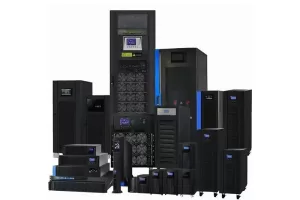
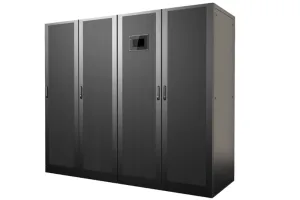
For projects requiring three-phase online power protection and modular capacity, Banatton offers the BT9300-M modular UPS series. The product range is designed for applications including data centers, industrial automation, factory production equipment, control rooms, monitoring systems, and other critical equipment.
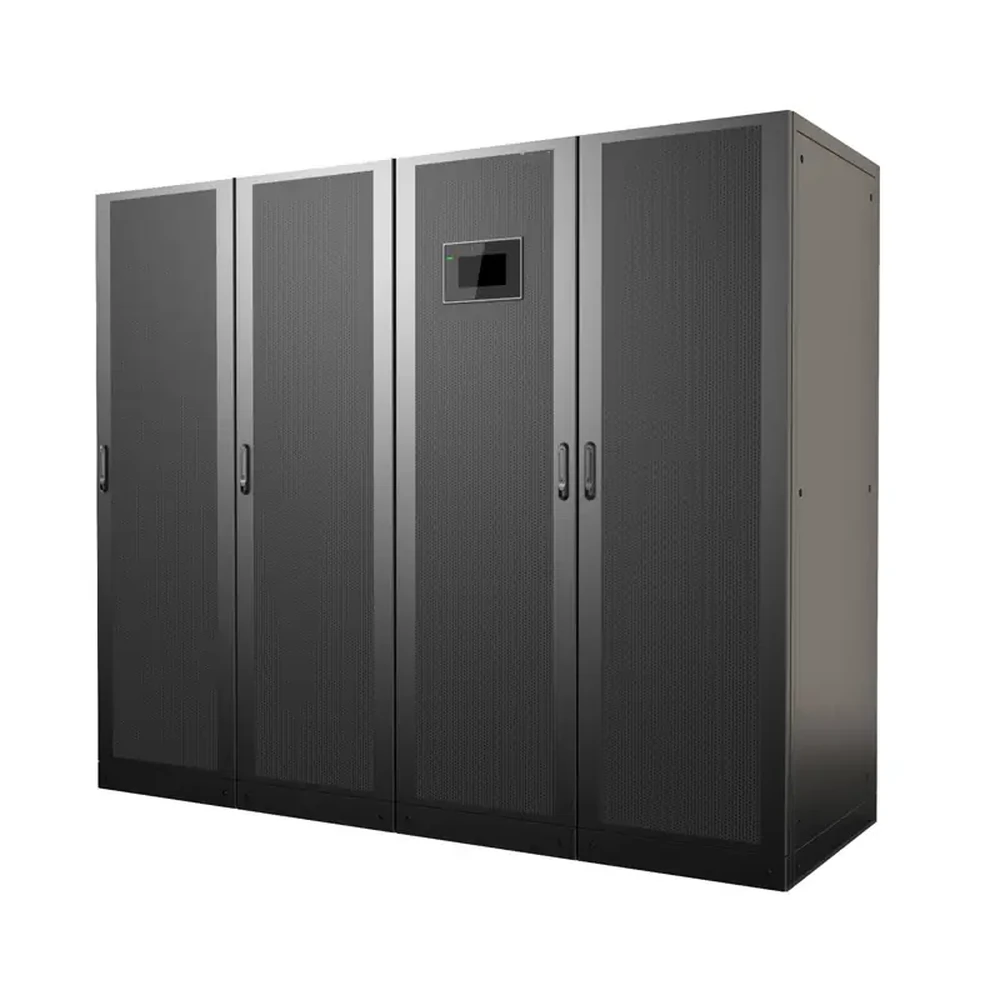
The series provides cabinet capacities ranging from 20 kVA to 300 kVA, depending on the configuration. Its three-phase input and three-phase output design, pure sine wave output, and 0 ms transfer time are specified for applications requiring continuous power protection.
Key product features include:
- Modular capacity: Individual power modules are available in 20 kVA, 25 kVA, and 30 kVA ratings, depending on the configuration. The modular structure supports capacity planning around the selected cabinet.
- Online power protection: The online UPS design provides a specified transfer time of 0 ms.
- Energy efficiency: The product information specifies efficiency above 96% at 50%–75% rated load and above 95% at 25% rated load.
- Input power quality: The listed specifications include an input power factor above 0.99 and input current harmonic distortion below 3%.
- Installation flexibility: Top or bottom cabling is supported, and the product is designed for full front access to simplify maintenance.
- Module replacement and expansion: Hot-swappable power modules support servicing and capacity upgrades, subject to the selected configuration and operating requirements.
- Parallel operation: The product information specifies support for parallel operation of up to four UPS units and online capacity expansion without a centralized bypass cabinet.
- Protection functions: Listed protections include short-circuit, overvoltage, and reverse-connection protection.
The series also includes intelligent battery management and flexible battery-cell configuration options. These features can be relevant when planning battery maintenance or modifying an existing power system, although compatibility must be checked against the specific installation.
Banatton supports OEM and ODM projects, with a monthly supply capacity of 5,000 pieces. For customized projects, please confirm the model, cabinet capacity, module arrangement, battery requirements, and customization details with our team before placing an order.
Conclusion
Selecting a modular UPS requires a clear understanding of load demand, redundancy, installation conditions, expansion plans, and maintenance requirements. For OEM and ODM projects, these technical decisions should be documented before customization and production arrangements are agreed upon.
By evaluating the complete power system and comparing suppliers against consistent specifications, B2B buyers can make more informed decisions about capacity, configuration, and long-term operational needs.
Banatton’s BT9300-M series provides modular three phase online UPS options for projects ranging from 20 kVA to 300 kVA. Contact our team to discuss your project requirements and confirm a suitable configuration for your application.
FAQs
1. What is the difference between OEM and ODM for modular UPS systems?
OEM focuses on supplying products based on agreed specifications, while ODM may involve broader product design or customization to meet specific project requirements.
2. How do I choose the right capacity for a modular UPS?
Calculate the power demand of critical loads, consider the power factor and load fluctuations, and allow for future expansion. The final capacity should also account for the required redundancy.
3. What should I confirm before ordering a modular UPS from a supplier?
Confirm the cabinet capacity, power module configuration, battery requirements, electrical specifications, customization scope, production lead time, and quality inspection procedures.