What Size Rack Mount UPS Do You Need for a Networking Room?
A networking room may contain switches, routers, servers, storage devices, communication equipment, and other critical IT hardware. Even a short power interruption can disrupt network availability and affect connected systems. For this reason, choosing the right Rack Mount UPS is an important part of networking room power planning.
However, UPS sizing should not be based only on the capacity shown on the product label. The actual equipment load, required capacity reserve, battery configuration, input and output requirements, and future expansion plans should all be considered.
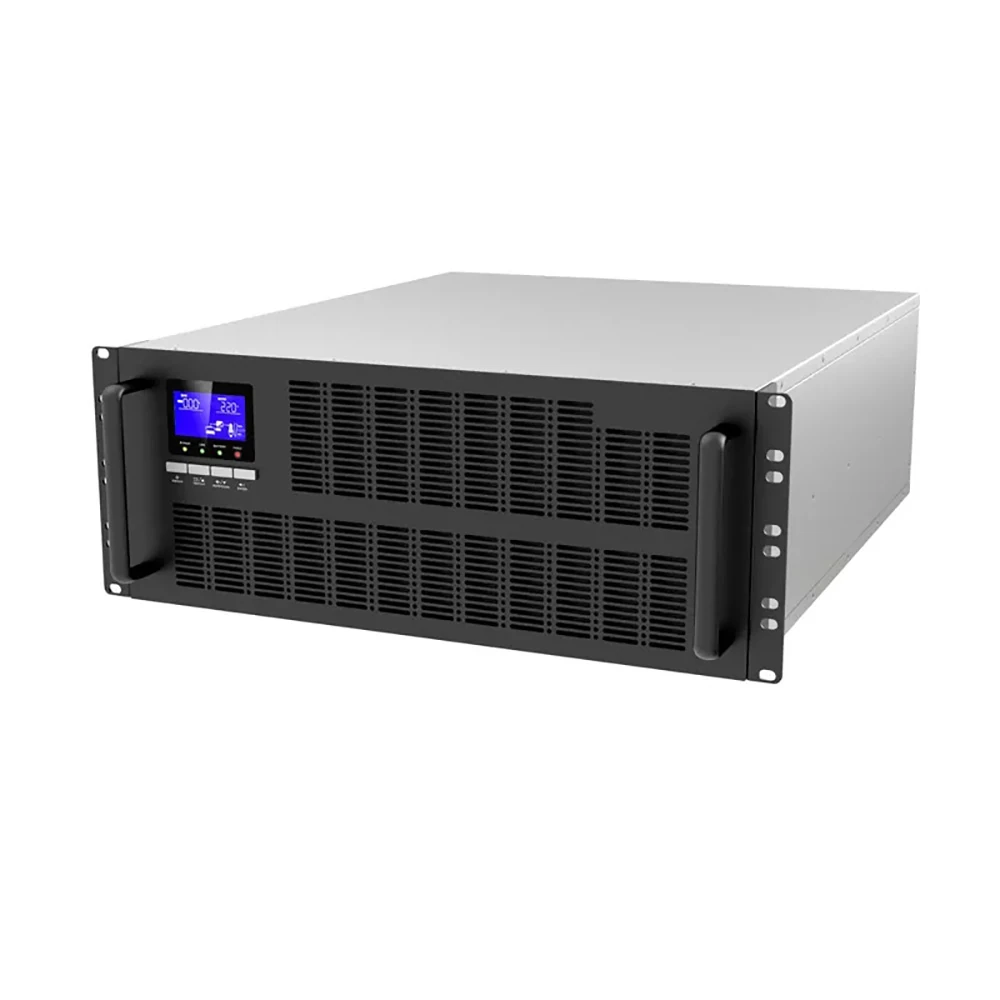
This guide explains how to estimate the required UPS capacity and introduces the BT900-RT series as an option for networking rooms and other IT infrastructure applications.
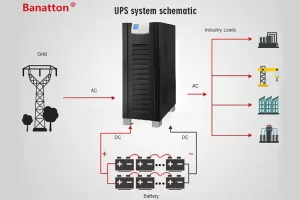
The purpose of a UPS is not simply to provide backup power. It also helps protect connected equipment from power-related interruptions and provides continuous power during a utility failure.
An undersized UPS may operate close to its maximum capacity, leaving little room for additional equipment or unexpected load increases. On the other hand, selecting a much larger UPS than necessary can increase equipment and installation costs without providing a practical benefit for the current load.
For networking rooms, the goal is to select a UPS with enough capacity for the connected equipment while maintaining a reasonable reserve for operational flexibility and future expansion.
How to Calculate the Required UPS Capacity
Step 1: List the Equipment Connected to the UPS
Start by identifying all equipment that will receive UPS protection. Depending on the networking room, this may include network switches, routers, servers, storage equipment, and other IT devices.
Check the rated power consumption of each device rather than estimating the load from the number of devices alone.
Step 2: Calculate the Total Power Load
Add up the power consumption of all equipment that will be connected to the UPS.
For example, if the total power consumption of the protected equipment is 6,000 W, the selected UPS should have a rated power of more than 6,000 W.
It is also important to check the UPS capacity in VA, because VA and W are related but represent different values. The relationship can be expressed as:
W = VA × Power Factor
For example, the BT900-RT series has a power factor of 0.9. Its 10 kVA model is rated at 9,000 W, while the 15 kVA model is rated at 13,500 W and the 20 kVA model is rated at 18,000 W.
Therefore, when selecting a UPS, buyers should check both the VA capacity and W rating to make sure the UPS can support the actual equipment load.
Step 3: Add a Suitable Capacity Reserve
Networking rooms often change over time. Additional switches, servers, or other equipment may be added as the network grows.
A reasonable capacity reserve can help prevent the UPS from operating continuously at its maximum rated load. The exact reserve should be determined according to the equipment plan and expected expansion rather than applying the same percentage to every project.
What Size Rack Mount UPS Do You Need?
There is no single UPS size suitable for every networking room. The correct capacity depends on the actual connected load and the expected growth of the system.
1–3 kVA UPS for Small Networking Rooms
Small networking rooms with limited IT equipment generally have lower power requirements. A UPS in the lower capacity range may be appropriate when the calculated load is relatively small.
The key consideration is still the actual load rather than the physical size of the room.
5–10 kVA UPS for Medium Networking Rooms
As the number of switches, servers, storage devices, and other IT equipment increases, a higher-capacity UPS may be required.
A 10 kVA class UPS can provide up to 9,000 W in the BT9010S(H)-R-31 model, making this capacity suitable for applications where the calculated load falls within its rated range and an appropriate capacity reserve is available.
10–20 kVA UPS for Higher-Density IT Equipment
Networking rooms with higher-density equipment may require a 10–20 kVA solution.
The BT900-RT series includes 15 kVA and 20 kVA models. The BT9015S(H)-R-31 is rated at 15,000 VA / 13,500 W, while the BT9020S(H)-R-31 is rated at 20,000 VA / 18,000 W.
20–30 kVA UPS for Large or Expanding Networking Loads
For larger networking environments or installations with significant expansion requirements, a higher-capacity UPS may be considered.
The BT900-RT series is listed with capacity options from 1 kVA to 30 kVA. The specific model should be selected according to the actual power requirement, electrical configuration, and battery requirements of the project.
Rack Mount UPS vs. Online UPS for Networking Equipment
The terms Rack Mount UPS and Online UPS describe different aspects of a UPS.
“Rack mount” primarily refers to the equipment’s form factor and its suitability for rack-based IT infrastructure. “Online UPS” describes the UPS operating technology.
For networking rooms where continuous and stable power is important, an online UPS can provide zero transfer time between AC operation and battery operation.
The BT900-RT series is an online UPS using a pure sine wave output. Its specifications also list zero transfer time from AC mode to battery mode and zero transfer time from inverter to bypass.
This makes the online UPS configuration a practical choice for applications that require continuous power protection for critical IT equipment.
BT900-RT Online Rack Mount UPS for Networking Rooms
The BT900-RT series is an online UPS Power Supply designed for applications requiring continuous power protection. The supplied product information lists capacity options from 1 kVA to 30 kVA and supports OEM/ODM requirements.
Its main features include DSP control, active input power factor correction, three-level inverter technology, a wide input voltage range, generator compatibility, cold start, ECO mode, and 50/60 Hz automatic frequency sensing.
The system also supports frequency conversion, with 50 Hz input / 60 Hz output or 60 Hz input / 50 Hz output operation.
Flexible Capacity and Electrical Configuration
The supplied specifications include 10 kVA, 15 kVA, and 20 kVA models. The listed models use a three-phase input and single-phase output configuration.
The input voltage is specified as 3 × 400 VAC (3Ph+N). Depending on the load level, the three-phase input voltage range is listed as 190–520 VAC at 50% load and 305–478 VAC at 100% load.
The output voltage options are 208/220/230/240 VAC.
Pure Sine Wave Output and Zero Transfer Time
The BT900-RT series uses pure sine wave output in battery mode. Its specifications also state zero transfer time for AC mode to battery mode and inverter to bypass.
The output voltage regulation in battery mode is specified as ±1%, while frequency in battery mode is specified as 50 Hz ±0.1 Hz or 60 Hz ±0.1 Hz.
These characteristics are relevant when the UPS is being evaluated for IT equipment and other applications requiring stable power.
Battery Configuration
The standard battery configuration varies according to the UPS capacity.
The 10 kVA model uses a standard battery configuration of 20 pieces, with 18–20 pieces adjustable. The 15 kVA model uses 20 pieces × 2 strings, also with 18–20 pieces adjustable.
The product information also lists long-run models that can use external batteries according to the required battery capacity.
The typical recharge time for the specified standard configuration is 9 hours to recover to 90% capacity. The maximum charging current is listed as 1 A for the 10 kVA model and 2 A for the 15 kVA model, while the long-run configuration supports a maximum charging current of 4 A.
Monitoring and Communication
For networking room applications, monitoring can be an important part of UPS management.
The BT900-RT series includes RS-232 as standard, with USB, MODBUS, RS485, SNMP, and AS400 options available.
The LCD display provides information including UPS status, load level, battery level, input/output voltage, discharge timer, and fault conditions. An optional SNMP function supports power management through an SNMP manager and web browser.
Frequently Asked Questions About Rack Mount UPS
How do rack-mount UPS systems provide reliable power for critical applications?
Rack-mount UPS systems provide backup power during utility interruptions and help maintain continuous power for connected equipment. When selecting a UPS, buyers should consider the required capacity, W rating, battery configuration, electrical requirements, and monitoring capabilities to ensure the UPS meets the needs of the application.
Why is it important to choose the right UPS capacity?
Choosing the right UPS capacity helps ensure that the system can support the actual power requirements of connected equipment without operating continuously at its maximum rated load. Buyers should calculate the total connected load, compare the UPS’s VA and W ratings, and consider future expansion when selecting the appropriate capacity.
Why is the physical size of a rack-mount UPS important?
The physical dimensions of a rack-mount UPS should be compatible with the available rack or network cabinet space. Buyers should check the UPS dimensions and rack requirements before installation to ensure that the equipment can be properly accommodated without creating space or installation issues.
How do rack-mounted UPS systems provide reliable power for critical applications?
Rack-mounted UPS systems are widely used in telecommunications, power, public security, fire protection, broadcasting, finance, military, internet, and data center applications. They can support equipment such as communication base stations, integrated distribution boxes, and other critical IT infrastructure. In data center environments, a Data CentreUPS can provide energy storage and backup power to help maintain power supply to critical loads during an interruption.
Conclusion
Choosing the right Rack Mount UPS for a networking room starts with the actual power requirement. Buyers should calculate the connected load, compare both VA and W ratings, allow for reasonable capacity growth, and confirm that the UPS matches the site’s electrical configuration.
For applications requiring online power protection, the BT900-RT series offers capacity options from 1 kVA to 30 kVA, with the supplied models covering 10 kVA, 15 kVA, and 20 kVA configurations. Features such as pure sine wave output, zero transfer time, battery options, and communication interfaces make the series applicable to networking rooms, data processing centers, servers, and other IT infrastructure applications.For B2B buyers, the final selection should be based on the project’s measured load, electrical requirements, battery configuration, and monitoring needs rather than capacity alone. Need help selecting the right UPS capacity for your networking room? Contact our team to discuss your power requirements and available UPS options.
An uninterruptible power supply (UPS) is an electrical device that provides emergency power to loads when the main power source (usually utility power) fails. When...
Today, businesses rely heavily on uninterruptible power to protect their critical infrastructure. To meet this demand, modular uninterruptible power supply (UPS) systems are becoming increasingly...
An industrial UPS is a device that provides temporary power to large electrical equipment during power outages. Because it uses three-phase power, which is common...
The supply of electricity has brought us great convenience and provided energy security for social development, people’s livelihoods, and industrial growth. However, power supply has...