 10Dec
10Dec

Introduction
In today’s digitized and automated industrial environment, a stable power supply is crucial for data centers, hospitals, manufacturing plants, and other critical facilities. Even brief power disturbances can corrupt critical data, destroy sensitive equipment, and incur exorbitant costs due to unplanned production halts. Industrial-grade UPS (Uninterruptible Power Supply) provides continuous, clean, and reliable power protection for critical systems.However, choosing the right UPS is not only about capacity but also depends on load requirements, application environment, scalability, efficiency, and battery performance. This guide explains how to select a suitable 10KVA–200KVA Industrial UPS for different industrial applications.
What Is an Industrial UPS System
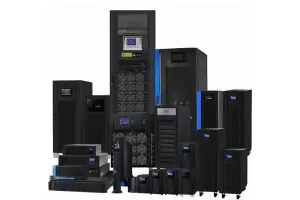
An Industrial UPS system provides continuous and stable power for critical equipment in demanding environments. It protects connected loads from voltage fluctuations, frequency variations, and power interruptions. Most industrial UPS systems use online double-conversion technology with features such as intelligent battery management, overload protection, and parallel expansion, making them suitable for applications including data centers, hospitals, manufacturing plants, and other critical industries.
How to Choose the Right Industrial UPS Capacity
10KVA–30KVA UPS for Small Industrial Systems
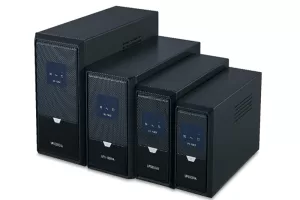
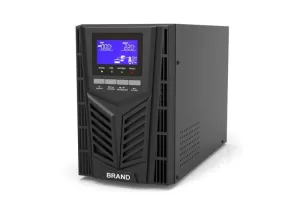
UPS systems in the 10KVA–30KVA range are suitable for small industrial applications that require stable power protection. They are commonly used for industrial computers, PLC control systems, communication equipment, monitoring systems, and small server rooms.
Designed for smaller industrial loads, these UPS systems provide dependable power protection for applications such as factory automation systems, laboratories, and control rooms.
40KVA–60KVA UPS for Medium-Sized Facilities
A 40KVA–60KVA is a popular choice for medium-scale industrial and commercial facilities because it provides a balance between capacity, efficiency, and investment cost. A 60kVA UPS offers reliable power protection with sufficient capacity for future expansion, making it a suitable choice for growing facilities.
80KVA–120KVA UPS for Larger Critical Applications
UPS systems in the 80KVA–120KVA range are designed for larger facilities such as enterprise data centers, medical facilities, transportation infrastructure, and industrial automation projects.
160KVA–200KVA UPS for Heavy-Duty Industrial Applications
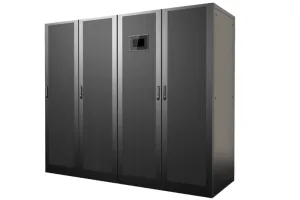
A 200kVA UPS is designed for large industrial applications such as semiconductor manufacturing, petrochemical plants, mining operations, power stations, and large data centers. These facilities usually involve heavy electrical loads and critical equipment that requires a stable and reliable power supply.
Key Factors to Consider When Selecting an Industrial UPS
Choosing an Industrial UPS involves more than selecting the right capacity. Factors such as load requirements, application environment, efficiency, and future expansion should also be considered.
Load Requirements and Future Expansion
The UPS capacity should be selected based on the actual load of connected equipment. A certain capacity margin is recommended to support future expansion and avoid replacing the system too early.
Many industrial users opt for a UPS with a slightly higher capacity to avoid the need for frequent equipment upgrades resulting from increased power demands.
Power quality is especially important for sensitive equipment such as medical devices, industrial controllers, and servers.
Industrial UPS systems should provide stable voltage, frequency regulation, and clean power output to protect sensitive equipment. Online double-conversion UPS technology is widely adopted because it continuously regulates the input power and provides a stable output to the connected load.
Battery Runtime and Management
Battery runtime is an important part of UPS selection. The required backup time depends on the application, from short shutdown support in factories to longer runtime needs in hospitals and data centers. Intelligent battery management helps monitor battery condition and extend service life.
Proper battery configuration should be determined based on:
- Required backup duration
- Load power consumption
- Battery type and quantity
- Environmental conditions
- Future expansion requirements
Redundancy and System Reliability
Reliability is important for facilities that cannot afford downtime.Many facilities employ multiple UPS units working in tandem to share the load. If one unit requires maintenance or fails, the other units can continue to provide power. Additional UPS units can also be added later when more capacity is required.
Common Applications of Industrial UPS Systems
Industrial UPS systems are widely used in applications where uninterrupted and stable power is essential. They help protect critical equipment and maintain business continuity across various industries.
Common applications include:
- Data Centers: Protect servers, storage systems, and networking equipment from power interruptions.
- Hospitals: Support medical devices, monitoring systems, and other critical healthcare equipment.
- Manufacturing: Ensure stable operation of automation systems, PLCs, and production equipment.
- Energy & Heavy Industry: Provide reliable power protection for control systems, safety equipment, and industrial facilities.
Key Features of Banatton 10KVA–200KVA Industrial UPS Solutions
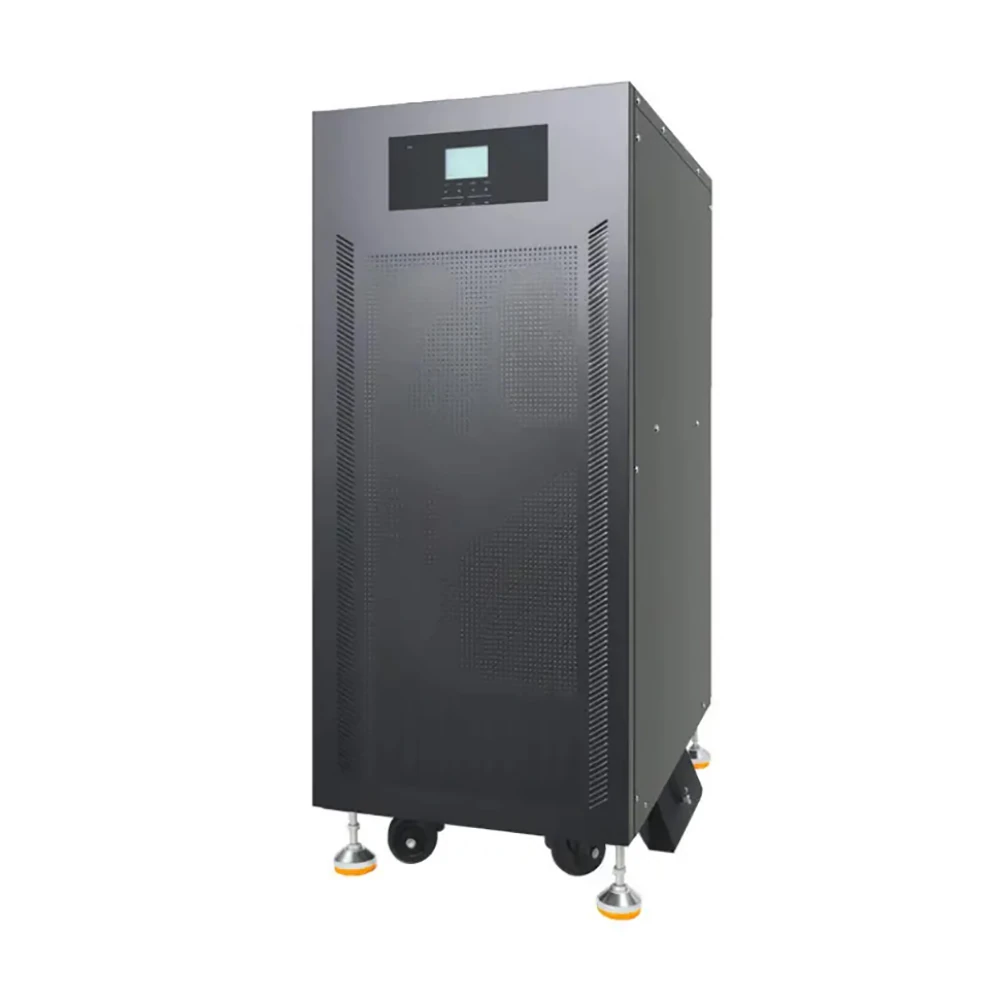
Banatton Group provides advanced power protection solutions based on years of experience in power electronics, intelligent energy, and industrial digitalization. LOur Industrial UPS systems are designed for applications that require reliable performance, flexible configuration, and long-term operational stability.
With a capacity range from 10KVA to 200KVA, Banatton Industrial UPS solutions can support different project requirements, from industrial control systems to large-scale critical infrastructure.
High-Reliability Dual Input Power Design
One important feature of Banatton Industrial UPS systems is the separated main input and bypass input design.
This configuration allows two independent power sources to connect to the UPS, improving system reliability and reducing the risk caused by a single power supply failure.
Combined with online double-conversion technology, the system provides stable voltage, frequency regulation, noise filtering, and protection against grid fluctuations.
Intelligent Battery Management Technology
Banatton UPS systems use advanced battery management technology to improve battery performance and reduce maintenance requirements.
The intelligent charging system automatically manages charging conditions through optimized current and voltage control, helping extend battery life and improve overall system efficiency.
For industrial users, better battery management means lower maintenance costs and more reliable backup performance throughout the UPS lifecycle.
Flexible Parallel Capability
For applications requiring higher capacity or increased redundancy, Banatton Industrial UPS systems support parallel operation of up to eight units with optional parallel modules.
The system does not rely on a fixed master-slave structure. If one UPS unit experiences a fault, the remaining units can continue supplying power to the connected load.
This flexible architecture makes the UPS suitable for expanding facilities where future capacity upgrades may be required.
Energy-Efficient and Environmentally Friendly Design
Energy efficiency is becoming increasingly important as businesses focus on reducing operating costs and improving sustainability.
Banatton Industrial UPS systems use intelligent fan speed control technology, automatically adjusting cooling performance according to load conditions and temperature changes.
The system also incorporates efficient rectification and inverter technologies to improve energy utilization while maintaining stable output performance.
Technical Specifications of Banatton Industrial UPS
Banatton’s Industrial UPS series covers a wide range of capacities from 10KVA to 200KVA, providing flexible solutions for different industrial and infrastructure applications.
Key specifications include:
Banatton 10KVA–200KVA Industrial UPS Technical Specifications
| Item | Specification |
| Capacity Range | 10KVA – 200KVA |
| Topology | Online Double Conversion |
| Input/Output | Three Phase 380VAC / 400VAC / 415VAC |
| Output Waveform | Pure Sine Wave |
| Efficiency | Up to 92% |
| Battery Voltage | 384VDC |
| Parallel Capability | Up to 8 units |
| Overload Capability | Up to 160% short-term overload |
| Bypass Transfer | Zero Transfer Time |
The product series includes models such as BT8010H-33, BT8040H-33, BT8060H-33, BT8120H-33, BT8160H-33, and BT8200H-33, allowing customers to select the appropriate capacity according to project requirements.
Frequently Asked Questions
What size Industrial UPS do I need?
The required UPS capacity depends on the total connected load, backup time requirements, and future expansion plans. A professional load assessment is recommended before selecting a UPS system.
Is a 60kVA UPS suitable for industrial applications?
Yes. A 60kVA UPS is commonly used in medium-sized manufacturing facilities, healthcare departments, automation systems, and communication rooms where reliable power protection is required.
When should I choose a 200kVA UPS?
A 200kVA UPS is suitable for large-scale applications such as data centers, semiconductor factories, energy facilities, and heavy industrial projects that require high-capacity and continuous power protection.
Why is online double-conversion technology important?
Online double-conversion technology provides continuous power conditioning, protects equipment from electrical disturbances, and ensures zero transfer time during power failures.
Can Industrial UPS systems be expanded in the future?
Yes. Many industry UPS support parallel operation, allowing additional units to be added as power requirements increase.
Conclusion
Choosing the right Industrial UPS system requires careful consideration of capacity, reliability, efficiency, battery performance, and future expansion needs. From smaller industrial control systems to large critical infrastructure projects, selecting the correct UPS solution helps protect equipment, reduce downtime, and maintain stable operations. Whether a facility requires a 60kVA UPS for medium-scale applications or a 200kVA UPS for large industrial operations, a reliable power protection system is essential for today’s digital and automated industries. With advanced online double-conversion technology, intelligent battery management, flexible scalability, and comprehensive quality assurance, Banatton’s 10KVA–200KVA Industrial UPS solutions provide dependable power protection for businesses worldwide.