 10Dec
10Dec

A brief power interruption can still shut down critical systems if the UPS architecture isn’t designed correctly. In environments like hospitals, manufacturing lines, and data centers, even a short transfer gap may lead to corrupted data, equipment trips, or production downtime. That’s why many facilities rely on true online 3 phase UPS systems with double-conversion technology. This guide covers the key factors to consider when selecting one.
What Is an Online 3 Phase UPS
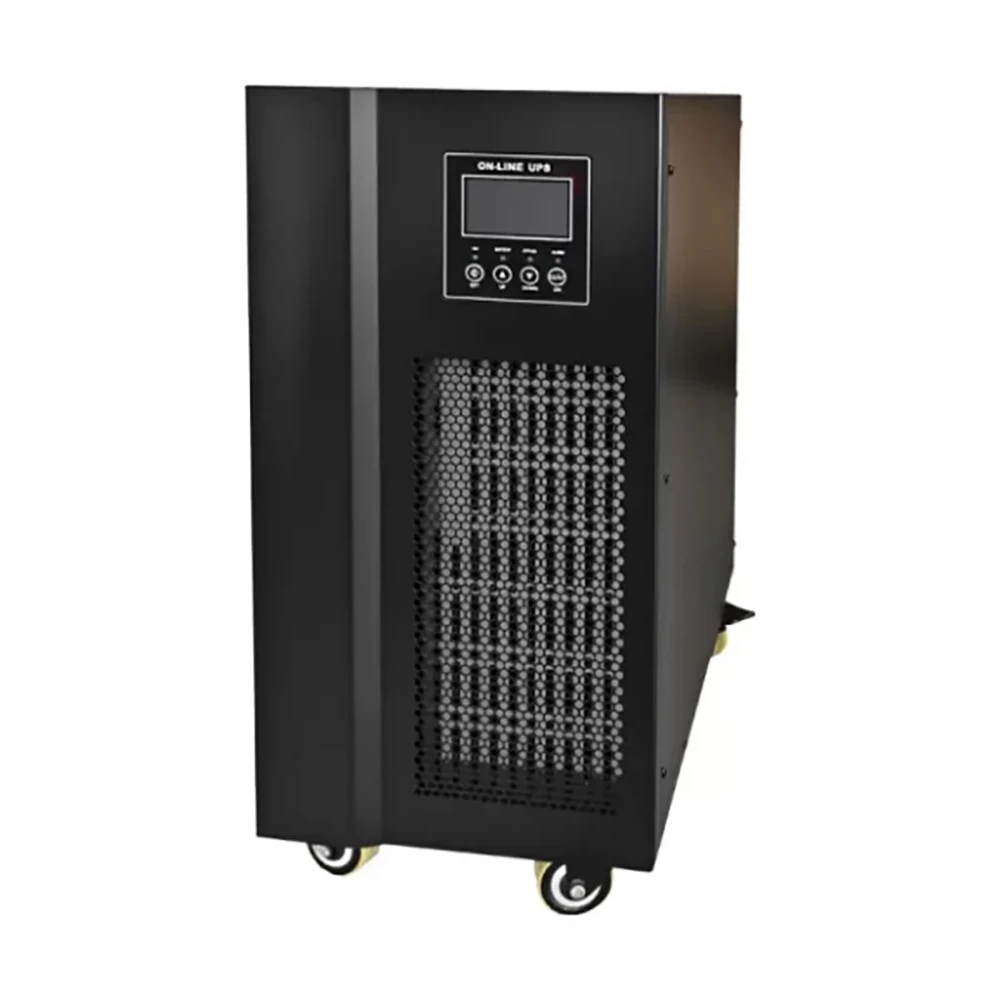
An online 3 phase UPS (Uninterruptible Power Supply) uses double-conversion technology to deliver continuous, conditioned power to critical equipment. Unlike standby or line-interactive units, an online 3 phase UPS never switches — it runs your equipment through its inverter full time. Utility power comes in, gets converted to DC, then back to AC on the output side. The result is zero transfer time and a stable pure sine wave output, even when incoming utility power is unstable.
How Double-Conversion UPS Technology Works
In online double-conversion mode, incoming AC power is first converted to DC via a rectifier/PFC stage, then reconverted back to AC by an output inverter. The batteries are connected to the DC bus, so when utility power fails, the inverter continues drawing from the batteries with no interruption—zero transfer time. This completely isolates connected equipment from input voltage and frequency fluctuations, providing the highest level of power quality available.
Common Applications for 3 Phase Online UPS Systems
Three phase UPS systems are widely used across industries. According to product specifications, typical applications include centralized power supply for medium and large data centers, industrial automation equipment and SMT placement machines, transmitter stations, control rooms, and medical equipment, factory production lines, monitoring and security systems, and mining, chemical, and petrochemical production equipment.
Available UPS Capacities: 10kVA to 200kVA
The UPS system is available in capacities from 10kVA up to 200kVA, with a 3-phase input / 3-phase output configuration. The 10kVA to 100kVA range handles most commercial and industrial installations.
Small and Medium Commercial Power Backup
For network closets, medical offices, and retail systems — 10kVA to 40kVA is usually enough for most single-site setups. These environments run mixed loads: servers, networking gear, and workstations. For them, a clean sine wave and zero transfer time matter a lot more than raw capacity.
Industrial and Data Center Applications
Manufacturing lines, server rooms, and control centers demand more. The 40kVA to 200kVA range handles high-density three-phase loads, and N+X parallel redundancy means a single unit failure doesn’t take down the whole system.
Key Features of Online 3 Phase UPS Systems
Pure Sine Wave Output and Stable Power Protection
This pure sine wave UPS delivers AC voltage regulation of ±1% in battery mode, ensuring sensitive electronics receive clean, stable power. Output voltage is configurable to 360/380/400/415 VAC, and total harmonic distortion (THD) is ≤2% on linear load and ≤4% on non-linear load.
Intelligent Battery Management and Monitoring
The system features 3-stage extendable charging design for optimized battery performance, with adjustable charging current from 1A to 48A depending on model and configuration. A 10-inch color touch LCD displays UPS status, load level, battery level, input/output voltage, discharge timer, and fault conditions. Multiple communication options are available including SNMP, USB, and RS-232.
Parallel Redundancy and System Scalability
For maximum availability, the UPS supports N+X parallel redundancy with up to 3 units in parallel (10kVA–80kVA) or 2 units (100kVA–200kVA). This configuration allows a failed unit to be removed while others continue supporting the load, ensuring zero downtime for critical operations.
How to Choose the Right 3 Phase UPS
Understanding Load Capacity and Backup Time
To size your UPS correctly, first calculate the total load (in kVA) of all equipment to be protected. As a general rule, multiply total load by 125% to determine minimum UPS capacity — this keeps the UPS from operating near its limit and allows for future expansion. For systems with motor loads, select a UPS rated at 1.5 to 2 times the motor’s rated power. Also consider required backup runtime; extended runtime may require additional external battery cabinets.
Installation Environment and Future Expansion
Check your facility’s electrical configuration: does your equipment require 3-phase input and output, or single-phase output from a 3-phase input (3/1 configuration)? Environmental factors matter too — operating temperature range is 0-40°C with humidity below 95% non-condensing, and noise levels range from under 55dB to 75dB depending on capacity. Plan for maintenance access around the unit and leave room for additional battery cabinets or parallel units if needed.
Common Mistakes When Buying an Industrial UPS
Choosing the Wrong UPS Capacity
Undersizing leads to overloads and unexpected shutdowns. Oversizing wastes capital and reduces efficiency at low loads. Always use nameplate ratings of equipment, not guesstimates, and apply the 125% overhead rule for safe operation.
Ignoring Battery Runtime and Maintenance Space
Runtime and physical access are frequently overlooked. Ensure your battery configuration delivers enough UPS backup power to complete orderly shutdowns or bridge to generator start. Also leave adequate space for battery replacement and routine service.
Why Businesses Choose Online Double-Conversion UPS Systems
Reliable Protection for Critical Equipment
The 3 stage extendable charging design optimizes battery performance and extends service life. ECO mode operation saves energy while maintaining protection, and generator compatibility ensures seamless transition during extended outages. With 12-month warranty coverage, this industrial UPS delivers dependable protection for your most valuable assets.
Reduced Downtime for Industrial Operations
The maintenance bypass function allows service without interrupting load. UPS status, load level, battery level, input/output voltage, discharge timer, and fault conditions are all visible on the LCD display, enabling proactive maintenance and rapid issue resolution.
Conclusion
Choosing the right industrial UPS comes down to three things: your load requirements, your facility constraints, and room to grow. Online 3-phase UPS with double-conversion technology delivers zero transfer time, pure sine wave output, and scalable parallel redundancy — the baseline for data centers, healthcare facilities, and industrial automation. For most commercial installations, a 20kVA to 100kVA system paired with proper battery sizing will cover you for the long haul.
FAQ
What size 3 phase UPS do I need?
Add up the nameplate ratings of everything you’re protecting, then multiply by 1.25 — that’s your minimum. Motor loads are the exception; size those at 1.5 to 2x rated power due to startup current. Then round up to the next standard capacity. If your calculation lands at 18kVA, you’re buying a 20kVA.
What’s the difference between online UPS and line-interactive UPS?
An online UPS always powers equipment through its inverter all the time, That means zero transfer time and continuous pure sine wave output — no matter how noisy or unstable the input power is. A line-interactive UPS, on the other hand, passes grid power directly to the load. It only switches to the inverter when the voltage goes out of range, so there’s a short transfer gap, and the power conditioning isn’t as thorough.
Can lithium batteries be used with online UPS systems?
Yes, and it’s worth considering seriously. Lithium batteries last significantly longer than VRLA — 10-15 years versus 3-5 years — and the built-in BMS gives you real-time health data you don’t get with lead-acid. The 3-stage extendable charging design handles the compatibility side; charging parameters can be adjusted to suit lithium configurations.