 26Nov
26Nov

In the modern industrial environment, the production process and key infrastructures are heavily dependent on continuous power supply, and the role of an UPS power system is self-evident. Uninterruptible Power supply (UPS) is a kind of equipment that provides emergency power supply to a load when the input power supply fails, which can ensure that equipment and systems keep running without interruption. Among the various types of UPS systems available, Three Phase UPS and High Frequency Online UPS stand out for their performance and suitability in industrial settings, with the UPS Inverter serving as a core component that converts DC power to AC power for seamless operation. This paper deeply discusses the basic elements, unique advantages, specifications and applications of UPS system, and answers common questions to help you understand why a high-quality UPS is an indispensable investment in key operations.
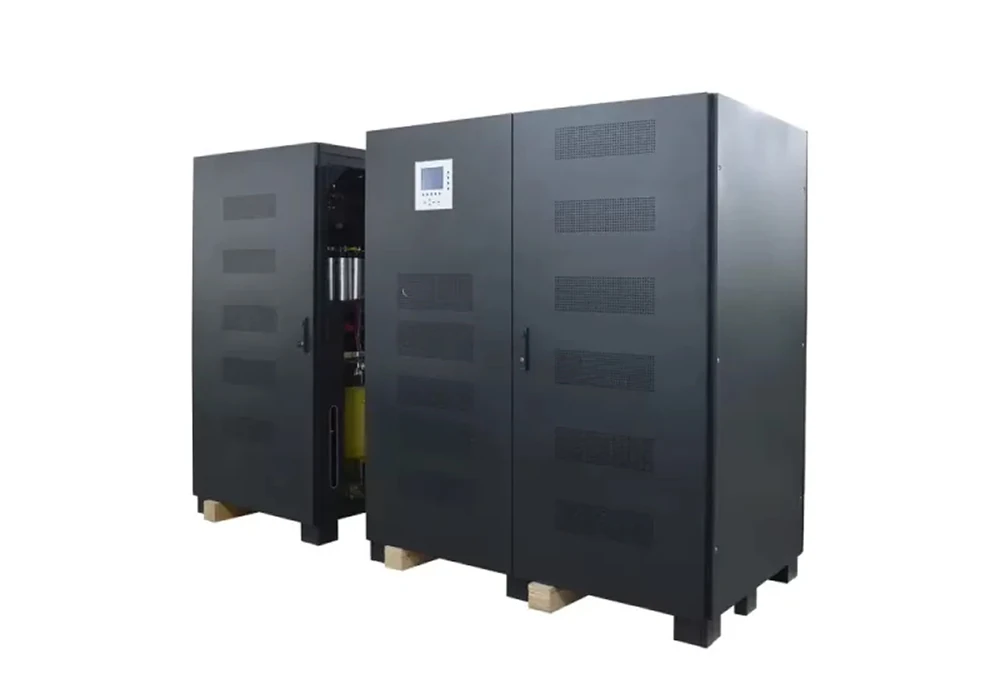
What Is an Uninterruptible Power Supply (UPS)
Uninterruptible Power supply (UPS) is a kind of electrical equipment, which can provide continuous power supply to connected equipment in case of power interruptions, voltage drop, surge or frequency fluctuations. Unlike generators that take time to start, a UPS provides instant backup power, eliminating downtime and preventing data loss, equipment damage and process failures. The key components of a UPS include a rectifier, battery pack, UPS inverter and static switch. The rectifier converts AC power supply into DC power supply, which charges the battery and supplies power to the inverter, while the inverter converts DC power supply back to AC power supply to supply power to load. The static switch ensures zero transmission time between the public power supply and UPS power supply, which is an important characteristic of sensitive equipment.
The main types of UPS systems are three-phase UPS and high-frequency online UPS
Three-phase uninterrupted power supply system
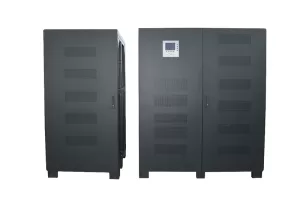
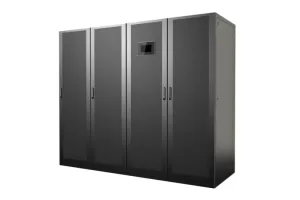
A Three Phase UPS is designed to handle three-phase AC power, which is the standard for industrial machinery, large-scale equipment, and critical infrastructures. This type of UPS is ideal choice for high-power applications, because it evenly distributes the power load in three phases, reduces the pressure of a single components and improves the overall efficiency. Three Phase UPS systems are available in both online and offline configurations, with online models offering continuous power conditioning and backup, making them suitable for mission-critical operations.
High frequency online uninterrupted power supply
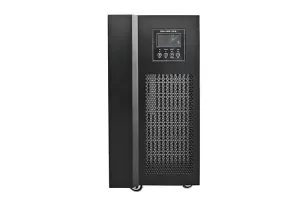
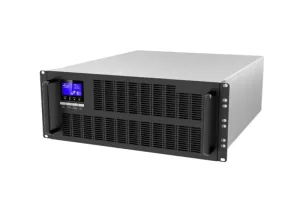
High frequency online UPS is an advanced type of online UPS, which uses high frequency switching technology to convert power. Compared with the power frequency UPS systems, the high frequency online UPS has many advantages, including higher efficiency, smaller size, lighter weight and better power quality. The high-frequency design eliminates the need for a large transformer, reducing the total floor space and weight of equipment, and makes it easier to install and maintain. In addition, the high frequency online UPS systems has a high input power factor, which can minimize harmonic distortion and reducing energy consumption, thus reducing operating costs.
Unique Advantages of High-Quality UPS Power Systems
Investing in a reliable UPS Power System, particularly a Three Phase UPS or High Frequency Online UPS, offers a range of benefits for industrial and critical applications:
- Zero Transfer Time: As a key performance, zero transfer time ensures that there is no interruption in power supply when switching from utility power to UPS backup, preventing equipment shutdowns and process disruptions. This is particularly important for sensitive equipment such as medical equipment, semiconductor manufacturing tools and industrial control systems.
- Pure sine wave output: Pure sine wave ensures compatibility with all types of electrical equipment, including sensitive electronic equipment. It eliminates harmonic distortion, provides stable power supply, prolongs the life of connected equipment and improves the operation efficiency.
- High efficiency and low power consumption: High-frequency online UPS system has high efficiency (usually more than 95%) and low power consumption, which reduces the energy costs and environmental impact. Their high input power factor also reduces the load of public power grid to the utmost extent.
- Powerful overload and short-circuit Protection: With advanced current limiting functions, including RMS voltage limiting for high overload and short-circuit conditions and peak voltage limiting for high crest factor current, UPS systems can protect UPS itself and connected devices from damage.
- Compact and Lightweight Design: High Frequency Online UPS systems are significantly smaller and lighter than line-frequency alternatives, saving space in industrial facilities and reducing installation and transportation costs.
Product Specifications of Three Phase High Frequency Online UPS
The following specifications are applicable to three-phase UPS with high frequency online UPS technology, designed for industrial and key applications:
| Performance Indicator | Specification |
| Rated Voltage | 3 x 380VAC/400VAC/415VAC (3Ph + N) |
| Acceptable Voltage Range | 165VAC ~ 280VAC (Ph-N); 285VAC ~ 485VAC (Ph-Ph) |
| Frequency | 50/60 Hz ± 10 % |
| Waveform | Pure Sinewave |
| Dynamic Recovery Time | 90% static value is three cycles |
| Current Limit | High overload, short-circuit: RMS Voltage Limit; High Crest-Factor current: Peak Voltage Limit |
| Transfer Time | Zero |
| Certification | CE Certificate; Certificate Number: M.2021.206.C67628 |
Main application scenarios of uninterrupted power supply system
In a wide range of applications where power continuity is crucial, a reliable UPS power system is essential. The following are the main application fields.
Industrial flow
In manufacturing and industrial facilities, Three Phase UPS and High Frequency Online UPS systems ensure continuous operation of manufacturing and control systems, industrial machinery, instruments and measurement equipment, process monitoring and control systems, and security and transport systems. In these cases, power interruption can lead to production delay, product defects and equipment damage, thus causing great economic losses.
Capital construction
Key infrastructures such as hospitals, airports, semiconductor facilities, water treatment plants, power plants and metallurgical enterprises rely on UPS power system to maintain basic services. For example, in hospitals, UPS systems provides power for life-saving medical equipment, patient monitoring systems and emergency lighting to ensure the safety of patients during power failure. Airports relies on UPS systems to maintain the normal operation of air traffic control systems, baggage handling equipment and safety systems. A study was published on the academic platform Typeset. Io shows that deploying high-quality High Frequency Online UPS systems can reduce unplanned downtime in critical infrastructures by up to 85% (https://typeset.io/pdf/reliability-assessment-of-the-configuration-of-dynamic-2gs35wtk.pdf).
Energy Industry
The energy industry, including gas and oil, petrochemical, and mining operations, uses Three Phase UPS systems to power drilling equipment, processing plants, and monitoring systems. These environments often have harsh conditions and high-power requirements, making robust UPS systems essential for ensuring operational safety and efficiency.
Military purpose
Military operations need to provide reliable power for communication systems, radar equipment and other important equipment. High-frequency online UPS systems is favored in military applications because of its compact size, high reliability and ability to work in extreme environment.
FAQ About UPS Power Systems
Q: What are the advantages and disadvantages of power frequency UPS and high frequency UPS? Can High Frequency Uninterruptible Power Supply Replace Industrial Frequency Uninterruptible Power Supply?
A: Line-frequency UPS: Disadvantages include low input power factor, high power consumption, low efficiency, large size, heavy weight, high price, and low reliability; Advantages include relative ease of manufacture, especially the least impact from manual labor, and relatively low requirements for consistency. High-frequency online UPS: Advantages include high input power factor, low power consumption, high efficiency, small volume, light weight and high reliability; However, it requires complicated manufacturing processes and strict consistency requirements. In most cases, high frequency online UPS can replace power frequency UPS, especially in applications where space, efficiency and reliability are primary considerations. However, line-frequency UPS may still be used in some specialized applications where manufacturing simplicity is more important than performance.
Q: What are active power and reactive power?
A: Active power refers to the power that can make the load do work, such as making a light bulb shine or making the circuit work. After doing work, it is completely transformed into heat, dissipated into the atmosphere and never comes back. Reactive power refers to the power stored in energy storage devices (equipment) and can be converted into active power. For UPS Power Systems, maintaining a balance between active and reactive power is crucial for ensuring stable operation and high efficiency, especially for Three Phase UPS systems that handle large loads.
Q: Why is a pure sine wave very important for UPS systems?
A: A pure sine wave waveform is essential because it matches the power supplied by the utility grid, ensuring compatibility with all types of electrical equipment. Non-sinewave waveforms (such as square waves or modified sine waves) can cause harmonic distortion, which can damage sensitive electronics, reduce equipment efficiency, and shorten lifespan. The pure sine wave output of our High Frequency Online UPS ensures that connected equipment operates safely and efficiently, making it suitable for even the most sensitive applications.
Q: What is the meaning of zero transmission time in UPS systems?
A: Zero transmission time means that there is no gap in power supply when switching from public power supply to UPS standby power supply. This is very important for industrial control systems, semiconductor manufacturing tools, medical equipment and other equipment that can not withstand instantaneous power failure. Delays in power supply can lead to unexpected shutdown of equipment, resulting in data loss, process failures and costly downtime. Our Three Phase UPS systems feature zero transfer time, ensuring uninterrupted operation for critical loads.
Sum up
Uninterruptible power supply is a key component to ensure the continuity of power in industrial, infrastructure, energy and military applications. Three-phase UPS and high-frequency on-line UPS systems have advanced functions and reliable performance, which provide ideal solution for high-power and critical task operations. As the core component, UPS inverter ensures stable pure sine wave power output, while zero transmission time and powerful protection function can prevent equipment from being damaged and stopped. With the right UPS Power System, businesses can minimize financial losses from power interruptions, improve operational efficiency, and ensure the safety and reliability of their critical systems. The CE-certified (Certificate Number: m.2021.206.C 67628) UPS systems discussed in this article meet the highest industry standards, making them a trustworthy choice for any organization that values power continuity.