Why do you need a reliable voltage regulator for your electrical equipment?
Key Takeaways
Voltage fluctuations is a common problem, which can damage electrical equipment, decrease efficiency and lead to unexpected shutdown. A high-quality Voltage Stabilizer, especially a Single Phase Automatic Voltage Stabilizer, is essential to protect your devices from such risks. This article will discuss what is a voltage regulator, its unique advantages, specifications and application scenarios, and answer frequently asked questions to help you make an informed decision.
What Is a voltage stabilizer?
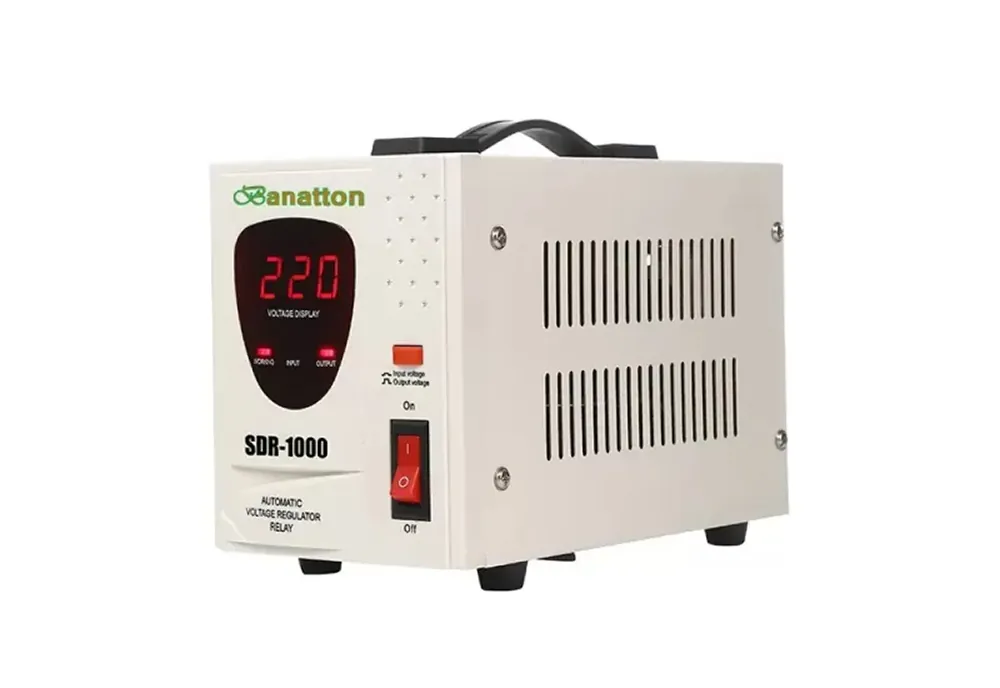
A Voltage Stabilizer is an electrical device designed to maintain a constant output voltage despite fluctuations in the input voltage. It ensures that sensitive equipment receives stable power, preventing damage from overvoltage, undervoltage, and other power anomalies. Among various types, the Single Phase Automatic Voltage Stabilizer is widely used in residential and commercial settings for its automatic adjustment capability, while the AC Voltage Regulator and 24 V DC Voltage Stabilizer cater to specific alternating current and direct current needs respectively. Avr voltage stabilizer (automatic voltage regulator stabilizer) stands out because of its precise control, making it suitable for high-demand equipment.
Why Invest in a Quality Voltage Stabilizer? Key data supports its necessity
Unstable voltage will bring great risks to electrical equipment. According to a study published in the IEEE Journal of Solid-State Circuits, during the rapid change of current, voltage fluctuations can cause a voltage ripple of 54 mV in sensitive chips, which will lead to performance degradation or permanent damage to semiconductor devices. (Source: https://ieeexplore.ieee.org/document/10321746)
Unique Advantages of Our Voltage Stabilizer Series
Wide input voltage range: Our single-phase automatic voltage regulator standard supports 140 ~ 260 v AC, and the customizable options are 100-260 v, 100-270 v or 80-260 VAC. This adaptability ensures stable operation of unstable power grid areas.
Programmed Computerized Control: Equipped with advanced programmed control technology, the Avr Voltage Stabilizer achieves precise voltage adjustment, responding quickly to input changes without manual intervention.
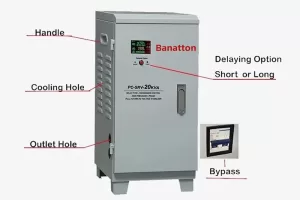
Stylish LED display screen design: The integrated LED display screen clearly shows all protection functions and working status, allowing users to monitor the AC voltage regulators in real time, which is convenient and safe.
Self-Manufactured Core Components:Key spare parts such as transformers and PCBs are produced in-house, ensuring consistent quality and reliable performance for every Voltage Stabilizer.
Comprehensive protection Functions: Both 24-volt DC voltage regulator and AC mode have overvoltage/undervoltage protection, overheating/overload protection and short circuit protection, which fully protect the connected equipment.
Double output mode option: Users can switch between voltage regulation mode and mains supply modes. In seasons with stable mains supply, the Single Phase Automatic Voltage Stabilizer can run in mains mode with zero power consumption, saving energy and costs.
High Efficiency: The efficiency of our AC voltage regulator exceeds 95%, which minimizes energy loss and reduces the long-term operation cost.
Specifications of product
Specification Project
Details
Input Voltage Range
AC 140~260V; Customizable (100-260V/100-270V/80-260VAC)
Control Technology
Programmed control computerized
Display
LED display screen (display the protection functions and status)
Our Voltage Stabilizer series is widely applicable to various scenarios, providing stable power for:
Residential & office: Computers, home appliances, office equipment, Hi-Fi equipment, and light systems. The Single Phase Automatic Voltage Stabilizer is ideal for home and small office use.
Industry and manufacturing: CNC machine tools, industrial automation equipment, color and drying equipment. The Avr Voltage Stabilizer ensures precision operation of industrial machinery.
Medical treatment and testing: Medical equipment, testing equipment and radiation equipment. The AC voltage regulator maintains stable power supply to avoid mistakes in sensitive medical and test equipment.
Security: Safe alarm systems, where the 24 V DC Voltage Stabilizer provides continuous and stable power for reliable security monitoring.
How to Use a voltage stabilizer correctly?
Check the input voltage range of your equipment and select a matching Voltage Stabilizer (e.g., 24 v DC voltage stabilizer for DC equipment).
Connect the stabilizer to the power supply and make sure that the plug is firmly inserted.
Connect the electric equipment to the output port of the stabilizer.
Turn on the voltage regulator and check the LED display to confirm normal operation and selected mode (voltage regulation or commercial power).
Regularly check the ventilation of the stabilizer, and clean up the surrounding sundries to prevent overheating.
Frequently asked questions about voltage regulators
Q: Voltage Regulator Fails to Start
A: First of all, check whether the power plug is firmly plugged in and whether the power cord is damaged. Ensure that the input voltage is within the operating range of the AC voltage regulator. If the input voltage is too low or too high, the voltage regulator may not be started. Also, check whether the internal fuse is blown or not; If so, please replace the fuse with the same specification.
Q: The output voltage is unstable
A: This may be due to an excessive load exceeding the Avr Voltage Stabilizer’s rated power. Lower the load or replace it with a regulator with higher rated power. It is also possible that the internal voltage regulating element of the regulator is out of order and needs professional maintenance or replacement.
Q: The voltage Regulator is overheated
A: Check if the Single Phase Automatic Voltage Stabilizer’s ventilation is adequate and if the ambient temperature is too high. If there is poor ventilation, please remove the debris around the regulator and ensure air circulation, thus improving heat dissipation. If the regulator itself is overloaded, reduce the load or replace it with an appropriate regulator.
Conclusion
Investing in a reliable Voltage Stabilizer is a cost-effective way to protect your electrical equipment. Whether you need a Single Phase Automatic Voltage Stabilizer for home use, an AC Voltage Regulator for industrial applications, or a 24 V DC Voltage Stabilizer for security systems, our products meet your needs with high quality and performance.
An uninterruptible power supply (UPS) is an electrical device that provides emergency power to loads when the main power source (usually utility power) fails. When...
Today, businesses rely heavily on uninterruptible power to protect their critical infrastructure. To meet this demand, modular uninterruptible power supply (UPS) systems are becoming increasingly...
An industrial UPS is a device that provides temporary power to large electrical equipment during power outages. Because it uses three-phase power, which is common...
The supply of electricity has brought us great convenience and provided energy security for social development, people’s livelihoods, and industrial growth. However, power supply has...