Top ten uninterruptible power supply (UPS) manufacturers by 2025
1.Introduce
What is an uninterruptible power supply (UPS)?
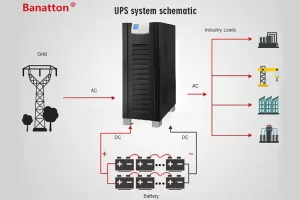
Uninterruptible Power Supply (UPS) is a kind of power protection equipment, which can provide instant, clean and stable alternating current to connected loads from its internal batteries when the main power supply fails or is abnormal. It ensures “zero interruption” power transmission, and protects key equipment from power failure, voltage sag, surge and other power quality problems.
Why is UPS system essential for industrial and commercial applications?
In today’s digital and automated world, power interruptions can lead to data loss, production interruption and sensitive equipment damage, thus leading to significant economic losses. For data centers, intelligent manufacturing, telecom base stations and medical systems, a UPS is core infrastructure to ensure business continuity and operational safety.
2025 UPS Industry Trends Overview
In 2025, the UPS industry is developing in the direction of higher efficiency, higher intelligence and higher modularization. With the surge of computing demands in data centers and edge computing, the demand for high-density and high-efficiency three-phase online UPS systems is still strong. At the same time, the adoption of lithium-ion battery, predictive maintenance driven by artificial intelligence and integration with renewable energy (such as solar photovoltaic) are key driving forces for innovation.
2. What should be looked for among UPS manufacturers
When choosing a UPS manufacturer, don’t just look at the price. Please consider the key indicators:
Core Brand Selection Metrics: Market reputation, brand history, financial stability, and industry case studies.
Product stability and reliability: Mean time between failure (MTBF) is a key indicator. In addition, check the quality and brands of core components (e.g. IGBTs).
Efficiency and output quality: Efficient (e.g. 96% or more) significantly reduces operating costs. Low total harmonic distortion (Thai) can protect sensitive loads.
Supported UPS types: Select according to the application. Online Double-Conversion UPS (especially 3phase UPS) provides the highest level of protection and is the preferred choice for data centers and industrial applications.
Full Lifecycle Service Capability: Includes pre-sales consulting, installation, commissioning, maintenance response, battery replacement, and recycling services.
Certifications and safety standards: Ensure that the products have passed international certifications such as UL, CE, IEC, ISO, etc., and meet local electrical safety standards.
Key Technical Parameters for Three-Phase Online UPS (10–100 kVA)
Input voltage range: wider range provides better adaptability.
Output power factor: usually 0.9 or 1.0, affecting the actual load capacity (kW).
System Efficiency: usually > 97% in economy mode and > 96% in online mode.
Parallelism: Supporting n+x redundancy is crucial for high availability.
3. Top ten UPS manufacturers in 2025
APC by Schneider Electric
Brand Profile: Schneider Electric’s flagship brand, a global leader of small and medium power UPS market.
Core advantages: Extremely extensive product portfolio, comprehensive global service network and high brand awareness.
Main product lines: Smart UPS, Symmetra and Galaxy series three-phase UPS.
Typical Applications: From desktop IT equipment to large data center computer room.
Eaton
Brand Profile: A U.S. power management giant with deep roots in industrial power.
Core advantages: Strong industrial power supply solutions integration ability; Sturdy and durable products.
Key product lines: 9 PX, 93 PS, high-power UPS of power expert series.
Typical Applications: Demanding industrial environment, such as factories, hospitals and transport hubs.
Vertiv
Brand Description: Separated from Emerson’s network energy business, focused on key digital infrastructure.
Core Advantage: Provide complete solutions for data centers and edge computing from power distribution to thermal management.
Key product lines: Liebert ITA 2 and Trinergy Cube UPS, emphasizing intelligent monitoring and management.
Typical Applications: Very large-scale data centers, enterprise core server room, and edge nodes.
Huawei
Brand Profile: Global leader in ICT and digital power solutions, and strong latecomer in the market.
Core advantages: Combining digital technology with power electronic technology; Modular uninterruptible power supply is leading in efficiency; A powerful intelligent management systems is provided.
Main product lines: Fusion power series modular uninterruptible power supply.
Typical Applications: Data centers and enterprises that require high efficiency, intelligence and maintainability.
Delta Electronics
Brand Profile: A world-leading provider of power and thermal management solutions with a strong ODM/OEM background.
Core advantage: Excellent R&D and power electronics manufacturing; High cost performance and excellent energy efficiency.
Main product lines: Ultron series three-phase uninterrupted power supply.
Typical Applications: Widely used in industrial automation, data centers and infrastructure.
Banatong
Brand Description: A solution provider that focuses on providing high-reliability power protection for industrial and large-scale commercial projects.
Core advantages: Deep specialization in the power range of 10–100 kva, optimized for excellent availability, voltage stability and load adaptability.
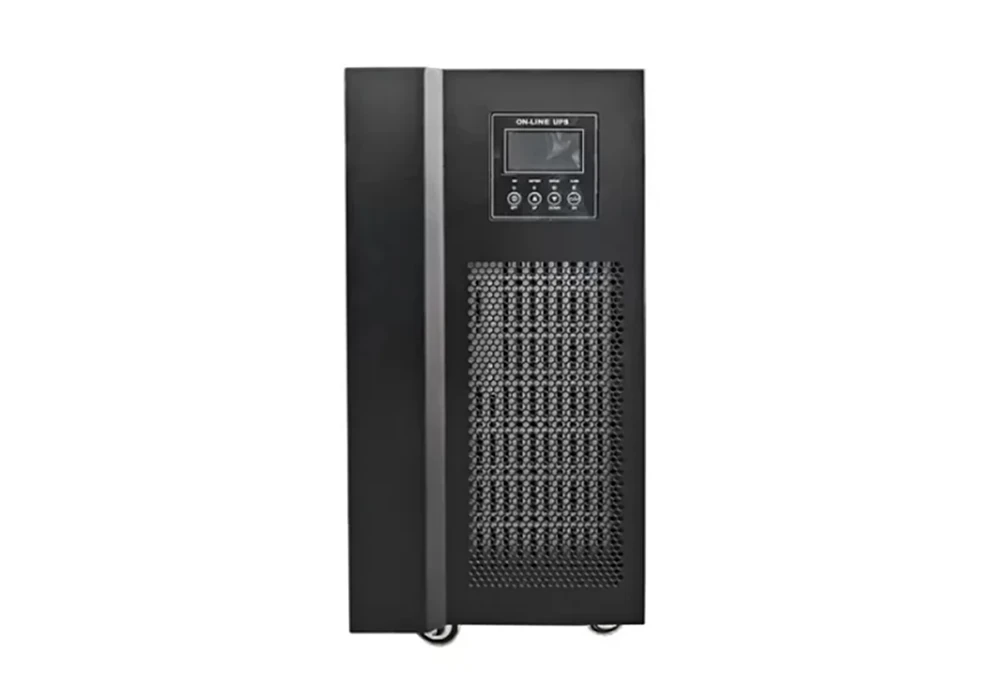
Main product lines: 10-100 kVA three-phase on-line uninterruptible power supply.
Unique Advantages:
High availability Design: Using full digital DSP control to realize the original and stable quality of output power supply.
Flexible Power supply Configuration: Provide rated capacities from 10 KVA, 20 KVA, 30 KVA to 100 KVA to meet various expansion requirements.
Strong backup support: Compatible with extended battery packs and external standby generator systems, achieving flexible backup operation time.
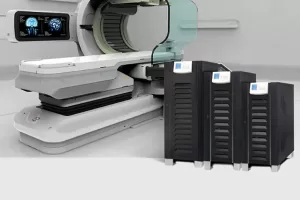
Typical Applications: High-end manufacturing production lines, telecom rooms, mid-sized data centers, medical imaging centers.
Example Model: For example, BNT-30 K series three-phase on-line uninterruptible power supply is designed for 24/7 continuous operation.
Schneider Electric
Brand Profile: A global leader in the field of digital transformation of energy management and automation, providing complete solutions from components to systems.
Core Advantage: Integrate UPS into a complete power distribution and building management ecosystem to achieve an overall energy efficiency solutions.
The main product line: Galaxy V series three-phase UPS, which is complementary to APC brand to achieve comprehensive market coverage.
Typical Applications: large data centers, key infrastructure and intelligent buildings.
Toshiba
Brand Profile: A Japanese industrial and technical group with profound professional knowledge in the fields of power electronics and motor drive.
Core advantages: The Products is famous for its high reliability and excellent energy-saving performance, especially in motor load compatibility.
Key Product Lines: G 9000 series industrial-grade UPS.
Typical Applications: Semiconductor manufacturing, precision processing, elevator and industrial motor loads protection.
Riello UPS
Brand Profile: An Italian brand, which is now part of the Swiss Socomec Group, is an important participant in the European market.
Core advantages: High product efficiency, strong competitiveness in middle and high power range (especially 40-120 kVA) and compact design.
Main product lines: Multi Power and Nucleo 3 series.
Typical Applications: Commercial buildings, small-to-medium data centers, industrial applications.
Mitsubishi Electric
Brand Profile: High-quality Japanese electromechanical brand, synonymous with precision, reliability and durability.
Core advantages: It is in a leading position in the field of high-power UPS and rotary (dynamic) UPS, and is suitable for the most demanding industrial environment.
Key product lines: 3000 UPS power.
Typical Applications: Heavy industry, petrochemical products, electric power systems, key process manufacturing.
4. Comparison between top UPS manufacturers
The following table provides a clear reference for your choice process:
5. How to Choose the UPS that is most suitable for your Needs
Evaluate your Load: Accurately calculate total load power (re-measured in kVA/kW) and type (resistance, inductance, capacitance).
Consider the environment: Evaluate the temperature, humidity, ventilation and floor load capacity of the installation space.
Planning Redundancy: For mission-critical operations, n+1 or 2 n parallel redundancy architecture is implemented to eliminate single points of failure.
Calculation of running time: Configure sufficient battery capacity according to load power and required backup time.
Assess the total Cost of ownership (TCO): Select high efficiency (for example;”titanium” class uninterruptible power supply systems; Long-term energy saving often exceeds the initial price differences.
6. Best practices for UPS installation and maintenance
Location and cooling: It is installed in a cool, dry and well-ventilated area with sufficient heat dissipation space (front/back).
Regular Inspection: Check the operation status and alarms every quarter; Professional testing is conducted every year, including battery impedance test.
Battery maintenance: Keep the best ambient temperature (20-25 C is ideal); Carry out periodic emission tests; Replace the battery actively when the service life of the battery is coming to an end (VRLA is usually 3-5 years).
Intelligent monitoring: Remote monitoring, alarm and efficiency analysis are carried out by using SNMP cards or cloud management software.
7. Typical Industries using UPS systems
Data center and edge computing: Ensure the normal operation of servers, storage devices and network devices around the clock.
Manufacturing and industrial automation: Protect programmable logic controllers, numerical control machine tools and robots to prevent production stoppages and material waste.
Telecommunications & Base Stations: Provide stable power for switches and 5 g base stations, ensuring network continuity.
Medical care and emergency response: The lifeline for operating room equipment, life support systems and emergency command centers.
8.Frequently asked Questions (FAQ)
Q1: What is the difference between online and offline UPS?
A 1: An Online UPS constantly powers the load through its inverter, providing zero transfer time and perfect power conditioning. An Offline UPS typically passes utility power directly to the load and switches to battery/inverter only during an outage, with a brief transfer break (milliseconds), offering a lower level of protection.
Q2: What size uninterruptible power supply do I need for a load of 50 kV?
A 2: It is recommended to choose an uninterruptible power supply with some expenses, such as 60-80 kva. This can adapt to the load fluctuations and future expansion, and ensure that UPS operates in its optimal efficiency range.
Q3: Can UPS systems be connected in parallel to achieve expansibility?
A 3: That’s right. Many mid-to-high-end three-phase on-line UPS systems support parallel operation to achieve redundancy (n+x) or capacity expansion, thus improving system availability or total power capacity.
Q 4: How long canUPS backup batteries last?
A 4: The standard configurations usually provides a standby time of 5-15 minutes, which is enough to shut down or start the generator safely. Long running times (e.g. A few hours) requires an expanded battery cabinets.
9. Glossary of UPS Terms
KVA (kilovolt ampere) vs. kW (kilowatt): kVA is apparent power; KW is the actual (active) power. For a UPS, the power factor (PF) determines its real load capacity. E.G. A 100 kVA UPS@PF = 0.9 can support a 90 kW load.
Online and offline UPS: Please refer to frequently asked questions.
Efficiency: the ratio of the actual output power (kW) to the actual input power (kW). Higher, the more energy-saving it is.
THD (Total Harmonic Distortion): Measure the degree to which voltage or current waveform deviates from ideal sine wave. Lower values means less disturbance to the load.
Bypass mode: an operating state in which the load is automatically transferred without interrupting the original public power supply, usually during the overload or internal fault of UPS.
10. Summary of closing case
The UPS power in 2025 is determined by the integration of technological innovation and deep industry-specific applications. Efficient, intelligent and reliable power supply systems has become the cornerstone of digital transformation of enterprises. Whether protecting key data center or an automated production line, we hope that this list of the top ten UPS manufacturers and the purchasing guide can provide a clear path for your decision-making.Be sure to consider your specific load characteristics, business continuity requirements and long-term operating costs when evaluating. Choose a partner like Banatton, which provides deep attention, reliability and good reputation in specific power ranges and industrial applications.
An uninterruptible power supply (UPS) is an electrical device that provides emergency power to loads when the main power source (usually utility power) fails. When...
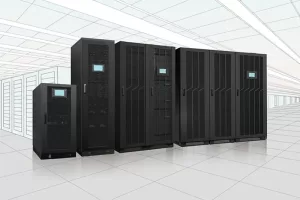
Today, businesses rely heavily on uninterruptible power to protect their critical infrastructure. To meet this demand, modular uninterruptible power supply (UPS) systems are becoming increasingly...
An industrial UPS is a device that provides temporary power to large electrical equipment during power outages. Because it uses three-phase power, which is common...
The supply of electricity has brought us great convenience and provided energy security for social development, people’s livelihoods, and industrial growth. However, power supply has...