 26Sep

A voltage stabilizer for CNC machine applications should match the machine builder’s supply limits, measured site voltage, and complete electrical load. Start with those three records. A spindle’s motor rating or a list of alarms alone cannot establish the right capacity or show that voltage regulation will solve the problem.
Computer numerical control (CNC) equipment includes drives, controls, and auxiliary loads. These parts may share an incoming supply but respond differently to a disturbance. Your goal is to keep the agreed supply within the machine’s requirements during real work, with protection and service arrangements that suit the installation.
This guide explains when regulation may help, what to record, and how to compare an offer. Use it to prepare a technical enquiry rather than select a universal kVA rating.
Do you need a voltage stabilizer for CNC machine operation?
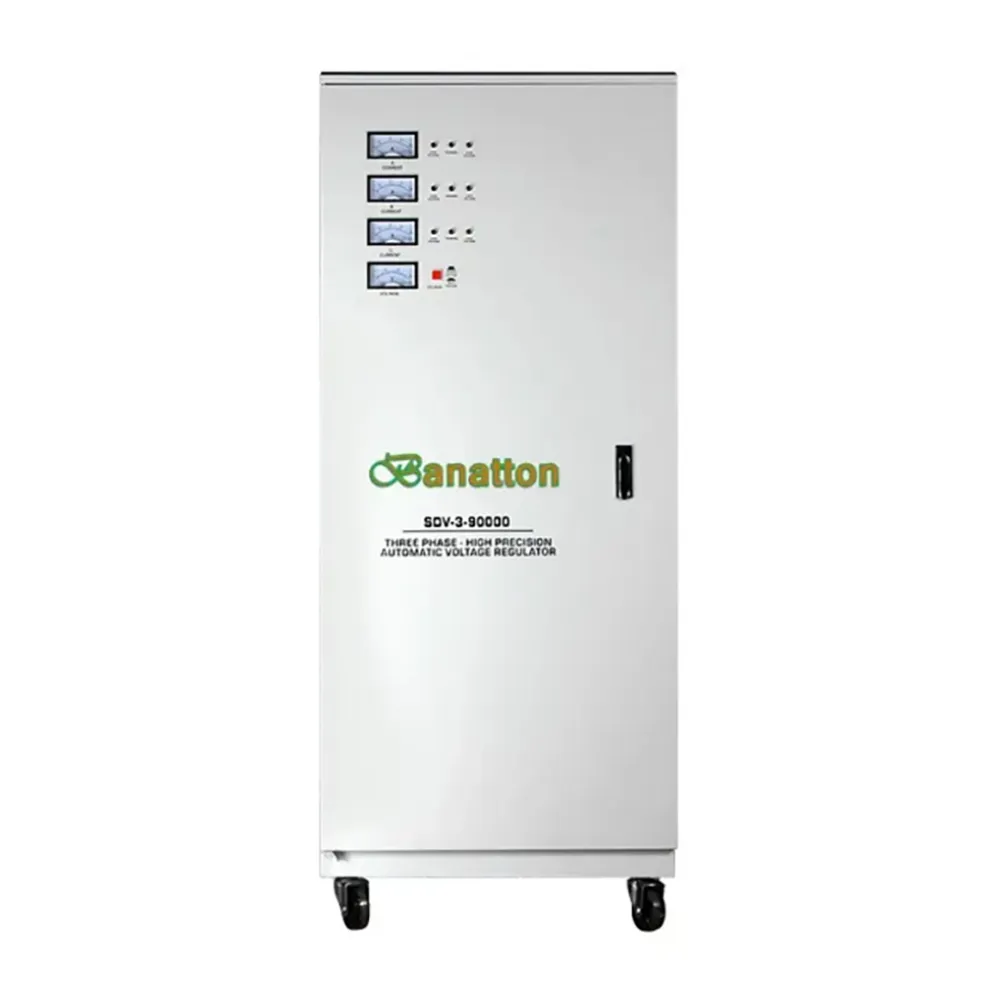
The strongest reason to consider a voltage stabilizer for CNC machine operation is a recorded mismatch between the supply and the machine’s permitted input. Record when that mismatch occurs and compare it with the machine’s alarm history. A fault code is a useful lead; it is not proof of the cause.
Separate voltage variation from other faults
A servo automatic voltage regulator uses a motor-driven adjustment mechanism to change the voltage correction. Its useful operating range and correction speed depend on its design. Continuous adjustment does not mean instant correction, battery backup, or removal of every power disturbance.
Before buying a voltage stabilizer for CNC machine protection, distinguish sustained low or high voltage from brief dips, spikes, and complete outages. Phase loss, incorrect phase sequence, poor connections, and machine faults also need their own review. Regulation cannot replace a sound electrical installation.
A qualified electrical team should assess the supply and fault history with the machine supplier. Avoid changing drive settings, wiring, or protection thresholds simply to stop an alarm. The machine builder’s instructions govern the installation and any approved changes.
| Observed issue | What to investigate | What must be confirmed |
|---|---|---|
| Voltage remains outside the OEM range | Loaded voltage records and correction range | Capacity and output limits across that range |
| A brief event coincides with a trip | Event depth, duration, and machine state | Whether the proposed equipment can address that event |
| Complete loss of supply | Continuity needs and machine shutdown behavior | A suitable continuity or controlled shutdown design |
| One phase differs from the others | Supply balance, load distribution, and connections | Phase control and protection requirements |
| Alarms occur with normal supply records | Machine, drive, and control diagnostics | Root cause before specifying extra equipment |
Illustrative scenario: A machining center stops when a nearby compressor starts. The buyer initially requests a larger regulator. Instead, the electrical team records the event and compares its timing with the alarm. That review determines whether supply correction, distribution work, or machine service needs further assessment. This is a hypothetical decision process, not a reported customer result.
If you are considering a voltage stabilizer for CNC machine loads, send Banatton your machine nameplate, OEM supply limits, and available event records. Those details make the first discussion more useful than a capacity request alone.
Record the machine requirements and site voltage
Build a short file for each machine before comparing products. Identify its make, model, serial number, electrical options, and installation manual revision. Imported equipment may have a different voltage configuration from another machine with a similar name. Confirm the actual unit.
Define the supply and load boundary
A voltage stabilizer for CNC machine use must suit the required phase system and voltage reference. Record whether a quoted value is line-to-line or line-to-neutral. Identify the required neutral and earthing arrangement through the machine’s approved documents and the installation design.
A stabilizer is not automatically a phase converter or an isolation transformer. If the factory voltage differs from the machine’s nominal supply, ask for a complete voltage-matching design. Do not assume that a product listing’s output options are settings that an operator can freely change.
For an OEM reference, Haas publishes a guide to three-phase input power configurations. Its configurations apply in their stated context. Use the current instructions for your machine rather than transferring one manufacturer’s arrangement to every CNC installation.
Define what the proposed voltage stabilizer for CNC machine service will supply. Is it the entire machine, only a separately fed control circuit, or a group of machines? List coolant pumps, chillers, chip conveyors, and other auxiliaries where they fall within that boundary. Check for loads already included in an OEM input rating so they are not counted twice.
Capture operating conditions, not one meter reading
Ask the electrical team to record voltage and current under representative operating conditions. Include idle operation, spindle acceleration, a demanding production cycle, and relevant simultaneous plant loads. Note the time, machine state, and alarm reference alongside each event.
For a voltage stabilizer for CNC machine enquiry, a daily minimum and maximum may be useful, but they do not describe every short event. The team should select suitable recording methods for the suspected disturbance. A slow display reading cannot establish the duration or shape of a brief dip.
Record ambient conditions, dust, ventilation space, and operating hours as well. A capacity that suits a clean test environment may need a different installation arrangement in a hot workshop. Ask the supplier to state any limits that affect the offered rating.
Keep the original files and a short written summary. Clear source records help the machine supplier and regulator supplier discuss the same problem without relying on recollection.
Size a voltage stabilizer for CNC machine loads
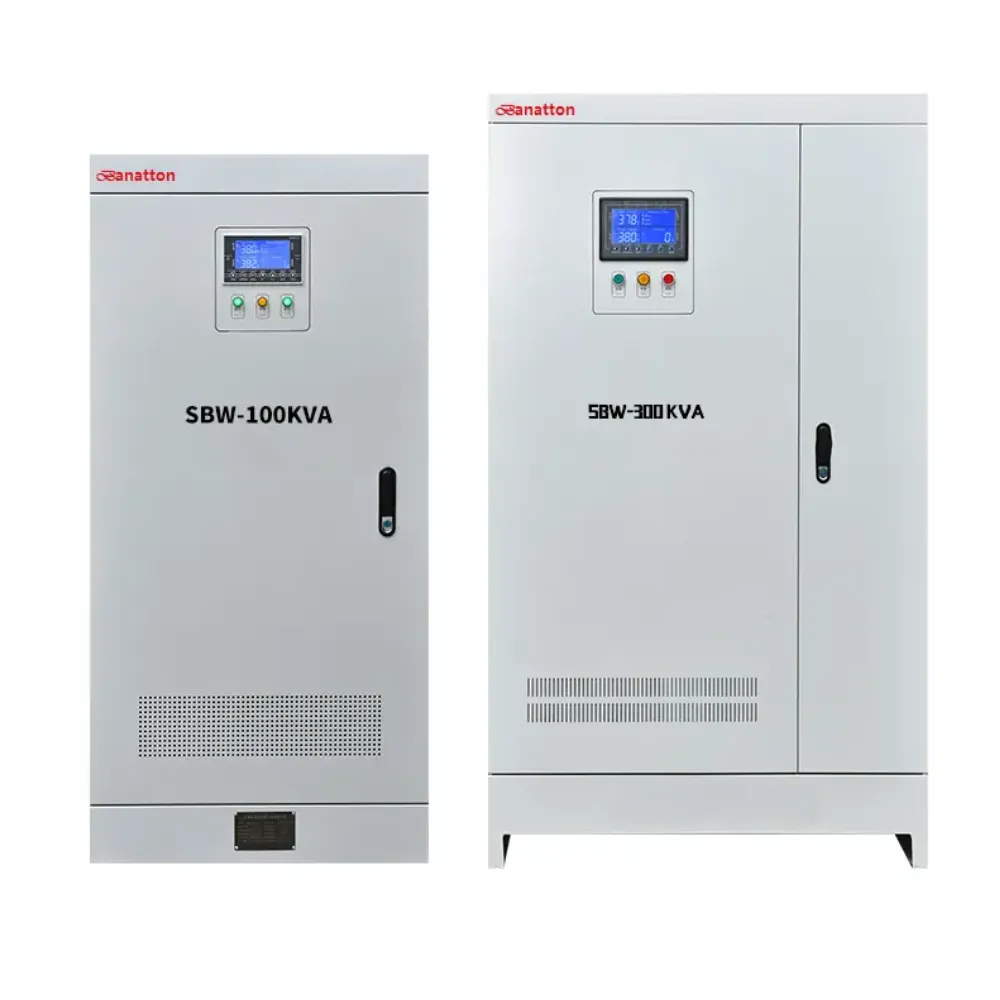
Size from complete electrical demand and the required duty. A spindle’s mechanical kW describes its output role; it does not by itself state the full machine input. Drives, conversion losses, controls, and auxiliary loads must be considered within the defined supply boundary.
Use kW and kVA with stated assumptions
For a voltage stabilizer for CNC machine load review, distinguish real power in kW from apparent power in kVA. When input real power and true power factor are known for the same operating condition, apparent power is kW divided by power factor. Do not apply an assumed motor power factor to the whole machine without evidence.
For balanced three-phase conditions, apparent power in kVA can be calculated as square root of three multiplied by line-to-line volts and line current, divided by 1,000. Unbalanced or complex loads require a suitable phase-by-phase assessment. This calculation is a load estimate, not a cable, breaker, or final product selection rule.
Illustrative scenario: Assume a machine has a measured, balanced electrical input of 400 V line-to-line and 40 A during a stated operating cycle. The apparent load is approximately 27.7 kVA: 1.732 × 400 × 40 ÷ 1,000. That result does not automatically approve a 30 kVA voltage stabilizer for CNC machine duty. Peak demand, low-input capacity, overload duration, and site conditions still need review. The values are invented for explanation.
Check whether the nameplate figure describes rated input, maximum input, or another condition. Keep the OEM requirement and measured demand side by side rather than using a quiet production shift to dismiss a higher installation requirement.
Check peaks and the lowest input condition
A voltage stabilizer for CNC machine operation needs a documented response to the duty it will see. Ask how much current it can supply, for how long, and at which input voltage. A general overload percentage without a duration or test condition is incomplete.
Lower incoming voltage can require more input current for the same output power. Ask for the manufacturer’s capacity or current limits across the proposed correction range. A wide advertised voltage window does not establish that full rated output is available at every point.
For several machines, record which loads can run together. Do not assume all peaks coincide, or that none do. Future expansion should be a stated requirement with identified loads, not an unexplained multiplier added to every estimate.
Before ordering a voltage stabilizer for CNC machine service, ask Banatton to review the full load schedule and input voltage window. Request written confirmation of the offered duty and its limits.
Compare regulation, response, and product evidence
An offer for a voltage stabilizer for CNC machine duty should explain performance in the conditions that matter to your machine. Steady output accuracy, correction speed, protection thresholds, and temporary overload capability are different specifications. One attractive number cannot stand in for all four.
Ask what each performance figure means
For a voltage stabilizer for CNC machine selection, ask how output accuracy was measured: at which input voltage, load, and operating condition? A steady-state tolerance does not show the largest deviation during a sudden supply change.
Likewise, detection time, motor movement, and output settling time describe different stages. Ask for the response to a defined input event and load. Compare the resulting output behavior with the machine builder’s requirements rather than ranking products by an unexplained millisecond claim.
A three-phase design may use common or independent phase regulation. Confirm the offered configuration and its permitted load or input imbalance. Do not assume that every three-phase regulator corrects each phase separately. The three-phase voltage stabilizer selection guide provides a broader checklist for that discussion.
Keep Banatton model families separate
Use the Banatton voltage stabilizer range as a starting point for an enquiry. The three-phase servo product listing with SDV-3 model entries contains SVC wording in its description. Its feature and parameter sections also present different output accuracy figures. Request a single model-specific specification before using either figure in a purchase decision.
The SBW industrial stabilizer listing is a separate product reference. Do not transfer values between these pages. A public listing is not approval of a voltage stabilizer for CNC machine compatibility at your site.
Request the exact model, drawing revision, rated input and output, capacity limits, protection functions, and maintenance instructions in the quotation. Where certification is required, ask for documents that cover the offered model and relevant destination requirements. A general certificate logo or company statement does not settle that question.
The broader voltage stabilizer types and selection guide can help distinguish technologies. For this purchase, keep the comparison tied to the CNC duty rather than generic claims that one technology is always superior.
Specify installation and acceptance checks
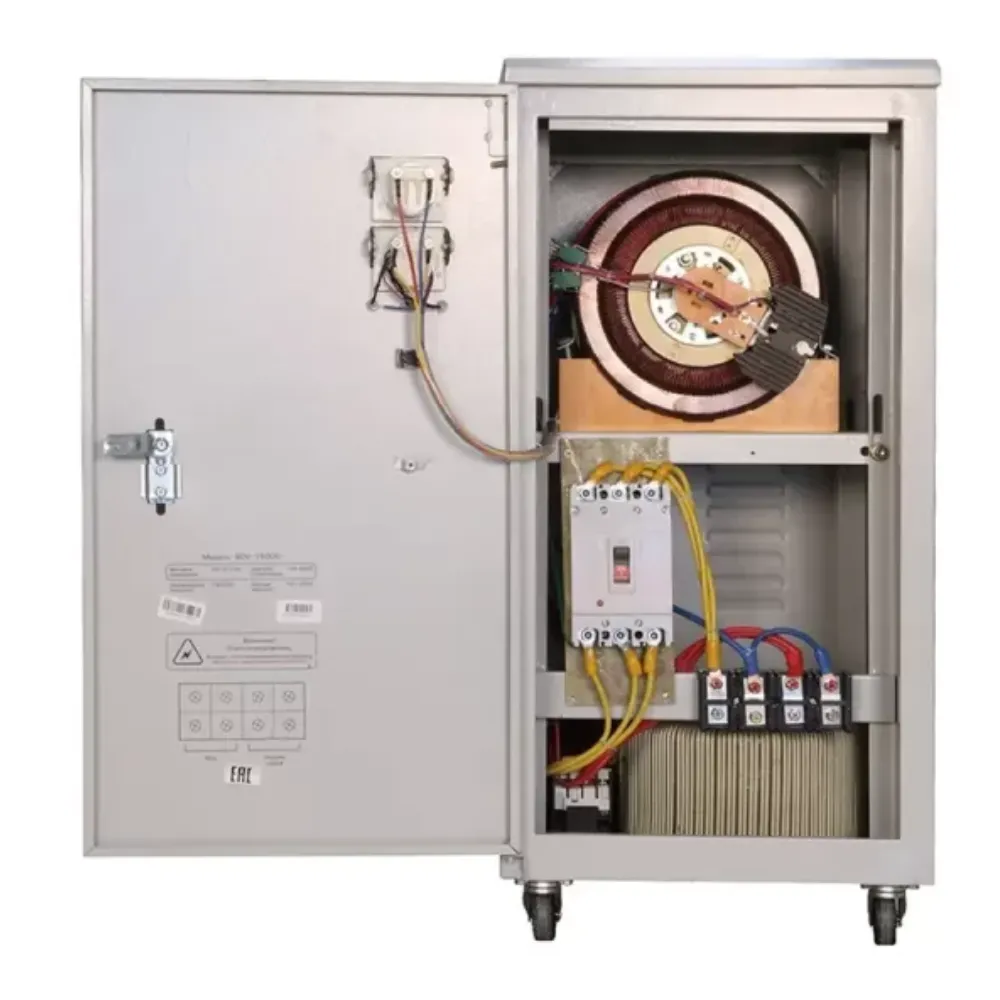
Agree on the installation scope for a voltage stabilizer for CNC machine service before delivery. Identify who designs the supply arrangement, installs the equipment, checks protection coordination, and approves the machine connection. Include access, ventilation, isolation, and service space in that plan.
The Haas electrical connection installation procedure illustrates why machine electrical work belongs with qualified personnel following the applicable instructions. It is an OEM procedure, not a universal wiring guide for other machines.
Turn the enquiry into an acceptance plan
A voltage stabilizer for CNC machine order should include agreed acceptance conditions. Define the records to collect, the production states to observe, and who signs off the results. Tests should follow an approved plan; do not deliberately create supply faults around production equipment.
| Item | Evidence before purchase | Agreed acceptance record |
|---|---|---|
| Machine supply requirements | OEM document and actual configuration | Approved supply arrangement |
| Voltage window and phase behavior | Site records and offered limits | Recorded input and output under agreed conditions |
| Continuous and peak demand | Load schedule and duty confirmation | Current and operating-state records |
| Protection and bypass | Model-specific logic and installation design | Checks performed under the approved procedure |
| Service arrangements | Manual, access needs, and parts information | Handover documents and maintenance responsibilities |
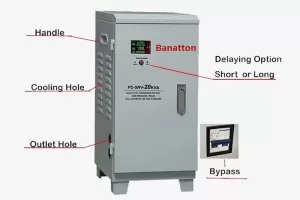
A bypass path may expose the machine to the incoming supply without regulation. Ask what remains protected, how transfer is handled, and what restrictions apply. Do not assume that bypass operation is suitable whenever the regulator is unavailable.
Illustrative scenario: A shop compares one regulator for several machines with separate units for each machine. It maps simultaneous demand, maintenance access, and what happens when one unit needs service. The final choice depends on that operating plan and the approved electrical design. This hypothetical example does not imply that either arrangement always costs less or provides better availability.
For a voltage stabilizer for CNC machine handover, save the approved specification, settings record, manuals, and acceptance results together. If the machine or workshop load changes later, that file provides a baseline for another review.
Plan service from the actual equipment
A servo voltage stabilizer for CNC machine duty includes moving parts that need the manufacturer’s prescribed inspection and service. Brush life depends on the design and operating conditions. Use the actual manual and service findings rather than a universal replacement interval.
Record symptoms and operating conditions when a fault occurs. Keep internal inspection and repair with qualified service personnel. A regulator inspection should not become an unplanned adjustment to CNC controls or safety functions.
Voltage stabilizer for CNC machine FAQs
Will a stabilizer improve machining accuracy?
Do not assume it will. It may help keep supply voltage within agreed limits when supply variation is the relevant problem. Tool condition, machine setup, mechanics, controls, and process conditions also affect machining results. Investigate the cause before making an accuracy claim.
Can it keep the machine running during an outage?
A voltage regulator alone does not provide battery energy during a complete outage. If continuity or controlled shutdown is needed, review that requirement separately with the machine supplier and a suitable power-system designer.
Is a 30 kVA unit enough for my machine?
There is no universal answer. Check the complete electrical input, peak duty, lowest supply voltage, and offered model limits. A voltage stabilizer for CNC machine loads must be selected from those records, not the machine category or spindle rating alone.
What should I send with an enquiry?
Send the machine nameplate and electrical requirements, actual supply configuration, voltage records, alarm history, full load boundary, operating cycle, and installation conditions. Identify gaps in the records so the supplier can state what still needs confirmation.
To discuss a voltage stabilizer for CNC machine service, contact Banatton with your machine and site records. Ask for a model-specific proposal with clear duty limits and acceptance conditions before making the purchase.