 26Sep

A three phase voltage stabilizer regulates AC voltage within its documented input and load conditions. Select a configuration by matching the equipment’s permitted supply, phase-by-phase demand and operating events to the proposed model’s rating, control arrangement and protection.
A total kVA figure is useful, but it does not describe the whole installation. One phase may carry more load, an input event may fall outside the correction window, or a quoted output value may use a different voltage reference. Those details belong in the selection record.
This guide explains how to review a three phase voltage stabilizer once a three-phase arrangement has been identified for the project. It covers the site information, model documents and supplier questions needed for a useful quotation. The broader voltage stabilizer selection guide provides context for the overall process.
Key takeaways
- Name the protected load and the voltage measurement boundaries.
- Keep total demand and phase-by-phase conditions together.
- Confirm whether regulation is common to the phases or independent.
- Check output capability across the required input range.
- Request the exact model, documents and operating-mode information.
Have site records available? Send Banatton your voltage and load requirements, including phase data and equipment operating states, for review against a proposed configuration.
Define the three phase voltage stabilizer duty
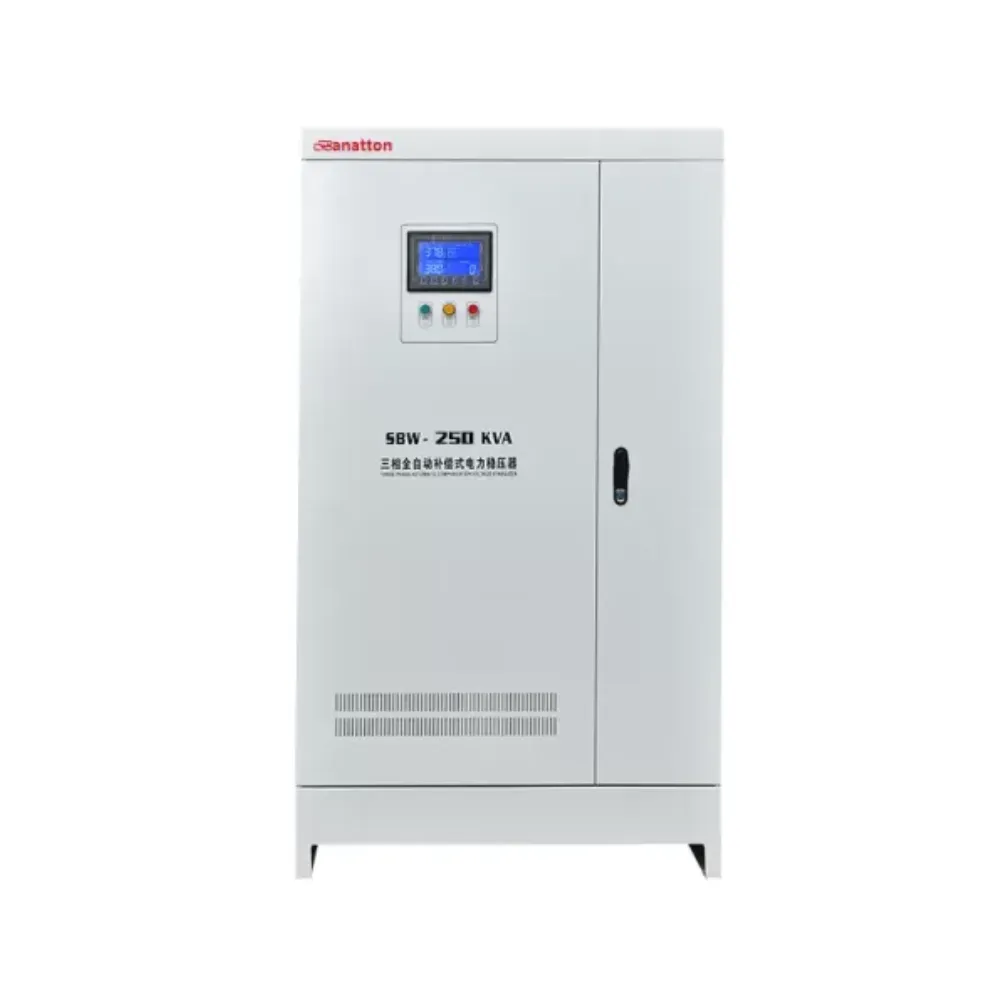
Start with the equipment that the proposed unit will supply. It may be a defined machine, a panel or a group of loads. Keep that boundary consistent in measurements, calculations and supplier discussions.
A three phase voltage stabilizer enquiry should identify the problem as well as the equipment. Describe when a fault, restart or process interruption occurred and what information was recorded. A symptom alone does not establish its electrical cause.
Separate regulation from other functions
Voltage regulation does not, by itself, establish outage backup, frequency conversion or isolation. Specify those needs separately where the project requires them. Do not infer a system function from a regulator’s name or application list.
The proposed unit also has a permitted correction envelope. Ask what happens if voltage or load moves outside it. Output disconnection, alarms and restart behavior must be checked against the specific model’s documents.
For a three phase voltage stabilizer, the useful question is whether its documented behavior matches the actual duty. Avoid choosing from a promise of stable power in every situation. Define the required result and the conditions in which it must be achieved.
Record what the equipment accepts
Obtain the equipment maker’s input requirements, including voltage, phase, frequency and relevant operating modes. Where phase conditions matter, retain those limits too. A general description such as industrial machinery does not replace the equipment specification.
Illustrative scenario: A buyer reports that a production machine sometimes restarts. Before recommending a three phase voltage stabilizer, the project team gathers the machine’s permitted input and records the time and operating state of the event. This creates an investigation and selection brief; it does not establish that voltage caused the restart.
Keep assumptions separate from confirmed data. Mark a value as measured, documented, estimated or still unknown. That gives the supplier a clear basis for requesting more information.
Record supply voltage and phase loading
Label voltage readings with their measurement reference. Line-to-line and line-to-neutral values describe different boundaries. Identify the relevant lines, the location and the equipment state behind each record.
For a three phase voltage stabilizer, do not assume a nominal voltage from the country or the building description alone. Confirm the actual source arrangement and required output. The proposed configuration must suit those conditions.
Capture representative operating states
Include normal production, low-load periods, starts and source changes where they affect the project. A single spot reading may miss the event that matters. A qualified person should plan suitable measurements and interpret the results.
Keep the load distribution with the voltage record. Total kW or kVA does not reveal whether one phase is more heavily loaded. Ask for the applicable per-phase limits of the proposed three phase voltage stabilizer.
| Site record | Detail to retain | Question it supports |
|---|---|---|
| Protected boundary | Named machine, panel or load group | What will the proposed unit supply? |
| Voltage | Reference, location, value and time | Which input conditions need review? |
| Phase demand | Current or other suitable load data by phase | Are all relevant rating limits addressed? |
| Operating events | Starts, steps and source changes | What duty exists beyond steady demand? |
| Equipment tolerance | OEM input requirements | What output behavior is acceptable? |
| Environment | Ambient conditions, ventilation and access | Which installation limits apply? |
Avoid hiding demanding conditions in an average
Illustrative scenario: A facility records modest total demand but finds that a normal production combination loads one phase more heavily. The buyer sends that operating-state record with the enquiry. The three phase voltage stabilizer review remains open until the supplier addresses the phase-specific duty.
There is no universal imbalance percentage in this example. The allowable condition depends on the model, the equipment and the installation. Use documented limits rather than a general allowance taken from another product.
The Arnav selection guide provides background on connecting voltage records with load events and input conditions. Its guidance can help organize the questions. It does not establish a Banatton model’s capability.
Check regulation architecture and usable capacity
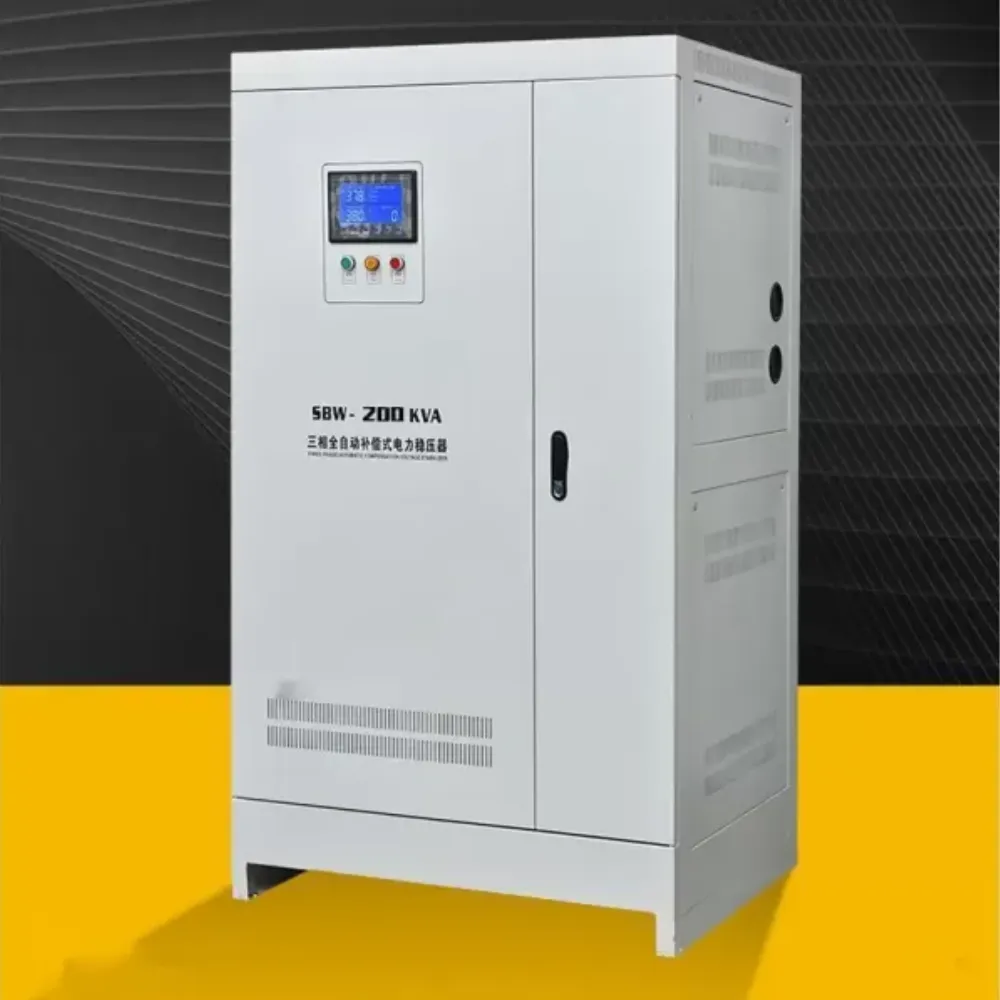
A three-phase regulator may control the phases together or regulate each phase independently, depending on its design. The UST phase-regulation guide explains this distinction. Confirm the architecture of the particular unit being offered.
Do not assume a three phase voltage stabilizer has independent phase control simply because it has a three-phase input. Ask how it senses and adjusts voltage, and what conditions its rating covers. Request the relevant document reference.
Compare correction behavior under stated conditions
The regulation mechanism and the phase arrangement are different parts of the specification. A servo motor, relay or electronic control label does not establish every output limit. Compare actual model data under the required conditions.
Ask what a response-time figure measures. Detection, correction movement, settling and restart delay are different measures. A short number without an event definition cannot establish which three phase voltage stabilizer better suits the load.
Output tolerance also needs context. Request the reference voltage, permitted load and input conditions behind the figure. Keep normal regulation limits separate from protection thresholds.
Make the records usable across teams
Name the document or measurement behind each input. Record the date and the load state, and label estimates as estimates. This lets the buyer, supplier and project reviewer use the same basis for a three phase voltage stabilizer assessment.
If two records disagree, check their boundaries before choosing a value. One may describe another panel or another operating state. Preserve the explanation with the enquiry so the difference does not reappear during quotation review.
Check capacity across the required input range
The window in which a unit operates is not automatically a full-output window. Ask what supported load, accuracy and restrictions apply at the lowest and highest input conditions required by the project. Obtain the relevant rating or derating information.
For a three phase voltage stabilizer, also separate continuous demand from starts and load changes. Record magnitude, duration and the operating sequence where known. A larger nominal kVA label does not, by itself, approve every event.
If information is missing, request a preliminary assessment that lists its assumptions. Keep growth plans separate from current demand. Do not use a fixed margin to hide uncertainty about the load or input conditions.
Review protection, bypass and service requirements
Ask which protection functions are supplied in the proposed configuration. Identify the applicable manual, settings scope and behavior when a protection limit is reached. A list of possible functions is not evidence that every option is installed.
The three phase voltage stabilizer and the connected load must also be reviewed in their actual operating modes. Confirm what supplies the load during normal regulation, protective disconnection and any bypass arrangement. The equipment’s permitted input remains relevant in each mode.
Treat delay as a defined function
A restart delay is not proof of transient suppression or complete correction speed. Ask what initiates the delay and what must be true before the output returns. Use the actual model’s instructions rather than a universal waiting time.
Where phase loss, phase sequence or other conditions matter, request the documented response. The project reviewer should confirm protection coordination and the approved operating method. This guide does not provide switching or wiring instructions.
Plan maintenance and support information
Keep the model, serial number, manual and service contact with the installation record. Follow the maintenance instructions for that configuration and environment. Internal checks or adjustments require the appropriate qualified personnel and procedure.
If a three phase voltage stabilizer has no output or disconnects repeatedly, record the mode, alarm, time and available operating data. Follow the manual and request service support. Do not treat a guessed contact fault or a control-board adjustment as a diagnosis.
Need help reviewing these conditions? Ask Banatton to assess the proposed operating requirements, including the load record and required protection or bypass behavior, before finalizing the configuration.
Verify the three phase voltage stabilizer model and quotation
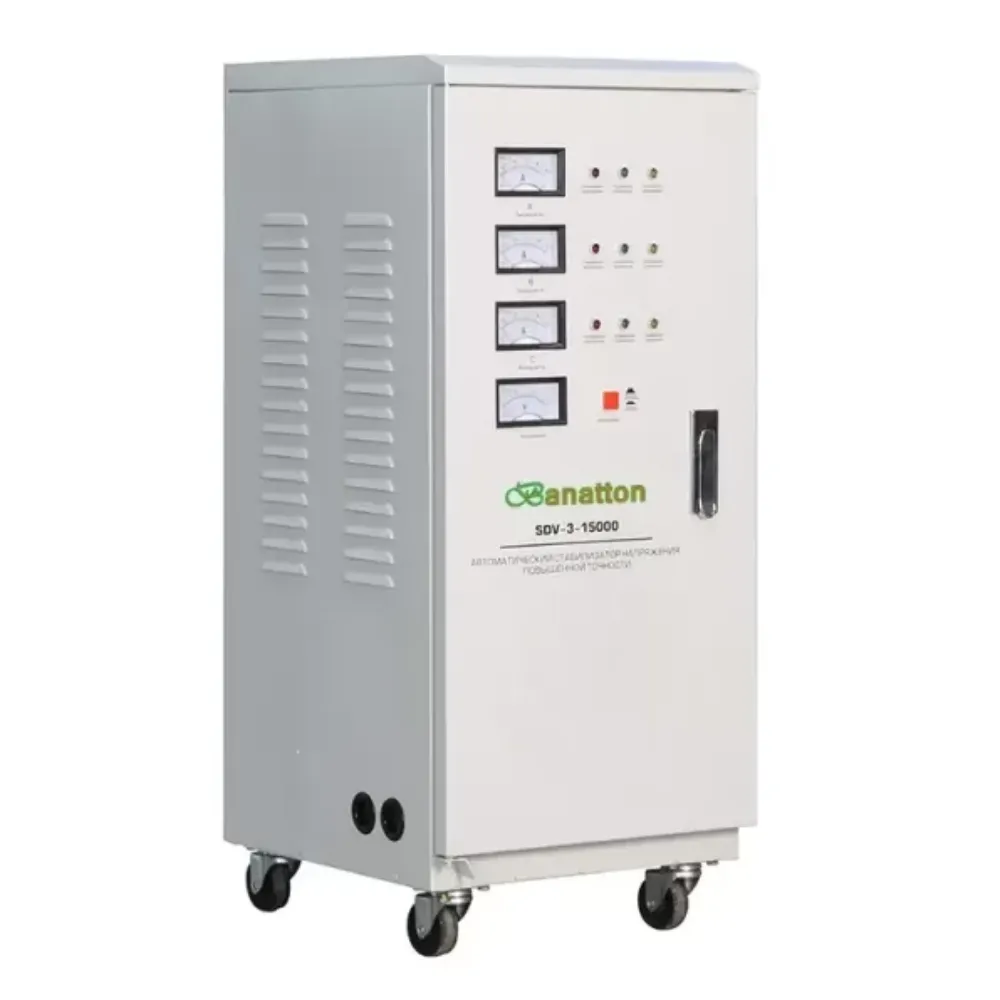
Start with the exact model and version offered. A product-family name, an article title and a broad capacity range do not necessarily identify the same configuration. Keep the quotation linked to the applicable data sheet and manual.
The Banatton three-phase regulator category provides a starting point for identifying relevant products. Move from the category to the specific offer. Do not combine parameter values from different series into one specification.
Use the SBW page as a bounded reference
The linked Banatton SBW product reference publishes a three-phase family table. It lists AC 304–456 V input and output configurations of 380/400/415 V AC. Confirm the voltage reference, exact configuration and applicable load conditions in the proposal.
These public values do not prove independent phase control or full-rated output throughout the input window. Request that information separately. A three phase voltage stabilizer must be selected from a consistent set of model documents, not from the best-looking figures across several pages.
Where a quotation includes an efficiency, correction-time or protection claim, ask for its conditions and evidence. If certification is required, obtain the document and confirm its product and scope. A certificate number alone does not establish every approval the installation may need.
Plan how a change will be reviewed
A new machine, revised operating sequence or different supply condition can change the stated duty. Record the change and ask which rating assumptions need another check. Keep that response with the three phase voltage stabilizer proposal instead of silently carrying forward an earlier approval.
Keep a response beside each requirement
| Buyer requirement | Supplier response to retain |
|---|---|
| Required input and output | Model, configuration and voltage references |
| Total and phase-by-phase duty | Rating conditions and relevant limits |
| Input range and load events | Supported output and event capability |
| Regulation architecture | Control arrangement and restrictions |
| Protection and bypass | Supplied functions and applicable instructions |
| Installation and maintenance | Environment limits, access and service documents |
| Required approvals | Applicable evidence and its scope |
Illustrative scenario: Two proposals appear to meet the same nominal output. One identifies its input and load conditions; the other supplies only a headline rating. The buyer requests matching evidence before comparing the three phase voltage stabilizer offers.
Give each open question an owner and a next action. Mark responses as documented, based on an agreed assumption or awaiting information. Preserve the approved version when the quotation changes.
For information about the supplier, consult the Banatton company profile. Use the voltage stabilizer product range to locate the relevant family. Neither page replaces the model evidence needed for a particular three phase voltage stabilizer installation.
Questions before approving a three-phase solution
Does every three-phase unit regulate each phase independently?
No. The regulation architecture depends on the design. Ask the supplier to identify the control arrangement and applicable limits for the unit offered. Do not infer independent control from the three-phase label.
Is total kVA enough to select the rating?
No. Retain per-phase demand, operating events and input conditions with the total. A three phase voltage stabilizer review must address the most demanding relevant duty, not just an average or a nominal label. Ask for the supporting rating information.
What should I do if the unit has no output?
Follow the model’s instructions and record the mode, alarm and available site information. Request service support when needed. Do not assume a particular internal fault or change protection settings from a general FAQ.
Can output or other options be customized?
Request written confirmation of the configuration required by your project. The quotation should identify the output, options and applicable rating conditions together. A broad customization statement is not evidence that a particular variation has been supplied or tested.
How should the installation be accepted?
Agree the documents, measurement boundaries, operating states and acceptance criteria before delivery. Testing and commissioning must follow the approved project method. Keep the results with the model and installation records.
Choose a three phase voltage stabilizer using a clear duty, consistent model documents and a response to each important site condition. Keep unresolved items visible through quotation review. Contact Banatton with your voltage and load records to discuss the configuration and supporting information needed for the next step.