 26Sep
26Sep

Stable power is important for IT infrastructure, communication systems, industrial automation, and other applications that depend on electronic equipment. Voltage fluctuations, electrical interference, and power interruptions can affect equipment operation and may cause unexpected downtime.
For these applications, a UPS should do more than provide battery backup. It should also deliver stable voltage and a clean power waveform. An online UPS can meet these requirements by continuously supplying the load through its inverter.
A Pure Sine Wave UPS can provide a clean AC waveform that is suitable for many sensitive electronic loads. Combined with the online UPS architecture, it can provide continuous power, stable voltage, and protection against common power disturbances.
What Is a Pure Sine Wave Online UPS?
A pure sine wave online UPS continuously supplies the connected load through its inverter. Unlike a standby UPS, the load does not normally receive utility power directly.
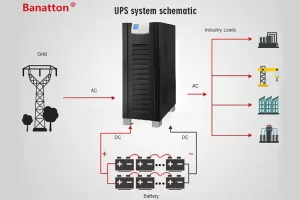
Under normal mains conditions, the input AC power first passes through a noise filter. The filtered power then enters the rectifier, which converts AC power into DC power. The DC power is divided into two paths. One path charges the battery, while the other supplies the inverter.
The inverter then converts the DC power back into AC power for the connected load.
When the mains supply fails, the battery supplies power to the inverter. The inverter continues to supply the load, so there is no need for a transfer operation between mains power and battery power.
This design provides stable and continuous power to connected equipment. It also helps reduce the impact of power interruptions and voltage fluctuations.
How an Online UPS Delivers Continuous Power
The main advantage of an online UPS is that the inverter continuously supplies the load.
When utility power is available, the inverter receives power through the rectifier. When utility power fails, the battery supplies the inverter instead. The load therefore remains connected to the inverter in both situations.
This design can provide a 0ms transfer time from mains mode to battery mode, depending on the UPS model.
Why Pure Sine Wave Output Matters for Sensitive Equipment
The waveform produced by a UPS is an important consideration when protecting electronic equipment.
A pure sine wave output provides a smooth AC waveform. This makes it suitable for many electronic loads that require stable and clean power.
For an online UPS, waveform quality can be evaluated through total harmonic distortion (THD). Lower distortion generally indicates a cleaner output waveform.
How Pure Sine Wave Online UPS Systems Protect Sensitive Equipment
An online UPS provides several layers of power protection. These include voltage regulation, waveform control, continuous inverter operation, and battery backup.
Stable Voltage Regulation and Clean Power Output
Voltage fluctuations in the utility supply can affect connected equipment. An online UPS can regulate the output voltage before it reaches the load.
A typical online UPS can maintain a stable output even when the input voltage changes within its specified operating range. This helps reduce the impact of unstable mains power on connected equipment.
For B2B buyers, output voltage regulation is therefore an important specification to check when comparing different UPS systems.
Low Harmonic Distortion for Sensitive Loads
Pure sine wave output is particularly important when the UPS is used with sensitive electronic equipment.
Online UPS systems can provide low waveform distortion. For example, the product specifications discussed later in this article specify THD below 3% for linear loads and below 6% for nonlinear loads.
This type of specification gives buyers a clearer way to evaluate the quality of UPS output rather than looking only at the nominal output voltage.
Zero-Millisecond Transfer Time During Power Failures
Power interruptions can cause equipment to shut down or restart. Even a short interruption may affect some critical electronic systems.
With an online UPS, the inverter continuously supplies the load. When the mains supply fails, the battery takes over the DC power supplied to the inverter.
As a result, there is no conventional transfer operation between mains power and battery power. An online UPS can therefore provide 0ms transfer time from mains mode to battery mode when specified for the system.
Excellent Transient Response Under Load Changes
The connected load does not always remain constant. Servers, automation equipment, and other electronic systems can change their power demand during operation.
Output transient performance is therefore another factor to consider when selecting a UPS.
A well-designed online UPS is intended to maintain stable output when the load changes. This helps provide consistent power to connected equipment during normal operation.
Low-Noise Operation for IT Environments
Noise can also be an important consideration when installing a UPS in an office, server room, or equipment area.
Online UPS systems commonly use high-frequency PWM control technology. A suitable design can help keep operating noise at a relatively low level.
For B2B buyers, the specified noise level should be checked against the requirements of the installation environment.
Electrical Isolation and Reliable Circuit Design
UPS reliability also depends on its internal circuit design.
Online UPS control systems can use components such as input transformers, output transformers, and optocouplers to separate the high-voltage power section from the low-voltage control section.
This electrical separation can help improve the reliability of the control circuitry. Other design factors, such as PCB construction, ventilation, and protective coating, also affect long-term equipment reliability.
Why Pure Sine Wave UPS Systems Are Important for IT Equipment
IT infrastructure depends heavily on stable electrical power. A power interruption or significant voltage disturbance can affect servers, networking equipment, monitoring systems, and workstations.
Online UPS systems can provide continuous inverter-based power to these loads.
Servers and Workstations
Servers and workstations can require stable power during operation. A UPS can provide backup power during utility failures and help reduce the impact of voltage fluctuations.
Network Switches and Routers
Network switches and routers are essential components of business networks. Maintaining continuous power can help reduce unnecessary network interruptions during a utility outage.
Monitoring and Communication Equipment
Monitoring and communication systems also depend on continuous electrical power. An online UPS can provide stable output and battery backup for these types of loads.
Data Center and IT Infrastructure
Data centers require reliable power protection for servers, networking equipment, and other critical infrastructure. Online UPS systems can be used as part of the overall power protection strategy.
Why Online UPS Systems Are Critical for Medical Equipment
Medical environments can include electronic equipment that requires stable and continuous power. An online UPS can provide continuous inverter-based output and 0ms mains-to-battery transfer when specified for the system.
This can help reduce the impact of power interruptions and voltage disturbances on connected equipment.
However, UPS selection for medical applications requires more than checking the power capacity. Buyers should also consider the electrical requirements of the medical equipment, installation conditions, applicable standards, and required certifications.
Pure Sine Wave UPS vs. Standby UPS: What Is the Difference
The main difference is how the UPS supplies power to the load.
A standby UPS normally supplies utility power directly to the load and switches to battery operation when the mains supply fails. An online UPS continuously supplies the load through its inverter.
| Feature | Online UPS | Standby UPS |
| Load supplied through inverter | Yes | Normally no |
| Mains-to-battery transfer time | 0ms for specified online systems | Requires transfer time |
| Pure sine wave output | Available | Depends on model |
| Voltage regulation | Continuous regulation | Depends on design |
| Power conditioning | Continuous | More limited |
| Suitability for sensitive electronic loads | Suitable | Depends on equipment |
For applications where power quality and continuity are important, the online UPS architecture provides a more comprehensive approach to power protection.
Key Features to Consider When Choosing an Online UPS
UPS Capacity and Load Requirements
UPS capacity should match the actual power requirements of the connected equipment.
The required capacity depends on the equipment load and the expected operating conditions. Buyers should also consider whether additional equipment may be added in the future.
Output Voltage Regulation and Waveform Quality
Output voltage regulation and waveform quality are two important specifications for sensitive electronic equipment.
Buyers should check the UPS output voltage, voltage regulation, frequency stability, waveform type, and harmonic distortion before making a purchasing decision.
Battery Backup and Expansion Options
Battery configuration directly affects backup time.
Some UPS systems use built-in batteries, while others support external batteries for longer backup requirements. Buyers should compare the required runtime with the available battery configuration.
Communication and Monitoring Options
Communication functions can be important when the UPS needs to be monitored or integrated into an IT or automation system.
Depending on the model, available interfaces may include RS232, USB, RS485, MODBUS, SNMP, AS400, or dry contacts.
Efficiency, Noise Level, and Operating Environment
UPS efficiency affects energy consumption during operation. Noise level and environmental specifications are also important when selecting equipment for a specific installation location.
Buyers should review operating temperature, humidity, noise level, efficiency, and other environmental specifications before installation.
Applications of Pure Sine Wave Online UPS Systems
Online UPS systems are used in a wide range of applications where stable and continuous power is required.
Data Centers and Server Rooms
Online UPS systems can provide backup power for servers, workstations, network switches, routers, and monitoring equipment.
Medical and Healthcare Facilities
Online UPS systems can be considered for applications requiring continuous and stable power, provided that the UPS meets the specific requirements and certifications of the medical application.
Banking and Financial Systems
Banking and financial environments rely on computers, communication equipment, and data systems. Continuous power protection can help reduce the impact of unexpected power interruptions.
Transportation and Railway Systems
UPS systems can support equipment used in transportation and railway applications where stable power is required for control and signaling equipment.
Industrial Automation and Control Systems
Automation systems such as SCADA and other control equipment can benefit from stable and uninterrupted power.
Communication Infrastructure
Communication equipment such as routers, switches, telephones, and related systems can use online UPS systems for continuous power protection.
BT900 1KVA–10KVA Pure Sine Wave Online UPS for Sensitive Equipment
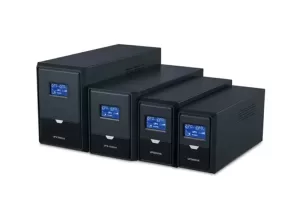
For businesses looking for a single-phase online UPS, the BT900 Direct Sealed Online UPS is available in capacities from 1KVA to 10KVA.
The product specifications include pure sine wave output, 0ms mains-to-battery transfer time, ±1% output voltage regulation, and THD below 3% for linear loads and below 6% for nonlinear loads.
The BT900 also uses DSP control and active input power factor correction, with an input power factor of ≥0.99 at 100% load. It supports a wide input voltage range and frequency range, as well as generator compatibility, cold start, ECO mode, and frequency auto sensing.
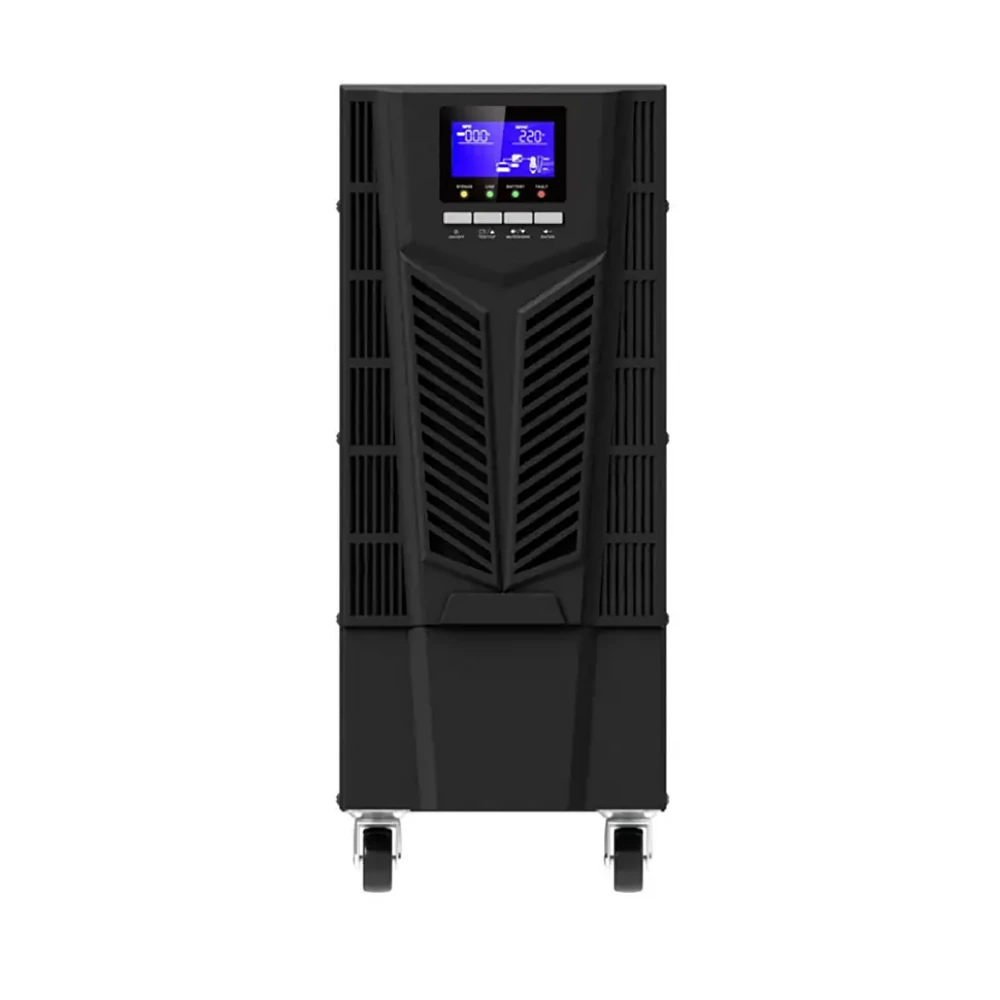
Key Features of the BT900 Online UPS
The main product features include:
- DSP digital signal processor control
- Active input power factor correction
- Input power factor ≥0.99 at 100% load
- Three-level inverter technology
- Pure sine wave output
- 0ms mains-to-battery transfer time
- Generator compatibility
- Cold-start function
- ECO operation mode
- 50Hz/60Hz frequency auto sensing
- Optional remote on/off function
- Optional USB, MODBUS, RS485, SNMP, and AS400 communication
- Short-circuit, over-voltage, and reverse-connection protection
The product can also accept laser printer and ultrasound system loads when customized according to the manufacturer’s specifications.
BT900 Online UPS Technical Specifications
The BT900 series uses a single-phase input and output system. Depending on the model, input voltage can be configured for high-voltage or low-voltage applications.
Key specifications include:
- Output voltage regulation: ±1%
- Output waveform: Pure sine wave
- THD: <3% for linear load; <6% for nonlinear load
- Transfer time: 0ms from mains mode to battery mode
- AC-mode efficiency: ≥92%
- Battery-mode efficiency: ≥90%
- ECO-mode efficiency: ≥95%
- Operating temperature: 0–40°C
- Relative humidity: 0–90% RH, non-condensing
- Noise level: <50dB
Battery configurations vary by model. The standard built-in battery configuration provides at least 8 minutes of backup time at 50% load and at least 3 minutes at 100% load. External battery configurations are also available for selected models.
Conclusion: Why Pure Sine Wave Online UPS Is Essential for Critical Loads
A Pure Sine Wave UPS can provide more than basic battery backup. With an online architecture, the inverter continuously supplies the connected load, helping provide stable power and eliminating the conventional transfer interruption when mains power fails.
For sensitive IT equipment, automation systems, communication equipment, and other critical electronic loads, important specifications include output voltage regulation, waveform quality, harmonic distortion, transfer time, battery configuration, efficiency, and communication functions.
The BT900 1KVA–10KVA online UPS combines pure sine wave output, ±1% voltage regulation, 0ms mains-to-battery transfer, multiple battery configurations, and optional communication interfaces. Businesses can evaluate these specifications against their actual load, backup requirements, installation environment, and compliance needs when selecting an Online UPS solution.