 20Nov

For UPS runtime calculation, match the measured load in watts to the exact UPS and battery configuration’s runtime curve or discharge table. Use an energy estimate for an early check, then confirm the conditions behind the result before relying on the minutes.
A 100 kVA label tells you power capacity, not how long the batteries will last. A system can carry the load yet run out of stored energy before a shutdown finishes. That gap matters when you compare quotations.
If you have found several formulas that give different answers, start with the inputs. This guide separates a rough energy estimate, a discharge-table check, and a verified configuration. You’ll get a worked example and a worksheet you can use to request a review.
Key takeaways
- Check output kW and kVA limits before assessing battery time.
- Record battery model, series blocks, parallel strings, temperature, and cutoff voltage.
- Match table units: watts per block and watts per cell are different.
- Treat a worked example as a method, not a promise for another product.
- Keep the calculation, supplier confirmation, and site verification in one record.
UPS runtime calculation starts with the protected load
Start by defining the task. Do you need time to shut down equipment, bridge a generator start, or keep a process running? Those goals can require different load schedules and end conditions.
Write the required duration and what must still be operating at its end. Include the network, controls, storage, and other supporting devices that the task depends on. A server that stays powered cannot complete a remote shutdown if its network equipment has already stopped.
Separate power capacity from backup time
Record real power in watts or kilowatts and apparent power in VA or kVA. Check both against the UPS ratings. The UPS sizing guide explains that capacity check; it comes before UPS runtime calculation.
A computer power supply’s maximum rating is not a measurement of the connected load. Use suitable readings for the equipment states the UPS must support. Record when and where you measured, so another person can review the figures.
For UPS runtime calculation, distinguish the normal load, the highest relevant load, and any planned load changes during an outage. A single quiet-period reading may miss the demand that matters to the task.
Missing a load or battery detail? Send Banatton your UPS model and protected-load information to request a configuration review before choosing a battery arrangement.
Illustrative scenario: controls with a changing load
A factory team wants to protect controls and communications while a process stops. Some devices shut down early; others remain powered until the stop is complete. The team records each stage instead of assuming that the first load reading applies throughout.
Its next step is to ask for a calculation that supports that load profile. It does not claim a runtime from an average that the battery model has not been shown to support. This UPS runtime calculation needs a time-based load record before a result.
Use an energy estimate as an early check
An energy balance helps explain the units:
Approximate hours = usable DC energy (Wh) × applicable DC-to-AC efficiency ÷ output load (W)
Multiply hours by 60 to express minutes. This assumes the usable energy and efficiency match the load and conditions. If either is unknown, the result is an assumption rather than a model-specific prediction.
The distinction matters in UPS runtime calculation. Voltage times rated Ah gives nominal energy. It does not prove how much reaches the load at a given discharge rate. A precise decimal does not make an incomplete input reliable.
Keep series and parallel quantities separate
Series-connected blocks add voltage. For identical blocks connected in series, the string’s Ah rating does not multiply by the number of blocks. Parallel strings add capacity under the applicable design conditions.
Write three separate fields: voltage per block, blocks per string, and number of parallel strings. If you already use the complete string voltage, do not multiply its energy by the same series-block count again.
That small notation choice can prevent a large UPS runtime calculation error. The same care applies to table units: a battery block may contain several cells, so W/block cannot be substituted for W/cell.
State what the UPS runtime calculation includes
Identify which losses are included in the energy figure and efficiency. If the energy figure is already usable AC output, do not apply the same loss again.
Use relevant battery-operation data. A headline ECO-mode efficiency figure does not establish the DC-to-AC efficiency needed for this estimate. Avoid a universal discount factor for all battery types, loads, temperatures, or ages.
For UPS runtime calculation, a useful early estimate has a short assumptions list beside it. Mark unknown usable capacity, efficiency, self-consumption, or cable losses as items to confirm. Do not fill those gaps with a number simply to make the formula return minutes.
UPS runtime calculation with a discharge table
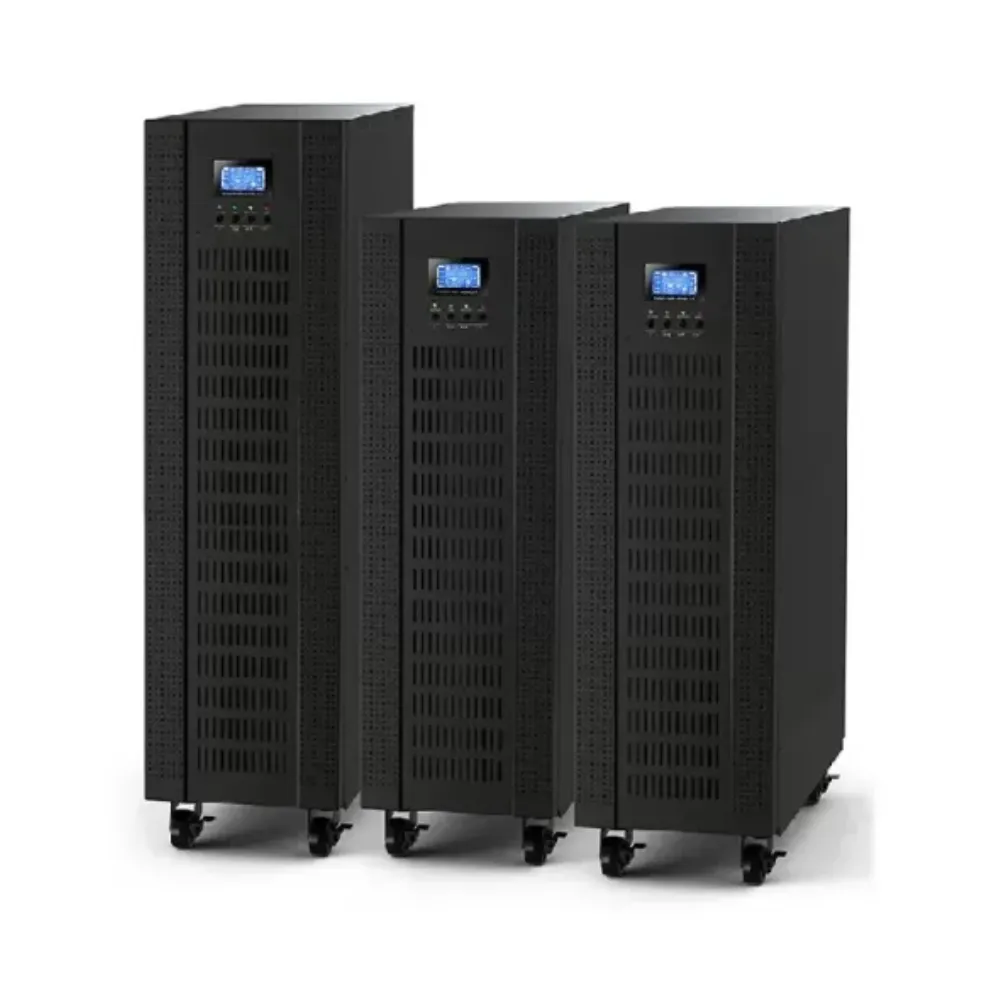
The next step is to use data that matches the actual equipment. The UPS maker’s complete runtime curve may already account for its batteries and power losses. A battery discharge table requires the UPS-side conditions to be checked separately.
In Legrand’s technical guide, section 4.2, the teaching example uses a 12 V, 40 Ah block containing six cells. Its table is at 25°C. At a 1.70 V/cell endpoint, the listed values include 548 W/block for 30 minutes and 442 W/block for 40 minutes.
These are source-specific teaching data, not a specification for every battery with that voltage and Ah label. Use them only to follow the method below. An actual UPS runtime calculation needs the approved battery model’s own data.
Match the row, column and unit
Before using a table, identify the battery model, temperature, end voltage, discharge duration, and unit. Check whether the power is stated per block, per cell, or for a complete assembly.
The UPS must support the proposed battery arrangement and cutoff conditions. The battery table alone does not prove that the equipment will work together. Keep the UPS manual and battery data revision in the calculation record.
Illustrative scenario: checking two runtime points
Assume a teaching configuration with 20 blocks in each series string and two parallel strings. Assume a 20,000 W output load and an applicable DC-to-AC efficiency of 0.95. Ignore additional cable losses and derating for this arithmetic example.
The required battery-side power is:
20,000 W ÷ 0.95 = 21,052.63 W
With equal sharing across 40 blocks, the required power per block is:
21,052.63 W ÷ (20 × 2) = 526.32 W/block
Now compare that demand with the two source table points:
| Candidate duration | Table capability at the stated conditions | Required power per block | Teaching comparison |
|---|---|---|---|
| 30 minutes | 548 W/block | 526.32 W/block | Demand is below the listed capability |
| 40 minutes | 442 W/block | 526.32 W/block | Demand exceeds the listed capability |
Under these assumptions, the example passes the 30-minute table-point check and fails the 40-minute check. It does not establish an exact runtime between them. Do not interpolate a purchase guarantee from these two points.
This UPS runtime calculation is an illustration, not approval of a Banatton battery configuration. It does not include an actual battery part number, installed condition, ageing requirement, or verified site losses. Those inputs must come from the proposed system.
Interpret the UPS runtime calculation result
A table-point comparison answers a narrow question: does the demand fit this published point under these conditions? It does not prove the entire installation will meet the target throughout its service life.
Ask the supplier to identify any temperature, ageing, cable-loss, or operating allowances in the final method. Check whether they have already been applied. A clear UPS runtime calculation should make each adjustment visible once.
Need a result for your equipment? Request a review using the exact UPS, battery and load details. Ask for the curve or calculation record supporting the proposed duration.
Account for battery condition and operating limits
A runtime figure is tied to the conditions behind it. A battery that is partly charged or no longer in its original condition cannot be assumed to match a new-battery result.
CyberPower’s official runtime calculator states that its runtimes use fully charged, new batteries under normal operating conditions. It also identifies battery age, charge state, and environment among the variables affecting actual results. That is a useful reminder to document test conditions, not a curve to apply to Banatton equipment.
Record the battery state and temperature
For UPS runtime calculation, note the battery’s age, charge state, temperature, and available condition evidence. Define whether the target applies at commissioning or at a later point in service. Ask for the manufacturer’s supported method rather than choosing a general percentage from an unrelated tool.
Use the battery temperature for the check. The room’s air-conditioning setting may not be the same. A table condition is part of its meaning. If conditions differ, ask for data that supports the change.
Do not extend a lead-acid discharge table to another chemistry. Battery management, voltage limits, charging, and protection must match the approved system. Chemistry comparison is a separate selection task from the runtime method here.
Check the load and configuration together
Eaton’s runtime-graph page organizes results by UPS family and optional battery packs. The useful principle is to match the complete configuration before reading its curve.
For a changing load, use the maker’s supported method. An average may not represent the load sequence. Also check what happens if a battery string or other required part is unavailable in the operating state you specified.
An extra power module does not by itself establish extra battery energy. In a modular design, power-module redundancy and the battery arrangement are separate items for UPS runtime calculation.
Include recovery in UPS runtime calculation
The next outage may arrive before the battery has recovered. Record the approved charger, battery arrangement, recharge conditions, and the required level of readiness. Adding battery capacity also requires a charging review.
There is no universal recharge time for the systems discussed here. Ask for a result tied to the selected model and battery state. This keeps UPS runtime calculation connected to repeat-outage planning rather than one idealized discharge.
UPS runtime calculation worksheet and verification
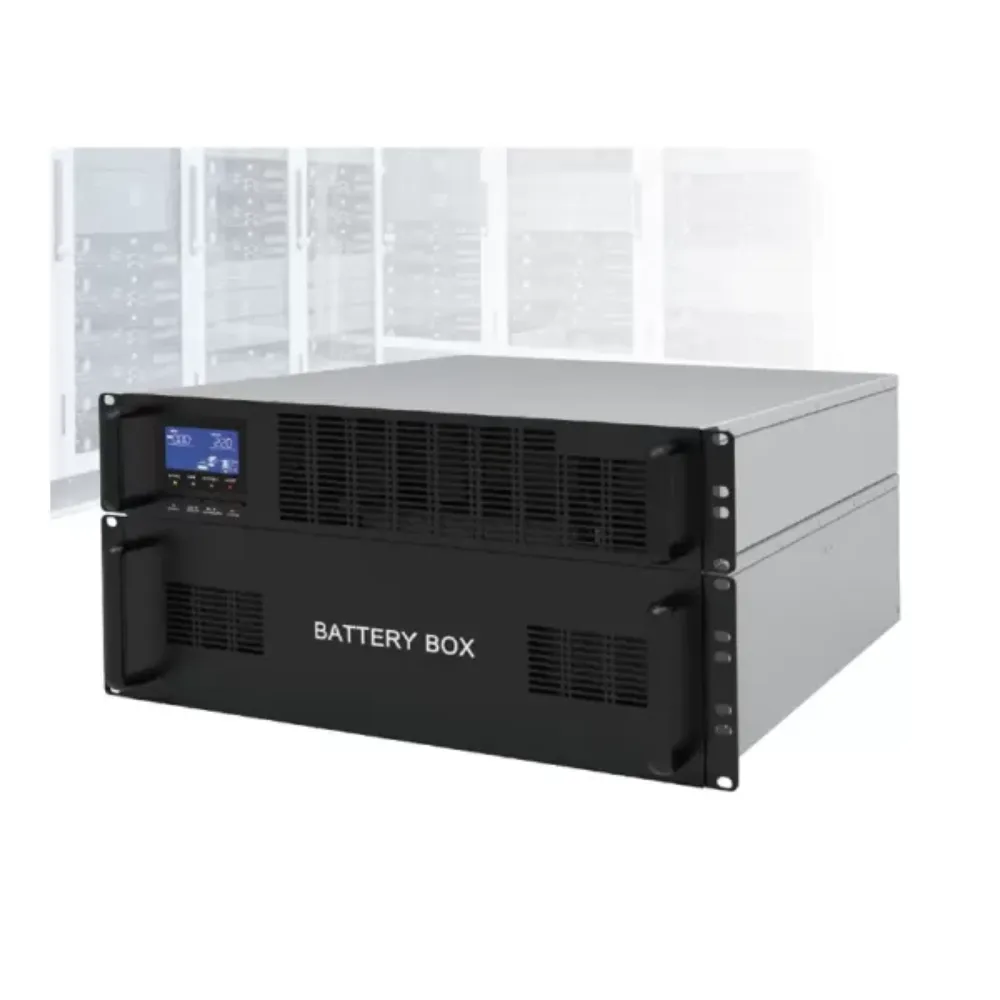
Keep the inputs and result together. A colleague should be able to trace the minutes to a load, battery, curve, and operating state. Without that record, two quotations may describe different requirements.
Use this worksheet for UPS runtime calculation. Fill unknown fields with a request for data rather than a guessed default.
| Field | Enter the value and its source |
|---|---|
| Purpose | Shutdown, generator bridge or continued operation; required duration and end condition |
| UPS | Full model, kW/kVA ratings, operating mode and manual revision |
| Load | Normal and peak W, kVA, changing stages, measurement location and date |
| Battery | Chemistry, exact model, block voltage, cells per block, blocks per string and parallel strings |
| Discharge data | Source document, revision, W/block or W/cell, end voltage and temperature |
| Battery condition | Charge state, age, condition evidence and service-life requirement |
| Losses | Relevant efficiency, self-consumption and cable-loss treatment; identify what is already included |
| Result | Candidate point supported, not supported or insufficient data; record assumptions |
| Recovery | Approved charging arrangement and readiness needed before another outage |
| Verification | Agreed load, conditions, acceptance criteria, reviewer and record date |
This is a fillable planning worksheet within the article. It does not calculate a hidden result or replace an approved design tool. You can use it to make a supplier review more specific.
Illustrative scenario: shutdown or generator bridge
Two sites start with similar protected loads. One needs to finish an orderly shutdown. The other needs to bridge the period until a generator supply is ready and accepted by the system.
The first team maps the shutdown sequence and its supporting devices. The second documents generator-related conditions and the fallback plan if that source is delayed. They do not choose a common runtime simply because the present loads are similar.
Each UPS runtime calculation must support its own task and end condition. The scenario does not set a standard duration for either site.
Turn a forecast into a verification plan
Keep three review records:
- A planning estimate with its assumptions.
- The exact configuration confirmed by the supplier.
- A site verification result under agreed conditions.
A pass in one record does not complete the others.
Agree the test load, initial battery condition, operating mode, end criteria, and required observations with the responsible service team. Follow the approved procedure. This article does not instruct readers to disconnect live batteries or interrupt a running installation.
If the UPS runtime calculation and verification differ, compare their inputs first. Check the load, charge state, configuration, temperature, and stopping condition before treating the difference as a product fault. Record unresolved differences for review.
Match the data to a Banatton configuration
Begin with the industrial UPS selection requirements, then narrow the UPS and battery arrangement. The runtime requirement belongs alongside voltage, phase, load, site conditions, and the maintenance plan.
Banatton’s lead-acid battery category is a starting point for a battery discussion. A listing does not prove that a battery is approved for your UPS. Request the exact product data and supported arrangement.
For modular applications, the BT9300-M product page provides configuration context. Do not infer battery minutes from frame capacity or borrow another manufacturer’s discharge curve for that model.
Ask for a UPS runtime calculation tied to the quoted configuration, including its battery part number and conditions. Where a public curve is unavailable, that is a request for supporting data, not permission to claim the target has been met.
UPS battery runtime questions
What is the formula for UPS runtime?
An energy estimate divides usable energy by load, allowing for relevant conversion losses. A model-specific result needs the matching runtime curve or battery discharge data. UPS runtime calculation should state which of those methods produced its answer.
How long will a 1500 VA or 1000 VA UPS run?
The VA label alone cannot tell you. You also need the actual load and supported battery configuration. Two units with the same output rating can have different battery arrangements, so use the exact model’s data.
How long will a UPS last with a 500 W load?
The load is only one input. Identify the UPS, battery, charge state, and relevant curve before assigning minutes. Do not convert a 500 W output rating into an energy capacity.
Why does the displayed time differ from my calculation?
First compare the inputs and conditions. Your estimate may use nominal energy while the displayed estimate uses a model-specific method. Consult the selected model’s documentation rather than assuming every UPS uses the same algorithm.
Does adding Ah or another module guarantee more time?
Only an approved configuration and matching data can establish the result. More power capacity does not by itself add stored energy, and battery changes require compatibility and charging checks. Repeat the UPS runtime calculation when the approved configuration or load changes.
Request a runtime configuration review: Contact Banatton with your completed load and battery worksheet. Use it to turn UPS runtime calculation into a documented requirement, a supported proposal, and a verification plan.