 26Sep
26Sep

Introduction
Whether you are configuring power protection systems for data centers, hospitals, factories, or communication networks, understanding the components of a high-quality modular UPS is the first step in making an investment. In this guide, we will introduce you to the concept, advantages, and technical points to note regarding modular UPS systems, such as power capacity and configuration, N+X module-level redundancy, and the ease of hot-swappable maintenance, to help you find the best uninterruptible power source.
What Is a Modular UPS System
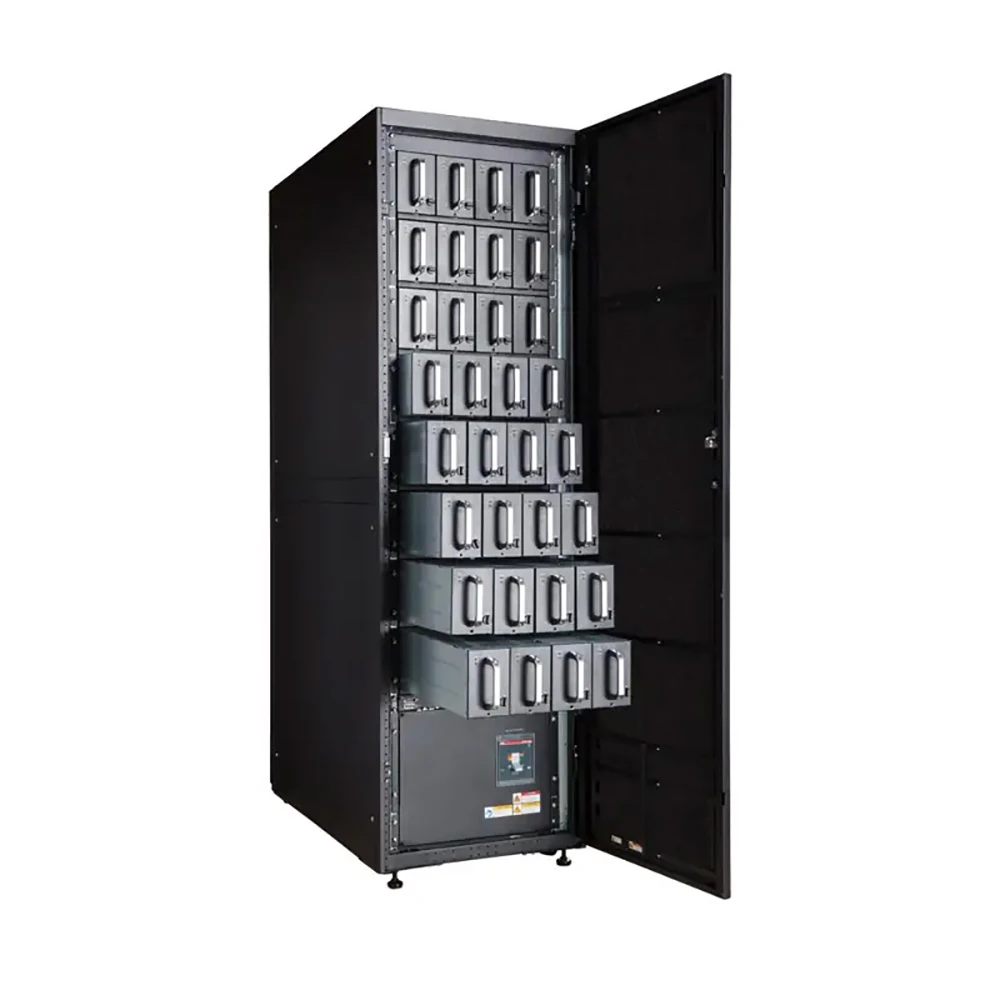
Traditional UPS systems typically have a fixed capacity. If you need more powerful power support in the future, you will have to buy a brand new UPS or replace the entire system. But modular UPS systems allow you to start with just one or two modules and scale up as needed.
Why Modular UPS Matters for Modern Businesses
Power quality issues are not only an inconvenience, but can also threaten business continuity.
Common problems include:
- Voltage fluctuations causing unexpected reboots of servers and industrial controllers
- Frequency instability affecting sensitive medical or communication equipment
- Harmonic distortion reducing energy efficiency and overheating transformers
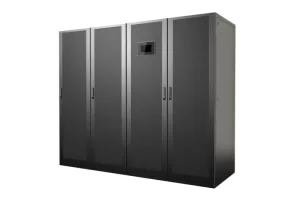
The BT9300-M is a high frequency online UPS and double conversion UPS, which is specifically designed to address precisely these types of application scenarios. With an ultra-wide input voltage range of 138–485Vac and a frequency range of 40–70Hz, this series of products can handle even harsh power grid environments with ease, ensuring that your equipment remains online even when the power grid is unstable.
Key Applications Across Industries
Modular UPS systems are used wherever power interruptions are unacceptable.
Data Centers and Server Rooms:
Centralized power supply for workstations and departmental facilities in medium-to-large data centers— exactly what a reliable data center UPS should deliver.
Medical Equipment:
Medical equipment requires pure sine wave output with zero interruption — online UPS systems can reliably deliver this.
Industrial Automation:
PLCs, robots, SMT placement machines, and factory production lines.
Communication and Security Systems:
Mobile base stations, PBX systems, control rooms, and surveillance centers
Other Critical Environments:
Mining, chemical, petrochemical production equipment, etc.
The BT9300-M series is already deployed across these industries — from data centers to hospital equipment rooms — thanks to its pure sine wave output (<2% THDV on linear load) and true 0ms transfer time.
Core Advantages of Modular UPS Systems
Scalability:
Traditional UPS systems have high initial investment and low initial operating efficiency. Modular UPS systems can initially deploy 1 to 3 modules, and the number of modules can be gradually increased as IT load or production load grows. In addition, such systems support online expansion without interrupting the operation of connected devices. Taking the BT9300-M series as an example, each cabinet can accommodate up to 10 power modules.
Enhanced Reliability:
In traditional UPS systems, redundancy typically means purchasing two complete UPS units, which doubles both cost and space. Modular UPS, however, offers N+X module-level redundancy: you can install one extra module (N+1) or more (N+X). If one module fails, its load is automatically redistributed to the healthy modules, eliminating any single point of failure at the module level. Take the BT9300-M series as an example — it uses advanced distributed active parallel technology, supporting up to 4 UPS cabinets in parallel operation without requiring a centralized bypass cabinet, which significantly improves system reliability.
Cost Efficiency:
Three factors determine cost efficiency: initial investment, operating efficiency, and maintenance cost.
Traditional UPS – High upfront cost (oversized). Efficiency drops at low loads. Requires trained technicians for repairs.
Modular UPS – Lower upfront cost (right-sized). Maintains >96% efficiency at 50–75% load. Hot-swappable modules allow in-house replacement.
BT9300-M series example:96% efficiency at 50–75% load, 95% efficiency at 25% load,Input power factor >0.99, THDi <3%
Result: Lower energy bills. Less harmonic pollution fed back to the grid.
Important Technical Features to Look For
Power Capacity and Configuration
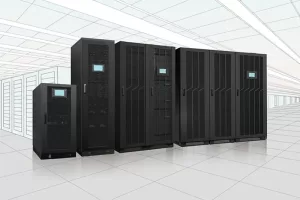
When evaluating a modular UPS for your business, pay close attention to power capacity and configuration. Not all modular UPS systems are truly modular — some require additional cabinets for bypass or batteries. Key features to look for include: cabinet capacity range, module capacity options, and true three-phase input / three-phase output. Take the BT9300-M series as an example: it offers three cabinet sizes — 20–90kVA, 25–180kVA, and 30–300kVA — all using the same 20/25/30kW power modules. This means you can standardize on one module type across different deployment sizes.
Maintenance and Serviceability
Downtime caused by maintenance is a hidden killer of productivity. Therefore, key features include: no need to access the rear or sides of the UPS during maintenance, the ability to replace a failed module while the system continues running, and the ability to replace batteries without shutdown. Taking the BT9300-M series as an example, it is designed for easy maintenance: all serviceable parts are accessible from the front, and each UPS module supports hot swapping. If a module fails, you can replace it in minutes without interrupting normal operation.
Integration with Existing Infrastructure
Replacing or upgrading a UPS shouldn’t require rewiring your entire facility. Key features to check include: flexible cabling with top or bottom entry, the ability to reuse existing battery strings, generator compatibility, and bypass backfeed protection. Taking the BT9300-M series as an example, it supports both top and bottom cabling, and its flexible battery configuration allows you to reuse your existing batteries when upgrading from a legacy system. Battery modules can also be replaced without interrupting normal UPS operation.
Intelligence and User Experience
Modern UPS systems provide real-time data, remote monitoring, and user-friendly interfaces. Taking the BT9300-M series as an example, it comes with an extra-large LCD display supporting 12 languages (including Chinese, English, Russian, French, and Spanish), with an optional touch screen. Advanced DSP full-digital control technology ensures higher system stability, while intelligent battery management automatically maintains batteries to prolong service life.
FAQ
Q: The power supply in our area is very poor, with frequent voltage fluctuations. Sometimes the computer restarts inexplicably. What kind of UPS should I get?
A: In your case, the mains interference is quite severe. A standby UPS often doesn’t solve the problem. We recommend an online interactive UPS with strong resistance to mains interference.
Q: Is it necessary to have a professional install the UPS?
A: For standard models with built-in batteries, professional installation is generally not required. Simply connect it to mains power, connect the load to the UPS, and turn it on. However, for long-duration models with external batteries, professional installation and commissioning are recommended. The battery connections are crucial; reversed connections can cause short circuits and damage the batteries. Additionally, on-site wiring may be required.
Q: I work in the hospital’s medical equipment department. What kind of UPS should we use for our hospital’s medical electronic equipment, such as electrocardiographs and biochemical analyzers?
Answer: Medical equipment and other electronic equipment have very high requirements for power quality, and some equipment requires sine wave sampling. Therefore, it is essential to equip them with online UPSs capable of outputting pure sine waves with zero interruption.
Conclusion
Modular UPS systems provide scalable, reliable, and cost-effective power UPS for environments such as data centers, healthcare facilities, and industrial automation settings. Featuring hot-swappable modules, N+X redundancy, and >96% efficiency, the BT9300-M Series (20–300kVA) delivers a 0ms transfer time, pure sine wave output, and intelligent battery management. If you are seeking a suitable modular UPS solution for your business, please feel free to contact us for more information or a customized quote.
26Sep
 20Nov
20Nov