 26Nov
26Nov

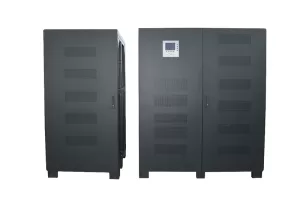
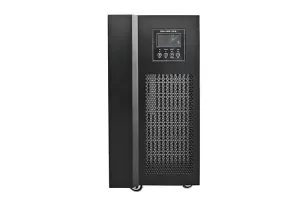
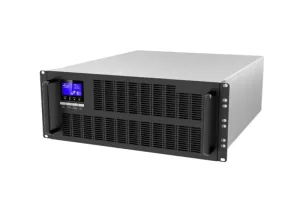
In an era when data has become a new currency and industrial processes require extreme accuracy, even a brief power flash can lead to disastrous financial loss, data damage or operational downtime. Uninterruptible Power Supply (UPS) is an unsung hero to resist these invisible threats. However, with the continuous development of technical requirements, what is the difference between modern high-capacity 3phase UPS and its predecessor? What makes it an indispensable part of today’s mission-critical environment? In this paper, the engineering, advantages and specific applications of powerful online UPS systems are discussed in depth, and the main models such as 40 KVA online UPS and the 200 KVA UPS are emphatically introduced to illustrate their key role in ensuring business continuity.
What is an Online Double-Conversion UPS?
Uninterruptible Power supply (UPS) is an electrical equipment, which provides emergency power to a load when the main power supply (usually commercial power supply) fails. Among various topologies, the Online Double-Conversion UPS is the gold standard for protecting sensitive and critical equipment. Different from standby or line interaction designs, its working principle is to continuously convert the input AC power supply into DC (first conversion) to charge the batteries, and then convert the DC back to clean and stable AC power supply (second conversion) to supply power to the connected load. This process ensures that the load is completely isolated from all input power abnormalities, including spikes, dips, harmonics and frequency changes. Only when the power is completely cut off can the system seamlessly absorb energy from the battery pack without any transmission time (0 ms), thus ensuring uninterrupted operation.
Unique Advantages of High-Capacity 3-Phase Online UPS Systems
Modern Data Center UPS systems and industrial-grade units offer far more than basic backup power. Their unique advantages stem from the complex engineering customized for the high-demand three-phase power supply environment.
- Uncompromising Power Quality: As per the provided specifications, these units maintain an output voltage with exceptional precision (380/400/415 ± 1% Vac) and exhibit extremely low Harmonic Distortion (THDV: ≤ 2% for linear loads, ≤ 3% for non-linear loads). This ensures that sensitive servers in a Data Center UPS application or precision industrial machinery are fed with pure sine wave power, preventing data errors and hardware stress.
- High Efficiency and Power Factor: With an efficiency of 95.50% and a power factor of 1, these systems minimize energy waste, directly reducing operational electricity costs and thermal output in densely packed server rooms. The unit power factor also means that they draw current in the same phase as the voltage, providing an ideal load for generator or public power grid without generating reactive power loss.
- Powerful overload and transient handling capability: The rated overload capability-supporting 110% load for 1 hour, 125% load for 10 minutes and 150% load for 1 minute-provides an important buffer for handling startup surge or temporary load peak of connected equipment. This is very important in an environment with dynamic power requirements.
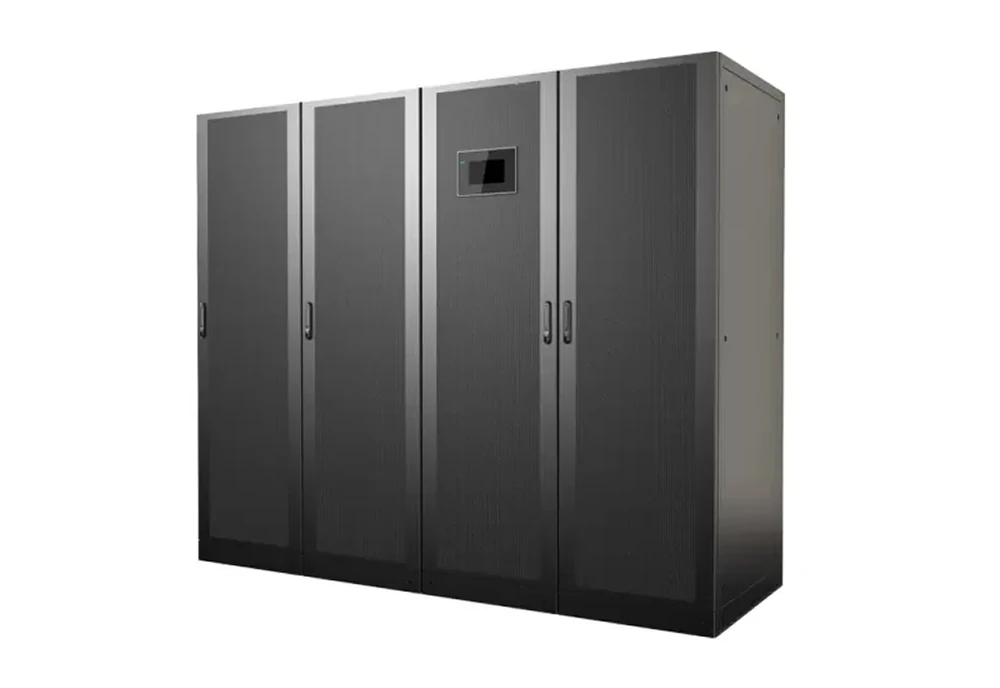
- Scalability and Reliability: Devices such as 40 KVA online UPS are usually used as modular building blocks or independent protectors for specific areas, while a 200 KVA UPS can protect the whole server channel or production line. This scalability supports customized, cost-effective power protection strategies.
Detailed product specifications and performance indicators
In order to understand the capability of advanced 3-phase UPS, it is necessary to check its key performance indicators (KPI) The following table summarizes the key technical data of high-performance online UPS model suitable for the range of 40 KVA to 200 KVA.
| Parameter | Specification | Implication for the User |
| Output Voltage | 380/400/415 Vac ±1% | Extreme stability protects equipment from damaging voltage fluctuations. |
| Power Factor | 1 | Maximizes real power usage, reduces electrical infrastructure costs, and is generator-friendly. |
| Admissible Crest Factor | 3:1 | Capable of powering challenging non-linear loads (like switch-mode power supplies) common in IT equipment. |
| Efficiency (Typical) | 95.50% | High efficiency lowers total cost of ownership (TCO) by reducing power loss and cooling needs. |
| Overload Capability | 110% (1h), 125% (10m), 150% (1m) | Provides headroom for load surges, enhancing system reliability and fault tolerance. |
| Operating Temperature | 0°C to 40°C | Defines the standard environmental range for reliable operation. |
| Certification | CE (Cert. No. M.2021.206.C67628) | Guarantees compliance with European health, safety, and environmental standards. |
These indicators represent measurable guarantees of system reliability rather than mere figures. For example, the transition from traditional low-efficiency dual-conversion UPS systems to modern high-efficiency mode is a key industry trend driven by the demand for reducing energy costs. According to a white paper published by the leading IT consulting firm Uptime Institute, improving the efficiency of power supply and cooling is very important to manage the total cost of ownership (TCO) of modern data centers, and UPS plays a central role in it. Switching from the old model with low efficiency to the uninterruptible power supply with efficiency over 95% is a direct means to realize this goal.
The main application scenario
The stability of a 3phase UPS makes it suitable for various mission-critical applications other than traditional data center UPS.
- Medium and large data Centers: Providing centralized power supply for server racks, network switches and storage arrays. A 200 KVA UPS might protect the whole area, and several 40 KVA online UPS could be deployed in a distributed architecture to achieve better fault isolation.
- Industrial Automation: Protect the programmable logic controllers (PLC), the mechanical arms and SMT mounter from power events, which could lead to expensive production suspension or defective batches.
- Critical Infrastructure: Ensuring continuous operation in transmitter stations, chemical/petrochemical control rooms, and for medical imaging equipment where a power interruption is unacceptable.
- Security & Information Hubs: Powering surveillance systems, access control, and local data centers that manage real-time information flow.
Steps for Selecting and Deploying a 3-Phase UPS
Implementing an appropriate UPS solution requires a systematic approach.
Step1: Load assessment. Calculate the total KVA and kw requirements of all key equipment. Ensure that the selected UPS (for example, a 40 KVA Online UPS) has a rated capacity exceeding this total, with allowance for future growth.
Step2: Run time requirements. Determine the backup time required during power failure. This determines the size and configuration of the external battery pack connected to the UPS.
Step3: Site Evaluation. Verify whether the installation site meets the environmental requirements of UPS (temperature, humidity, floor load), and whether there is enough three-phase power input and distribution.
Step4: Integration Planning. It is planned to integrate with existing power distribution units (PDU), generator systems and remote monitoring software to realize seamless management.
Frequently asked Questions (FAQs)
Q: What is the definition of the efficiency of uninterruptible power supply? What does this stand for? The same as power factor?
A: UPS efficiency (η) is defined as the percentage of output active power (P) and input active power (P ‘), and expressed as η = (p/p’)%. It represents the proportion of input power successfully transmitted to the load, and the difference is lost in the form of heat. It is a direct measure of the UPS power consumption and operation cost. This is different from power factor. Power factor measures the efficiency of converting input current into useful work (active power), and efficiency measures the active power loss in the conversion process. International Electrotechnical Commission (IEC) standard 62040-3 provides a method for testing and reporting UPS efficiency, which ensures the consistency and comparability of measurement results.
Q: Can a traditional line frequency inverter with an output isolation transformer improve its load capacity and reduce the neutral-to-ground voltage?
A: Strictly speaking, the output isolation transformer of the power frequency inverter is an indispensable part of its inverter. However, it does not provide complete isolation, because bypass channel usually lacks isolation, and so does the neutral line. While it can aid in certain grounding scenarios, its primary role is voltage transformation and creating a neutral, not universally increasing load capacity or solving all neutral-to-ground voltage issues. Modern transformer-free or high-frequency 3phase UPS designs can usually achieve excellent efficiency and power density, while managing these characteristics through advanced electronic equipment.
Conclusion
In a word, choosing modern 3phase UPS, such as accurately designed 40 KVA on-line UPS or expandable 200 KVA UPS, is a strategic investment in operating flexibility. By delivering flawless power quality, high efficiency, and robust protection, these systems form the bedrock of reliability for Data Center UPS infrastructures and critical industrial operations alike, ensuring uninterrupted operation of modern digital and industrial infrastructures.