28Jan
28Jan

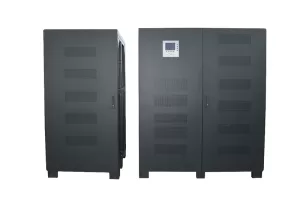
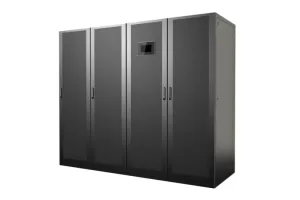
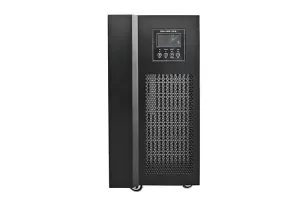
Ensuring Uninterrupted Power for Data Centers, Industrial Systems, and Medical Facilities with Advanced Three-Phase Technology. In today’s digital economy, the price of power instability is huge. For key operations in data centers, factories and medical facilities, even a short power outage can lead to serious data loss, production suspension and significant economic losses. Uninterruptible Power Supply (UPS) is a basic means to resist these interruptions. For medium to large-scale applications, the solution often lies in a robust 40 kVA Online UPS, a cornerstone of any comprehensive Backup Power UPS strategy. This paper discusses the key functions of these systems, focusing on the technology and advantages of modern three-phase UPS systems.
What is the online UPS? Advantages of double conversion
Uninterruptible Power supply (UPS) provides emergency power when power supply fails. However, the highest level of protection comes from an “online double conversion” UPS. This technology works in a continuous loop.
1. Conversion to DC: Incoming AC power is converted to clean DC power.
2. Convert to AC again: This DC power supply is then converted back to the ideal AC power supply for the connected devices.
3. Battery charging: the system charges the batteries at the same time.
4. Seamless Backup: During a power failure, the inverter immediately obtains power from the batteries, and the transmission time is zero. This process can ensure the abnormal complete isolation of interconnected devices from the power grid, making it the gold standard for mission-critical infrastructure.
The Key Benefits of a 40 kVA Three-Phase UPS.
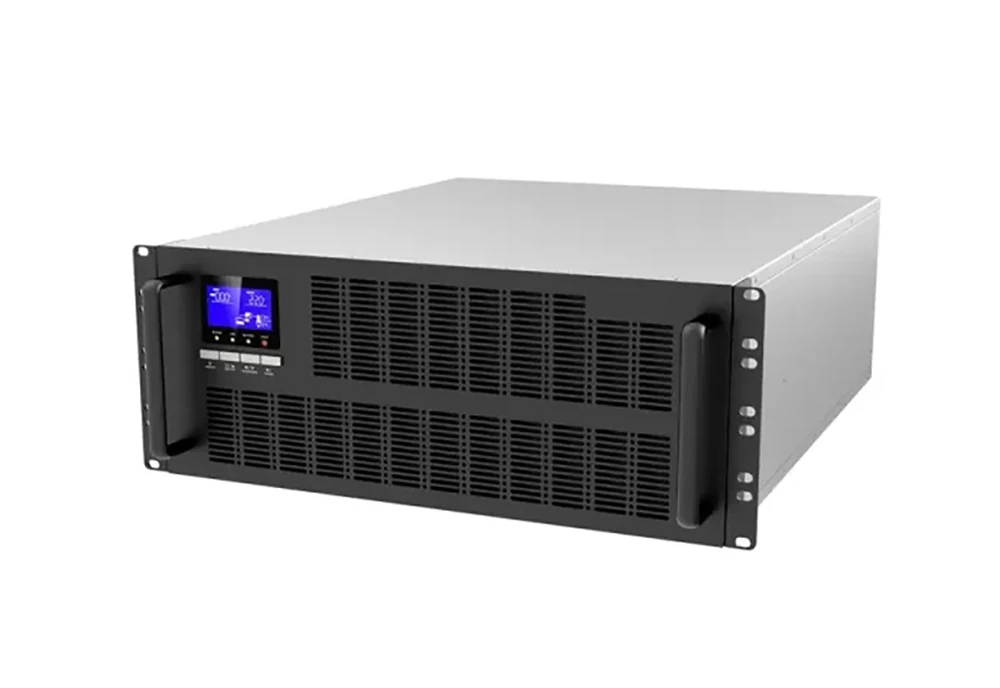
A 40 kVA online UPS is designed to protect the whole server room, industrial control systems or medical suites. Its technical characteristics provide obvious advantages.
High Efficiency and Clean Power: With active input power factor correction (> 0.99) and three-level inverter technology, these systems draw power efficiently from the grid. This reduces energy costs and electrical noise, resulting in lower operating temperature and higher reliability. Improving power quality is an urgent task for all industries. This technology can achieve this goal.
Excellent flexibility: the wide input voltage range (90 v ~ 300 v) allows the UPS to handle severe voltage sags and surges without switching to battery, thus maintaining the battery life in the event of actual power failure. This is of vital importance in areas where power is unstable.
Operational flexibility: Key functions such as generator compatibility and inverter mode (for 50/60 Hz conversion) make these systems suitable for global use and extended backups. The function of accepting single-phase or three-phase input simplifies installation. DSP (Digital Signal Processor) control and optional remote monitoring cards (SNMP, MODBUS) can achieve accurate management and be integrated into building control systems.
Core Specifications and Their Real-World Impact.
The value of a high-end Backup Power UPS is defined by its specifications. The following are the meanings of key characteristics in practice.
DSP control and high power factor: provide intelligent and fast response to power problems and reduce the costs of utility.
Three-level inverter: it can achieve high efficiency (> 96%), reduce operating costs and heat output.
Wide input range: Excellent protection against common power grid fluctuations.
ECO mode: allows ultra-efficient operation during stable power supply conditions.
CE certification (m. 2021.206.c 67628): Confirm that the product meet the strict EU safety and environmental protection standards.
Where are 40 kVA 3 Phase UPS Systems Used?
The robustness of a 40 kVA Online UPS makes it indispensable across critical sectors.
Data Centers & IT: Protecting servers and network gear from downtime. According to Ponemon Institute, data center downtime costs thousands of dollars per minute, which highlights the return on investment of UPS.
Industrial Automation: Safeguarding PLCs and control systems to prevent production halts.
Medical Facilities: ensure the continuous operation of life support and diagnostic imaging equipment.
Key Infrastructure: providing power for public safety traffic control and power grid systems.
Frequently asked Questions and answers
Q: What is the definition of UPS operating efficiency and why is it so important?
Answer: Efficiency is the ratio of the output power to input power. High efficiency means less wasted energy, lower electricity costs, reduced heat generation, and improved system reliability and lifespan.
Q: What are the advantages of high frequency Ups compared with power frequency Ups?
A: High-frequency Ups, like the system described, offer superior efficiency, a smaller footprint, lighter weight, and higher reliability compared to older, bulkier line-frequency models. They have become the leading technology in most commercial and industrial applications.
Q: What does the rating of “40 KVA” mean? How long can it supply power for my equipment?
Answer: the kVA rating indicates the maximum load that can be supported by the uninterruptible power supply. The standby operation time is determined by the external battery pack connected to the UPS. A power experts can design a battery solution to meet any specific running time requirement, from a few minutes to a few hours.
Sum up
Investing in a modern 40 KVA online UPS is a strategic measure to protect key operations. As a reliable backup power supply UPS for demanding applications, an advanced three-phase UPS system can not only provide stable shutdown protection, but also provide higher energy efficiency and operation control. It is the basic pillar of flexible and reliable modern infrastructure.