The supply of electricity has brought us great convenience and provided energy security for social development, people’s livelihoods, and industrial growth. However, power supply has not always been smooth sailing and has faced significant challenges. Not only must long-distance power transmission be considered, but electrical pollution in the environment where electricity is consumed must also be considered.
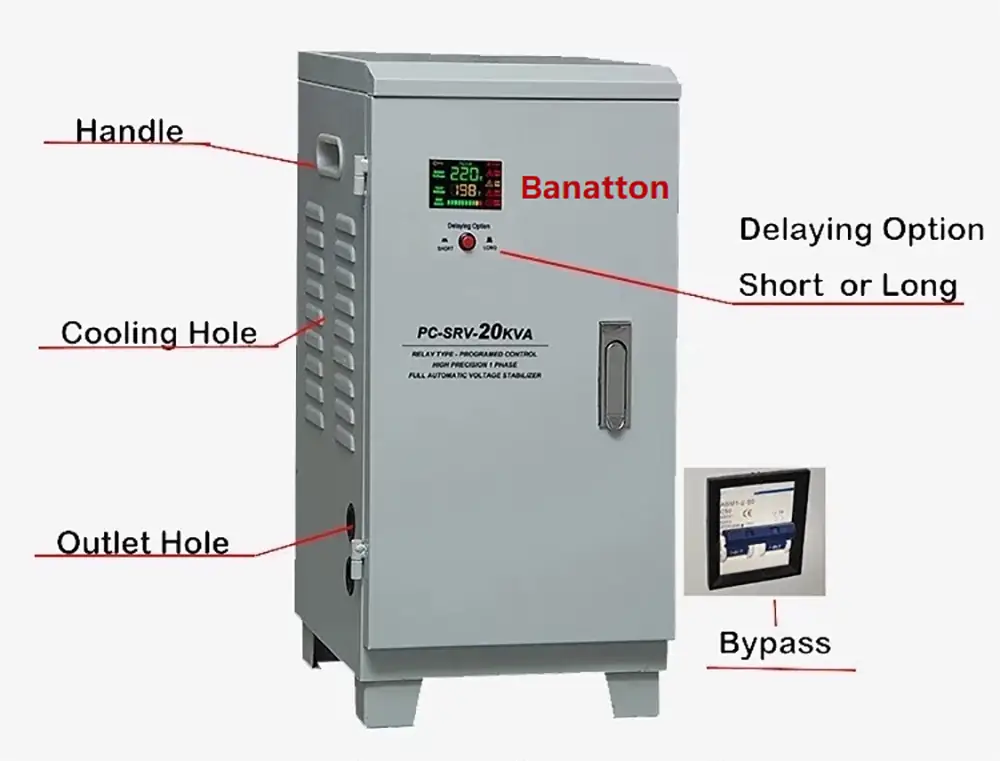
Since the invention of electricity, unstable power supply has been a significant challenge for energy providers and grid engineers. Although my country boasts a highly developed electricity network, reaching every household, voltage stability remains a common concern. For industrial manufacturers in particular, voltage instability has become a common occurrence and a challenge that needs to be addressed. The application of voltage stabilizers has filled this technological gap.
In 1955, American scientist G.H. Rover successfully developed a transistor-based DC converter that exploited magnetic saturation for self-oscillation. Since then, various forms of DC converters have emerged, utilizing this technology with increasing refinement, replacing earlier rotating and mechanical oscillator-based commutation devices with short lifespans, poor reliability, and low conversion efficiency.
Because the power transistors in transistor-DC converters operate in a switching state, the resulting regulated power supplies offer numerous output groups, variable polarity, high efficiency, compact size, and light weight. Consequently, they were widely used in aerospace and military electronic equipment at the time. However, due to the backward microelectronics and technology of the time, transistors with high voltage resistance, high switching speed, and high power could not be produced. Therefore, DC converters of this period could only operate with low voltage inputs, and the conversion speed was not very high.
Beginning in the 1960s, the rapid development of microelectronics technology led to the emergence of high-reverse-voltage transistors. DC converters could now directly operate from rectified and filtered mains power, eliminating the need for a power-frequency transformer to step down the voltage. This greatly expanded their application range and led to the emergence of transformerless switching power supplies. Eliminating the power-frequency transformer significantly reduced the size and weight of the switching power supply, truly achieving high efficiency, compact size, and light weight.
Since the 1970s, components related to this technology, such as high-frequency, high-reverse-voltage power transistors, high-frequency capacitors, switching diodes, and switching transformer cores, have been continuously developed and produced. This has led to the rapid development of transformerless switching power supplies, which have been widely used in fields such as computers, communications, aerospace, and color televisions, making them a leading power supply.
With the rapid advancement of society, the number of electrical devices has increased significantly. However, the aging and underdeveloped power transmission and distribution infrastructure, as well as poor design and insufficient power supply, have resulted in low voltages at end users and often high voltages at end users. This is like having no insurance for electrical equipment, especially high-tech and precision equipment with stringent voltage requirements.
Unstable voltage can cause fatal damage or malfunction to equipment, disrupting production, resulting in delivery delays, inconsistent quality, and other losses. It also accelerates equipment aging, shortens its service life, and can even burn out components, forcing owners to face the hassle of repairs or short-term equipment replacements, wasting resources and, in severe cases, leading to safety accidents and immeasurable losses.
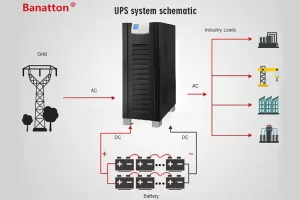
An uninterruptible power supply (UPS) is an electrical device that provides emergency power to loads when the main power source (usually utility power) fails. When...
Today, businesses rely heavily on uninterruptible power to protect their critical infrastructure. To meet this demand, modular uninterruptible power supply (UPS) systems are becoming increasingly...
An industrial UPS is a device that provides temporary power to large electrical equipment during power outages. Because it uses three-phase power, which is common...
In an era when enterprises rely on continuous power supply, blackouts, voltage fluctuations and surges will pose costly threats. From data centers to medical equipment,...