 26Sep

Solar battery sizing starts with the energy your chosen loads need during the backup or overnight window. Divide that energy by the share you can discharge and the efficiency of delivering it to your loads. Then check power and recharge.
A bigger battery cannot fix a power bottleneck. You can have enough stored energy for the night and still trip the system when a pump starts. Likewise, a bank that handles every load can remain partly empty if winter solar production cannot refill it.
If you’ve compared battery capacity labels, usable capacity ratings, and inverter data, the numbers can be hard to match. They’re describing different parts of the same system. This guide connects them with a load sheet, formulas, and worked examples. You can check each result with a calculator.
The method draws on US Department of Energy (DOE) guidance, altE’s bank-sizing guide, and a named battery maker’s cold-weather data. You’ll check energy first, power second, and recharge third. Example inputs are assumptions, not product ratings. Replace them with measured loads and the right model data before you buy.
Key Takeaways
- With an assumed 80% discharge window and 90% delivery efficiency, 8 kWh of AC demand requires about 11.11 kWh nominal storage.
- A usable capacity rating already includes its stated discharge window; applying the same depth-of-discharge reduction again counts it twice.
- Battery kWh determines stored energy, while inverter and battery power limits determine which loads can run together.
- An outage beginning at partial charge provides less runtime than one beginning with a full battery.
- Solar generation must cover daytime loads and recharge losses before the bank can recover for another night.
Solar battery sizing starts with the load window
Choose the job before calculating battery capacity. Using stored solar at night, backing up chosen loads, and running off-grid need different energy budgets. Solar battery sizing for a shop’s fridge circuit should follow that circuit’s use. A bill for the whole building covers more loads.
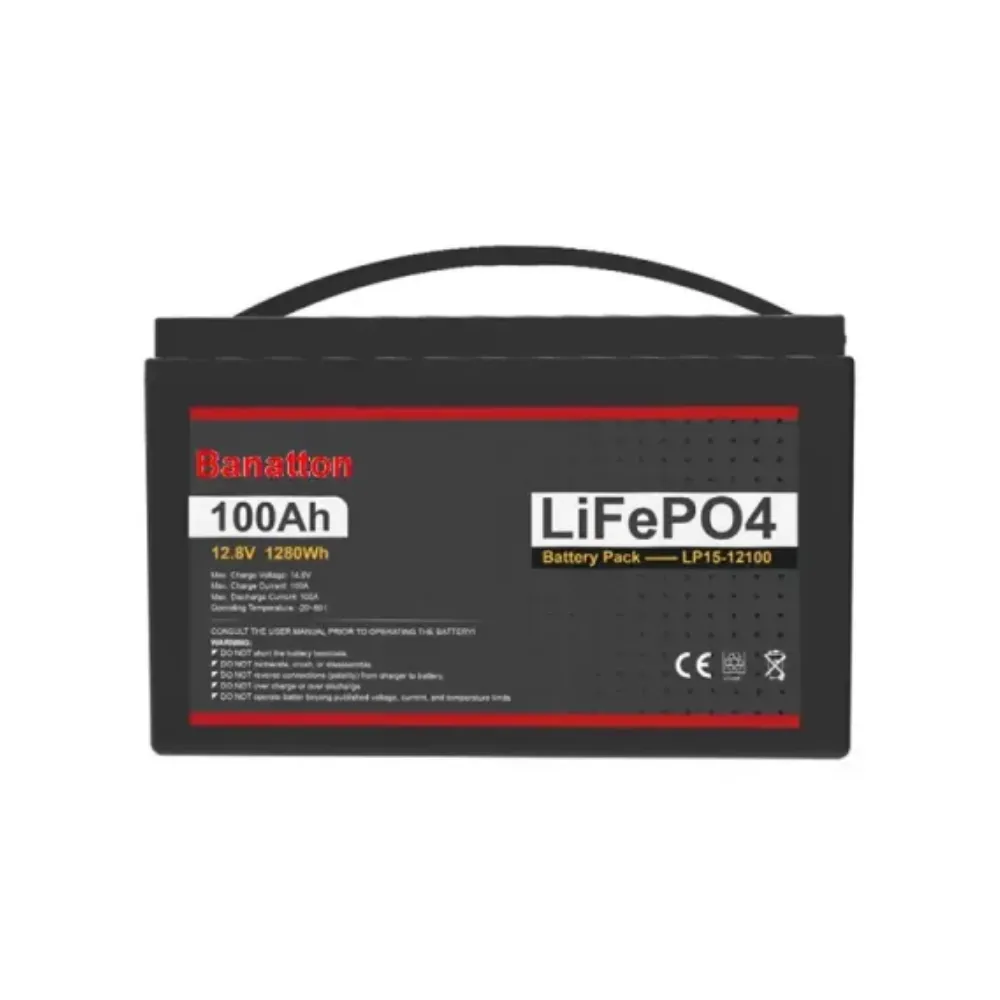
Start with Banatton Group’s storage battery catalog to find the right product type. Compare each model’s usable capacity and power data with your load sheet.
Build an energy budget
List each load, its measured power draw, and how long it must run. Energy in kilowatt-hours equals watts multiplied by hours, divided by 1,000. For loads that switch on and off, use logged energy or measured running time. The label’s rated watts may not apply all day.
| Illustrative selected load | Assumed draw | Operating time per day | AC energy per day |
|---|---|---|---|
| Fridge, assumed running time | 150 W | 8 hours | 1.20 kWh |
| Network equipment | 20 W | 24 hours | 0.48 kWh |
| Lights | 40 W total | 5 hours | 0.20 kWh |
| Laptop | 60 W | 4 hours | 0.24 kWh |
| Total | 2.12 kWh |
These load figures are assumptions, not appliance averages. Solar battery sizing for two identical days without recharge starts with 4.24 kWh of AC demand, before conversion losses and operating limits.
Alex, a fictional homeowner, starts with a bill showing 18 kWh per day. Their chosen circuits match the example’s 2.12 kWh worksheet. Leaving out electric cooking and water heating cuts their two-day budget from 36 kWh to 4.24 kWh.
The result is a smaller battery capacity target. This is a worked example, not a customer result or runtime promise.
Separate energy from power
The Department of Energy’s storage explanation explains the difference between energy and power ratings. Battery capacity in kWh describes stored energy; power in kW describes the rate of delivery.
Record both values in your solar battery sizing worksheet. Bills usually miss motor starts and brief load peaks. Use short-interval power logs to check them.
| Check | Main input | What can fail |
|---|---|---|
| Energy | Load kWh over the chosen window | Stored energy runs out |
| Power | Peak kW and start duration | A limit trips before energy runs out |
| Recharge | Solar yield after daytime loads | The bank starts the next night partly empty |
Solar battery sizing formulas without double counting
For a first estimate, assume a full start and no recharge during the chosen window. Define every factor before entering it into the formula. Two battery capacity figures may look alike yet measure energy at different points.
Start with nominal energy
Use this first-pass formula for loads measured on the AC side:
Nominal battery kWh = AC load kWh / (available discharge fraction x one-way delivery efficiency)
The discharge fraction is the share of rated energy you plan to draw. Depth of discharge (DoD) tells you how much of a full battery you’ve used. Delivery efficiency accounts for energy lost between the battery and AC loads. Use a value suited to the load level.
For solar battery sizing, altE’s deep-cycle battery-bank guide uses load energy, days without recharge, discharge depth, temperature, and voltage as inputs. Days without recharge are also called days of autonomy. Check its chemistry advice against the model you choose.
Assume 8 kWh AC demand, an 80% discharge window, and 90% one-way delivery efficiency. These are example inputs, not Banatton ratings or settings for every battery:
8 / (0.80 x 0.90) = 11.11 kWh nominal.
That result assumes a new battery at its rated test conditions. Now assume the bank will retain 80% of its starting energy at your chosen replacement point:
8 / (0.80 x 0.90 x 0.80) = 13.89 kWh nominal.
The extra factor allows for assumed aging. Solar battery sizing cannot predict when a bank will reach that point. Check the maker’s retained-energy terms and test conditions.
Use usable capacity correctly
A usable capacity rating tells you how much energy you may draw under stated conditions. Check where the maker measures it: at the DC battery terminals or the AC system output. Usable capacity alone doesn’t tell you that.
If an example unit offers 10 kWh usable DC energy, an assumed 90% delivery efficiency gives 9 kWh AC. Do not multiply by the same DoD allowance again. If usable capacity already means delivered AC energy, don’t apply the same loss again.
Solar battery sizing must include controls, fans, heaters, and standby draw. Add their energy at the right point unless the system rating includes it. Round-trip efficiency covers both charge and discharge losses. Don’t use it in place of one-way delivery efficiency.
Account for the starting charge
State of charge (SoC) describes how full the battery is. Assume a 60% starting SoC and a 20% minimum SoC. Only 40 percentage points remain to use. You won’t have the full usable capacity available from that start.
For backup, record the reserve charge you plan to keep. For solar battery sizing with daily use and backup, test the outage case at that reserve level. Energy spent on evening loads won’t also be there for an outage.
Check inverter power, current, and battery configuration
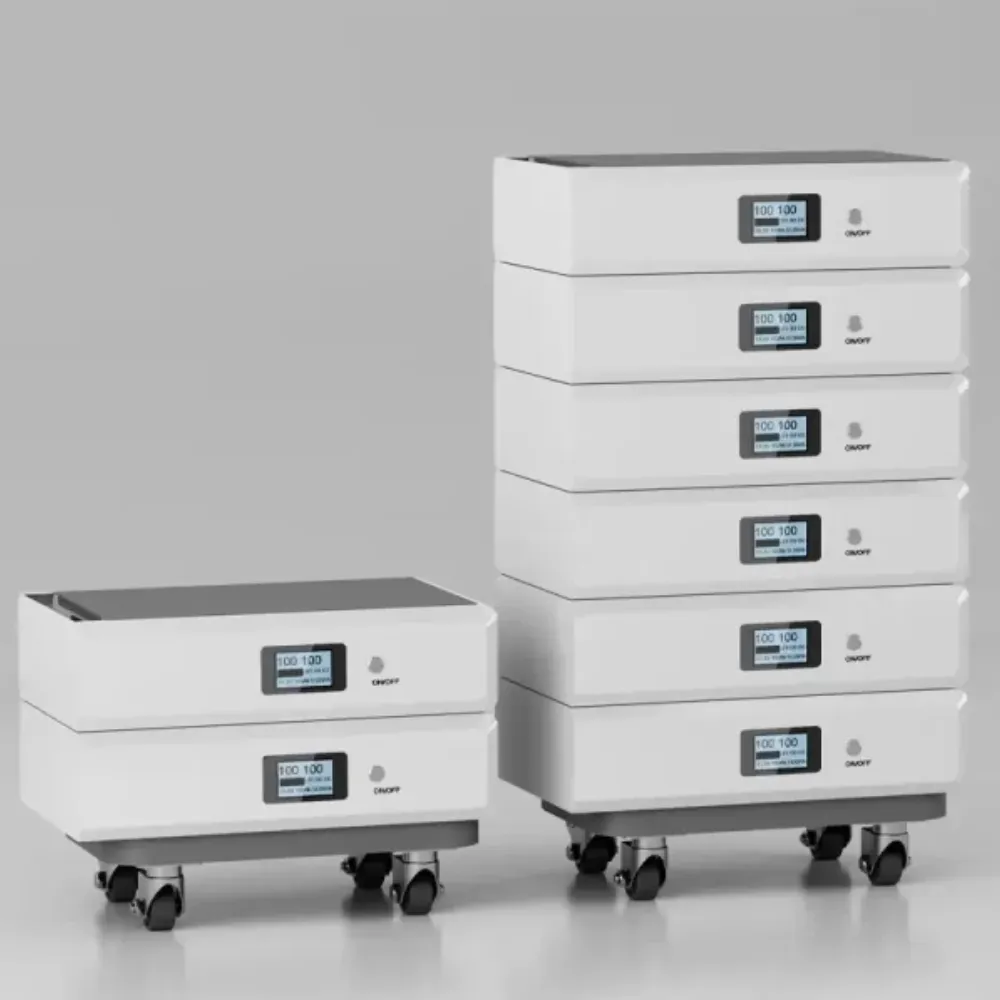
Next, check whether the system can feed the load. Solar battery sizing needs more than a kWh result. An inverter turns DC battery power into AC power. Check both its steady output and brief peak rating.
Check the weakest power limit
Add loads that can run together. Then check the power needed to start each load and how long that peak lasts. Check the inverter output, battery discharge limit, battery management system (BMS), and protection devices against those needs. The lowest relevant limit sets what the system can deliver.
Jordan, a fictional workshop owner, budgets 6 kWh for an evening shift. Their hypothetical pump needs 1.2 kW while running but 4 kW for one second at startup. A proposed inverter supports only 3 kW for that duration. Even with enough battery capacity, that system fails the startup check.
Jordan must change the equipment match or starting method before ordering. Adding stored energy alone won’t fix the power limit.
Solar battery sizing should record steady kW and peak kW or kVA, plus peak duration, beside usable capacity. Check phase, output voltage, and power factor too. A surge number needs a time rating to be useful.
Translate power into battery current
For an illustrative 3 kW AC load, 48 V operating battery voltage, and 90% inverter efficiency:
DC current = 3,000 / (48 x 0.90) = 69.44 A.
Actual current rises as loaded voltage falls for the same output power. Solar battery sizing must check the lowest allowed loaded voltage, surge demand, and current limits at the site’s temperature. The nominal system label alone doesn’t give you these values.
A BMS monitors cells and controls protection within its set limits. It doesn’t allow unlimited current or work with every inverter. Check the approved data link, firmware, shutdown behavior, and charge settings for the exact pair.
Convert Ah only after choosing voltage
Amp-hours (Ah) measure electric charge. To find battery capacity in kWh, you also need voltage.
Nominal kWh = nominal V x Ah / 1,000. An example 48 V, 200 Ah bank contains about 9.6 kWh nominal, before determining usable capacity.
Two identical 12 V, 100 Ah units give approximately 24 V, 100 Ah in series or 12 V, 200 Ah in parallel. Both arrangements total about 2.4 kWh nominal. Solar battery sizing must still respect the maker’s connection limits. Check them before putting units in series or parallel.
Check winter recharge before adding storage
Storage shifts energy in time; it doesn’t produce it. Solar battery sizing for daily use needs enough solar yield to feed daytime loads and refill the bank. DOE notes that solar output changes with season, weather, and site conditions.
Calculate both energy paths
Consider a separate recharge example with assumed inputs. Assume the bank needs 10 kWh added at the stored-energy boundary, while daytime equipment needs 6 kWh AC. For photovoltaic (PV) panels, assume 80% yield from nameplate-equivalent energy to stored energy, 90% to daytime AC loads, and 4 equivalent peak-sun-hours.
The panels need this nameplate-equivalent daily energy budget:
- Charging path: 10 / 0.80 = 12.50 kWh.
- Daytime-load path: 6 / 0.90 = 6.67 kWh.
- Total: approximately 19.17 kWh.
- Screening array power: 19.17 / 4 = 4.79 kW.
This solar battery sizing example uses two loss factors. One covers charging; the other covers the direct path to loads. Each assumed factor must cover the losses along its own path. Do not add the same charge loss twice.
Four peak-sun-hours means the day’s yield equals four hours at rated output. It doesn’t mean the panels hold that output for four hours. Daily totals also hide timing: a large midday load can compete with charging. Check the array with local seasonal yield data and hourly loads.
Test recovery after poor weather
For off-grid battery bank sizing, check several poor-sun days in a row. Then check how long recovery will take. A larger bank needs more energy to refill after the same deep discharge. It won’t fix a lasting shortfall in solar supply.
Check the controller and battery charge-current limits. Check inverter modes and whether PV can restart after a low-battery shutdown. Solar battery sizing for outages also requires a system set up to feed an isolated backup circuit. Owning panels and a battery doesn’t by itself give you outage power.
Compare solar system categories with your load and recovery requirements. Bring both the usable capacity target and charging window when checking which parts work together.
Turn the estimate into an equipment specification
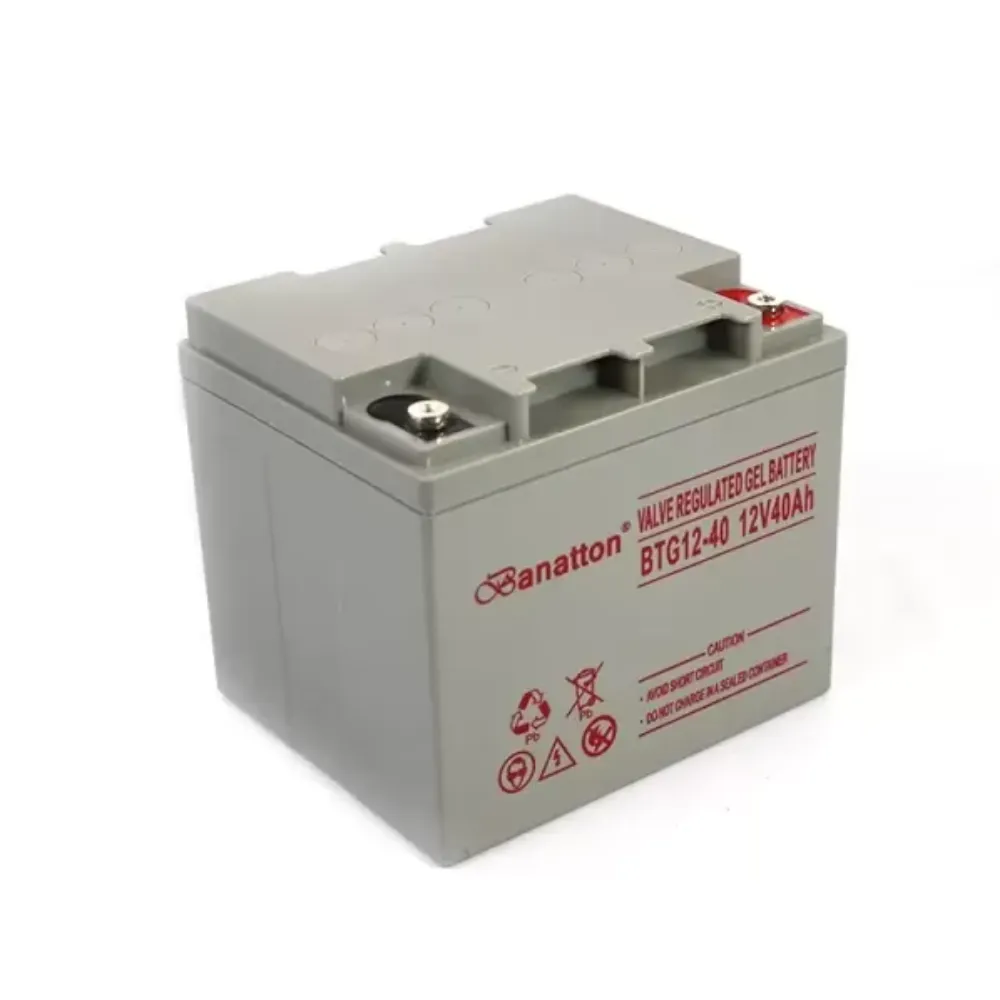
Once energy, power, and recharge checks agree, turn the worksheet into a buying brief. Solar battery sizing should give you a clear list of needs. State the conditions behind each battery capacity figure so someone else can check it.
Check temperature and chemistry limits
Check the model’s usable capacity and its limits for discharge rate and temperature. Lead-acid energy output can fall as discharge rate rises. Lithium products also have limits. Use the model’s data rather than a fixed DoD or charging limit for an entire chemistry.
For a named example from another maker, Victron’s Lithium Battery Smart technical table lists the LFP-Smart 12.8/100 at 100 Ah at 25°C and 80 Ah at 0°C. Those capacity figures apply at a discharge current at or below 1C. For a 100 Ah battery, 1C means 100 A.
The same product range lists a +5°C to +50°C charging range. These are Victron-specific figures, not Banatton limits. They show why solar battery sizing must check both cold-weather energy and when charging is allowed. Usable capacity alone cannot answer both.
Prepare a handoff someone else can check
Record these inputs alongside your battery capacity estimate:
- Chosen loads, measured energy, and loads running together.
- Runtime, starting SoC, minimum SoC, and any planned recharge.
- Nominal or usable capacity, where it’s measured, losses, and standby draw.
- Steady and peak power, peak duration, and lowest loaded voltage.
- Site temperature, assumed aging, and planned new loads.
- Seasonal solar yield, recharge time, and approved equipment pairs.
Banatton’s power and energy storage solutions show the kinds of projects that handoff can support. Ask for the proposed model’s datasheet and written sales terms. A category page alone cannot prove its battery capacity, approval status, warranty, or ability to work with other equipment.
Solar battery sizing questions
What size battery do I need for a 6.6 kW solar system?
Panel power alone cannot set battery capacity. Find the energy needed overnight or during backup. Then check usable capacity, output power, and spare solar yield. Two sites with the same 6.6 kW array can have different loads and reserve needs. Solar battery sizing follows those needs rather than a fixed panel-to-battery ratio.
How long will a 10 kWh battery power a house?
Divide the energy you can deliver by average load for a first estimate. If 10 kWh is usable DC energy, an assumed 90% conversion delivers 9 kWh AC: about 9 hours at a constant 1 kW. This example assumes a full start and no recharge. It also assumes standby loads are already counted. Check inverter power separately.
What is the 20/80 rule for batteries?
It often means staying between 20% and 80% SoC. That leaves a 60-percentage-point window. It isn’t a rule for every battery. An 80% DoD limit means something different; it doesn’t give the same usable capacity. Solar battery sizing must follow the chosen model’s allowed window.
How many batteries do I need for solar?
Divide your energy target by one module’s usable capacity measured at the same point. Round up, then check allowed connections and discharge power. For example, a 12 kWh usable-DC target needs three 5 kWh usable-DC modules by energy alone. The modules must also work together within their connection limits. Battery capacity arithmetic is only the first check.
How do I size an inverter for battery backup?
Match steady output to loads running together. Match surge output to start demand for the time it lasts. Check battery voltage, current limits, phase, and approved controls.
Solar battery sizing and inverter choice must agree. Enough stored energy won’t fix a weak power path.
Can I use a solar battery size calculator instead?
Yes, for a first estimate if it shows its assumptions. Check for nominal or usable capacity, starting charge, AC losses, days of backup, temperature, and recharge needs.
A calculator’s battery capacity result still needs model and site checks. Keep its input sheet so someone else can check the math.
Choose a battery that can deliver and recharge
A useful solar battery sizing result connects three decisions: how much energy to store, how quickly to deliver it, and how to replace it. Start with measured loads and a clear runtime goal. Then check usable capacity at the right point in the system. Include the starting reserve and any documented allowances.
Keep the energy and power checks together as you compare options. Confirm inverter output, battery current, motor starting demand, and the permitted connections. Finally, test whether seasonal solar yield can feed the site and refill the bank in time for its next use.
Your next step is to complete the six-point handoff above and attach the relevant load records. This turns your first battery capacity estimate into a request a supplier or installer can check against model data. If one input changes, update the calculation before placing an order.
Request a battery and solar-system quote with your load profile, runtime target, site conditions, and solar battery sizing worksheet. Ask for the model’s usable capacity, operating limits, and proof that the parts work together with the quote.