 26Sep

Battery capacity calculation starts with Ah = current in amps × time in hours; nominal energy is Wh ≈ volts × Ah. To estimate a battery for an AC load, divide load watts × runtime hours by battery voltage, conversion efficiency, and allowed discharge fraction.
Two batteries labeled 100 Ah can store very different amounts of energy. At 48 V, the nominal energy is four times that of a 12 V battery with the same amp hours. Reading the label correctly can change the entire purchase.
Consider Alex, a fictional facility manager planning four hours of backup for a 600 W communications load. They first compare Ah labels, then realize voltage and usable energy determine whether the shortlist makes sense. Their worked example below shows how an initial 50 Ah estimate becomes 86.8 Ah after stated allowances.
This guide explains the units, equations, and checks behind that change. You’ll learn how to use watt hours, organize a load worksheet, and spot the limits of simple battery sizing. Manufacturer discharge data remains the final check for a specific installation.
Key Takeaways
- Amp hours measure charge; watt hours account for both charge and voltage.
- A nominal 12 V, 100 Ah battery represents about 1,200 Wh, before operating limits and losses.
- In the worked 600 W example, 90% efficiency and 80% allowed discharge raise the estimate from 50 Ah to 69.4 Ah.
- Series connections add voltage; approved parallel connections add Ah at the same voltage.
- Short-duration uninterruptible power supply (UPS) selection needs discharge data at the actual load and cutoff voltage.
Battery capacity calculation: units and ratings
Separate charge from energy
Amp hours (Ah) describe electrical charge delivered over time. A 5 A current lasting 20 hours delivers 100 Ah. One Ah equals 1,000 milliamp hours (mAh), so a 5,000 mAh rating equals 5 Ah.
Watt hours (Wh) describe energy. Multiply amp hours by nominal battery voltage to estimate watt hours, then divide by 1,000 for kilowatt hours (kWh). For example, 12 V × 100 Ah gives about 1,200 Wh, or 1.2 kWh.
For battery sizing, compare watt hours when candidate voltages differ. The same amp hours at a higher voltage represent more nominal energy. A battery capacity calculation that compares Ah alone can hide that difference.
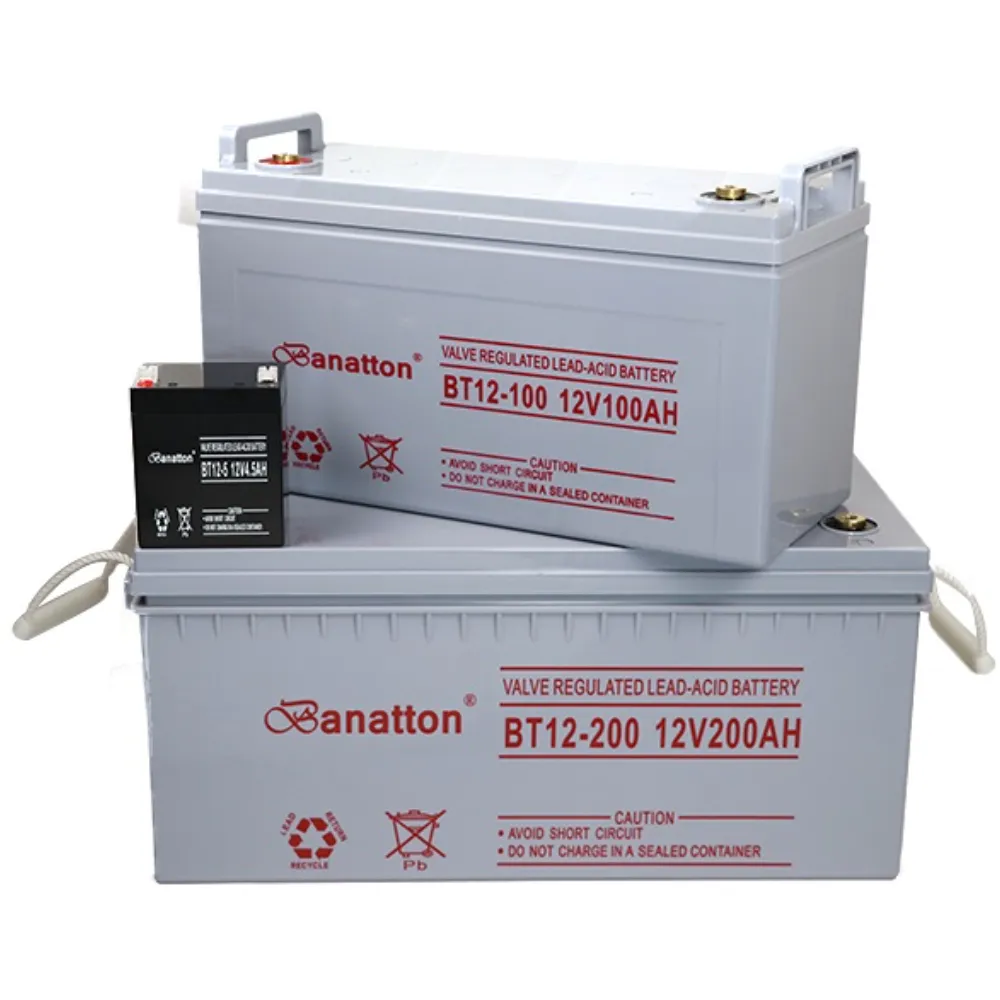
Compare Banatton Group’s storage battery options once you’ve recorded the voltage and energy your application needs. Keep model-specific discharge limits beside the Ah rating as you build the shortlist.
What a battery capacity calculation measures
A battery capacity calculation needs the rating conditions: discharge duration, temperature, and endpoint voltage. The label gives a rated result, rather than a promise at every current.
Victron’s battery-capacity explanation uses a 100 Ah battery at the 20-hour rate, or C20. That corresponds to 5 A for 20 hours under the stated conditions. Its lead-acid example also illustrates reduced available capacity at a faster discharge rate.
Keep three questions separate. A capacity test measures what an installed battery delivers; an energy estimate converts that charge into watt hours. Battery sizing determines what you must install to meet a load and runtime requirement.
Battery capacity calculation formulas and inputs
Battery capacity calculation from current and time
For a steady DC current, the basic battery capacity formula is:
Delivered Ah = I × t
Here, I is current in amps and t is time in hours. A 6 A draw lasting 3 hours consumes 18 Ah. This measures charge drawn; it doesn’t establish the nameplate capacity you should buy.
When current changes, add the charge used in each time segment. For example, 8 A for 2 hours plus 2 A for 4 hours consumes 24 Ah. Recording the schedule improves a battery capacity calculation more than adding an unexplained margin afterward.
Use amp hours directly only when the current is measured on the battery side. AC output current and DC battery current usually differ. Their voltages and power paths differ too.
Convert a load requirement into installed capacity
For a steady AC load and a set runtime, start with this battery sizing calculation:
Required nominal Ah ≈ (P × t) / (V × η × D × R)
- P: load power in watts at the AC output.
- t: required runtime in hours; divide minutes by 60.
- V: nominal DC battery-bank voltage.
- η: battery-to-load conversion efficiency as a decimal.
- D: usable discharge window as a fraction of full present capacity.
- R: capacity left at the design age, as a fraction of new capacity.
D equals starting state of charge minus minimum allowed state of charge, using decimals. Starting at 80% and stopping at 20% gives D = 0.60.
Start with P × t to find the load’s watt hours. Divide by efficiency to find the battery-side energy. Then allow for the charge window and the capacity lost with age. Finally, divide by nominal voltage for amp hours.
For a new battery, R can be 1.00. If only 80% of new capacity remains, divide by 0.80. That raises the starting size by 1 / 0.80 = 1.25. Don’t also multiply by another 1.25 aging allowance for the same effect.
Check cold-weather and high-current limits for the exact model as well. This battery capacity calculation uses nominal voltage as a first estimate. It doesn’t replace the maker’s discharge curves. Avoid a generic correction factor when an actual discharge table is available.
Define the battery capacity calculation boundary
Use battery-to-load efficiency at the load you plan to run. An AC-to-AC efficiency figure measured on utility power may describe a different path. For a DC load, include DC converter and wire losses. Set efficiency to 1 only if you choose to leave those losses out.
A supplier may quote watt hours already delivered to the AC load. Ask which losses, charge window, and age limits that figure includes. Counting the same losses twice makes the battery sizing result too large.
Keep the inputs on your battery capacity calculation sheet so each result can be checked:
| Input | What to record | Why it matters |
|---|---|---|
| Load | Measured watts and operating schedule | Defines the energy demand |
| Runtime | Hours or minutes, clearly labeled | Prevents a 60-fold unit error |
| Bank | Nominal voltage and allowed voltage range | Connects Ah to energy and equipment limits |
| Conversion | Battery-to-load efficiency and included auxiliaries | Defines where losses are counted |
| Usable window | Starting charge and minimum allowed charge | Determines the available fraction |
| Service conditions | Design age, lowest temperature, and discharge rate | Connects the estimate to actual performance |
For changing loads, add the watt hours in each time slot and account for the losses on that path. Separately check the highest power demand. Energy and peak power answer different questions. For battery sizing, keep both results on the same sheet.
Worked battery sizing examples

Alex’s 600 W communications load
Alex’s fictional project needs 600 W for 4 hours. For this teaching example, assume a 48 V nominal bank, 90% conversion efficiency, and 80% allowed discharge from full charge. These are calculation inputs, not Banatton specifications or universal settings.
Their first battery capacity calculation ignores allowances: 600 × 4 / 48 = 50 Ah. That figure represents the load energy divided by nominal voltage. It is not yet a complete purchase requirement.
First, the load requires 2,400 Wh. Dividing by 0.90 gives about 2,667 Wh on the battery side. These watt hours still need an allowance for the usable discharge window.
Next, the new-battery estimate becomes:
600 × 4 / (48 × 0.90 × 0.80) = 69.4 Ah
If the project must meet runtime when capacity has fallen to 80% of its new value, the battery capacity calculation becomes:
69.444 / 0.80 = 86.8 Ah
That is a minimum from this simplified energy model, before temperature and rate checks. An example 100 Ah size clears that need on paper.
Alex still needs the model’s discharge data. They must also check its allowed charge window and whether it works with the system.
Check current before accepting the answer
The nominal DC current is about 600 / (48 × 0.90) = 13.9 A. If this example system operates down to 42 V with the same assumed efficiency, current rises to about 15.9 A. The actual minimum voltage must come from the selected equipment.
A battery capacity calculation gives the amp hours needed; the current check tests how fast the bank must supply them. Battery terminals, protective devices, cables, converters, and any battery management system (BMS) must suit the operating current and peaks.
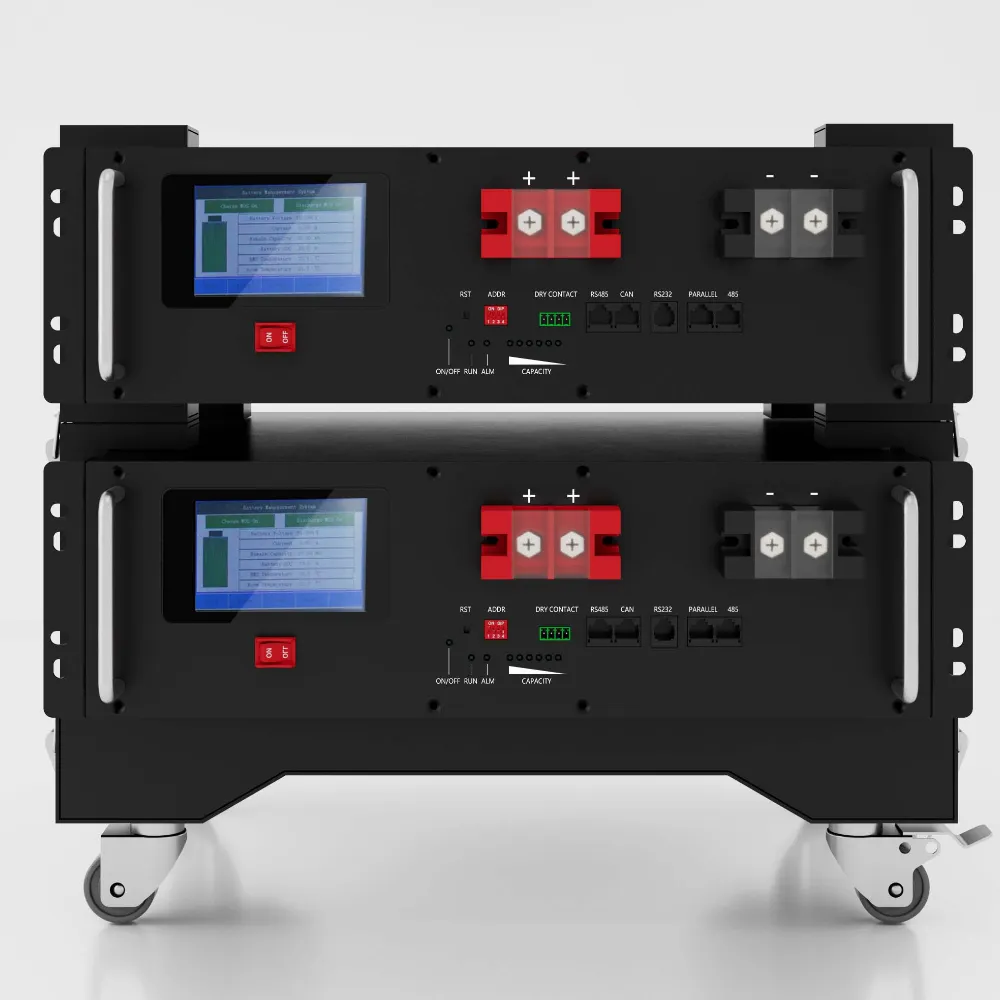
For chemistry-specific selection, compare lithium-ion and lead-acid UPS batteries. Keep battery sizing tied to the selected model’s data rather than assuming one chemistry’s operating window fits another.
Jordan’s 15-minute UPS requirement
Jordan, a fictional IT manager, needs an uninterruptible power supply (UPS) to support 10 kW for 15 minutes. For a first check, they use an example 240 V nominal battery bus. They assume 90% battery-to-load efficiency. Neither figure specifies a particular UPS model.
Their battery capacity calculation starts with 10,000 × 0.25 = 2,500 Wh of load energy. The nominal battery-side equivalent is 2,500 / (240 × 0.90) = 11.6 Ah. This assumes full capacity use, with no age or temperature allowance.
Jordan initially treats 12 Ah as a buying answer. The discharge duration changes that decision: the nominal DC demand is about 46.3 A, and it rises as voltage falls. They request 15-minute constant-power discharge data before placing an order.
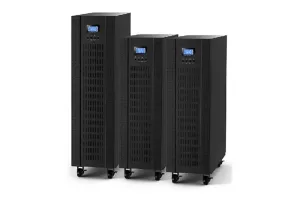
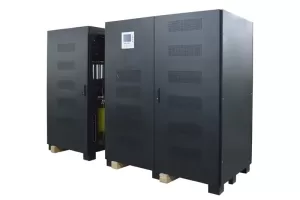
For a project like this, review the available UPS systems with your measured load and target runtime. Ask which DC bank layout the UPS accepts and request the matching battery data.
Battery banks, discharge rate, and capacity checks
Account for series and parallel connections
A battery capacity calculation must describe the whole bank. For identical, matched batteries, series connections add voltage. Amp hours stay the same. Parallel connections add amp hours at the same voltage. Check that the battery maker allows this layout.
The following arithmetic uses four example 12 V, 100 Ah blocks. It describes nominal energy, not an approved wiring design.
| Arrangement | Nominal bank voltage | Bank capacity | Nominal energy |
|---|---|---|---|
| Four in series | 48 V | 100 Ah | 4,800 Wh |
| Four in parallel | 12 V | 400 Ah | 4,800 Wh |
| Two series pairs in parallel | 24 V | 200 Ah | 4,800 Wh |
For battery sizing, this battery capacity calculation confirms that all three arrangements contain the same nominal watt hours. The layout changes the voltage and amp hours seen by the equipment. It does not create extra energy. Don’t multiply battery count again after using the complete bank voltage and capacity.
Victron’s battery-bank wiring guide explains the connection principles and why balanced current paths matter. Follow the battery maker’s rules for matching blocks, series and parallel limits, and circuit protection. Some lithium packs permit only particular configurations.
Before you trust the bank total
Keep these checks beside the bank drawing:
- Use the voltage of the whole string, not one block.
- Use the Ah of one series string, then add approved parallel strings.
- Check that the total Wh equals the sum of the individual blocks.
- Record the model, rating duration, and cutoff used for each block.
- Confirm that each string has the protection and current path the maker requires.
Check the discharge duration and endpoint
A faster discharge can reduce usable lead-acid capacity. Amp hours measured over 20 hours cannot prove what the bank will supply in 15 minutes. Peukert’s law gives a rough model of this effect. Use the exact model’s constant-power or constant-current data for final battery sizing.
A short-runtime battery capacity calculation also needs the UPS cutoff voltage. The UPS can reach its minimum voltage while charge remains in the battery. Treating all nominal watt hours as available would miss that limit.
Use the deeper guide to UPS runtime and discharge curves when reviewing a short backup window. Match the table’s units: watts per cell and watts per block require different cell or block counts.
Confirm capacity and readiness over time
For an installed bank, battery capacity calculation from a discharge test means adding current × time over the test. Match the test temperature, current or power, and cutoff to the rating you want to check. Have trained staff run the test with the right tools and test procedure.
A single current reading or resistance check can’t show usable amp hours. Record the measured discharge and compare like conditions. Battery sizing must also allow the system to recharge before the next required duty period.
Battery capacity calculation questions
What is the formula for battery capacity?
For a constant-current discharge, capacity in amp hours equals current × hours. Energy in watt hours is about nominal volts × Ah. For battery sizing, also account for the load schedule, losses, usable discharge window, age, temperature, and discharge-rate limits. State which quantity your battery capacity calculation is estimating.
How do I calculate battery capacity in kWh?
For a battery capacity calculation in kWh, multiply nominal volts by amp hours, then divide by 1,000. An example 51.2 V, 100 Ah pack represents about 5.12 kWh of nominal energy. Less energy reaches the AC load once charge limits and losses apply. Compare quoted capacities on the same basis.
How long will a 150 Ah battery run a load?
You also need voltage, load, and usable capacity. At 12 V, 150 Ah represents about 1,800 Wh nominally. With assumed 80% usable discharge and 90% efficiency, it provides an estimated 1,296 Wh to the load: about 4.32 hours at 300 W. This battery capacity calculation excludes aging, temperature, and rate corrections.
Do series connections increase battery amp hours?
Series connections increase voltage while keeping the Ah rating unchanged for identical matched batteries. Approved parallel connections add Ah at the same voltage. For battery sizing, compare total watt hours as well as the bank voltage, and confirm the equipment permits the proposed connection.
Can voltage tell me the battery’s remaining capacity?
Voltage alone cannot show remaining capacity under all loads and temperatures. State of charge means how full the battery is today. It differs from the charge the battery could hold when new.
Turn the calculation into a battery specification
A useful battery capacity calculation leaves a clear record of the load, operating window, and assumptions behind the result. Keep measured demand beside required runtime, then show where you counted losses and reduced available capacity. That makes the result easier to check when a supplier proposes a different voltage or configuration.
Before ordering, check the energy estimate against the exact model’s discharge data. Confirm current limits, cutoff voltage, operating temperature, charger suitability, and the allowed bank arrangement. Keep future load growth separate from an aging allowance so each margin has a clear purpose.
Keep the battery sizing worksheet for maintenance as well. When the load changes or capacity testing shows a decline, you can repeat the calculation using comparable inputs. You can use the first set of inputs to check whether the bank still meets its duty.
To discuss your battery capacity calculation, contact Banatton with the load schedule, required runtime, system voltage, installation temperature, and any existing model numbers. Ask for model-specific discharge and compatibility information to support your selection.