 26Sep

The voltage stabilizer vs UPS choice starts with what happens to your supply. A standalone voltage stabilizer corrects voltage while usable input power is present. A battery UPS can keep a load running for a limited time when input power is lost, and some UPS designs also regulate voltage.
Two machines can show the same low-voltage alarm after very different events. One might see low voltage for most of a shift. Another might lose power just long enough to reset its controls. This guide helps you read those events, compare equipment by duty, and put the right checks into a purchase request.
Key takeaways
- Match sustained voltage changes to the stabilizer’s correction range, available capacity, and output limits.
- Match outages to a UPS load list and a required runtime at that load.
- Check the UPS topology and operating mode before relying on voltage regulation or transfer performance.
- Use the load’s tolerance and an event record to assess brief dips.
- Ask both suppliers to review compatibility if a proposal combines a stabilizer and UPS.
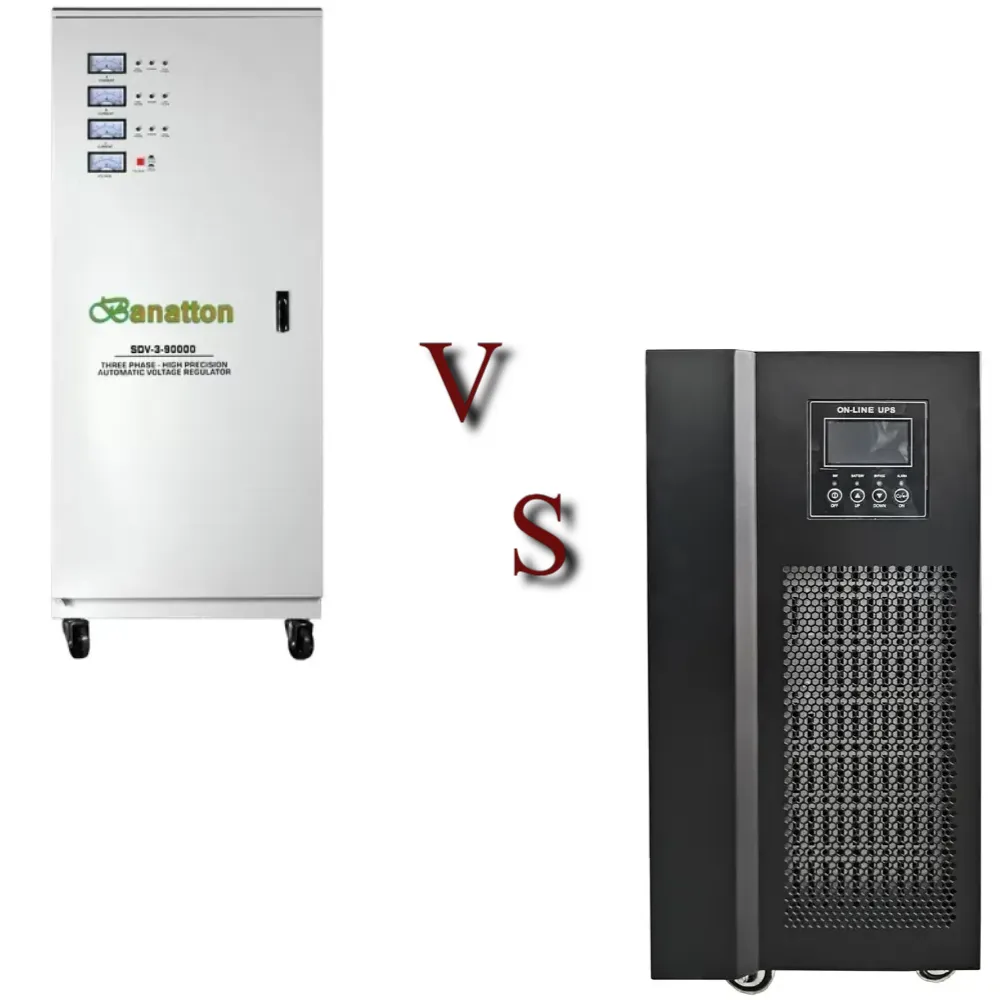
Voltage stabilizer vs UPS at a glance
What a stabilizer does
A standalone automatic voltage regulator, or AVR, raises or lowers the voltage supplied to its load within its design limits. A voltage stabilizer vs UPS comparison should start with the permitted input window and the amount of load each unit can support. An AVR can reach a correction or capacity limit even if the utility supply is still present.
Ask what the output does at the lowest expected input and highest expected load. If the supplier lists a steady output tolerance, request the test conditions behind it. That figure doesn’t show how the output changes during a dip. Ask the supplier for a test that shows the change and recovery.
What a UPS does
An uninterruptible power supply, or UPS, uses stored energy to support its output during a loss of acceptable input. With a battery UPS, the useful backup period depends on the load and battery configuration. The topology determines how the UPS handles normal supply and when it uses its inverter or battery.
Use this voltage stabilizer vs UPS table to turn each problem into a specification question.
| Question | Standalone stabilizer | Battery UPS |
|---|---|---|
| What is its main job? | Correct voltage within its operating limits | Supply a load during loss of acceptable input for a stated period |
| What should I check during normal power? | Input window, output tolerance, available capacity and response | Input window, operating mode, regulation and when it transfers |
| What happens in an outage? | Regulation depends on having usable input power | The battery supports the load within the unit’s limits |
| What should I ask for? | A model data sheet and performance at site conditions | Load ratings, transfer behavior and a runtime curve |
| What affects maintenance? | Actual design, environment and service access | Battery condition, service plan and the actual design |
A surge protective device, or SPD, addresses transient overvoltage within its ratings. Include surge protection as a separate design question in a voltage stabilizer vs UPS review. Brief spikes, sustained low voltage and an interruption each need their own evidence.
For more background on types and operating limits, see the voltage stabilizer selection guide.
Send Banatton your event record and load details if you are comparing equipment for a specific site. Include whether you need the load to keep running through a power cut.
How UPS topology changes the comparison
Standby and line-interactive UPS
A standby UPS normally supplies the load from its input and switches to its backup path when needed. A line-interactive model can use automatic voltage regulation to correct some voltage changes without drawing on the battery. Check the model’s input limits and settings to see when that correction ends and battery operation begins.
In a voltage stabilizer vs UPS decision, the term AVR can refer to a standalone device or a feature inside a UPS. Find out what the feature does on the exact model. An AVR label alone gives you neither a correction range nor a backup time.
Online double conversion
In normal double-conversion mode, the inverter supplies the load. When the input fails, stored energy can support that inverter without a transfer to a different output path. For a voltage stabilizer vs UPS review, ask how the proposed UPS behaves in its actual operating mode. ECO and bypass can use other paths, with different behavior when the input changes.
Read the numbers in context
Eaton’s AVR550U is a line-interactive example with output limits of 550 VA and 300 W. Its data sheet gives a line-to-battery transfer time of 6 ms typical and 10 ms maximum.
The sheet lists different runtimes at half and full load. These figures apply to that model. They illustrate why a voltage stabilizer vs UPS comparison needs a power rating, a defined transfer path, and a runtime at a stated load.
Voltage stabilizer vs UPS for common site problems
The voltage stays low while production runs
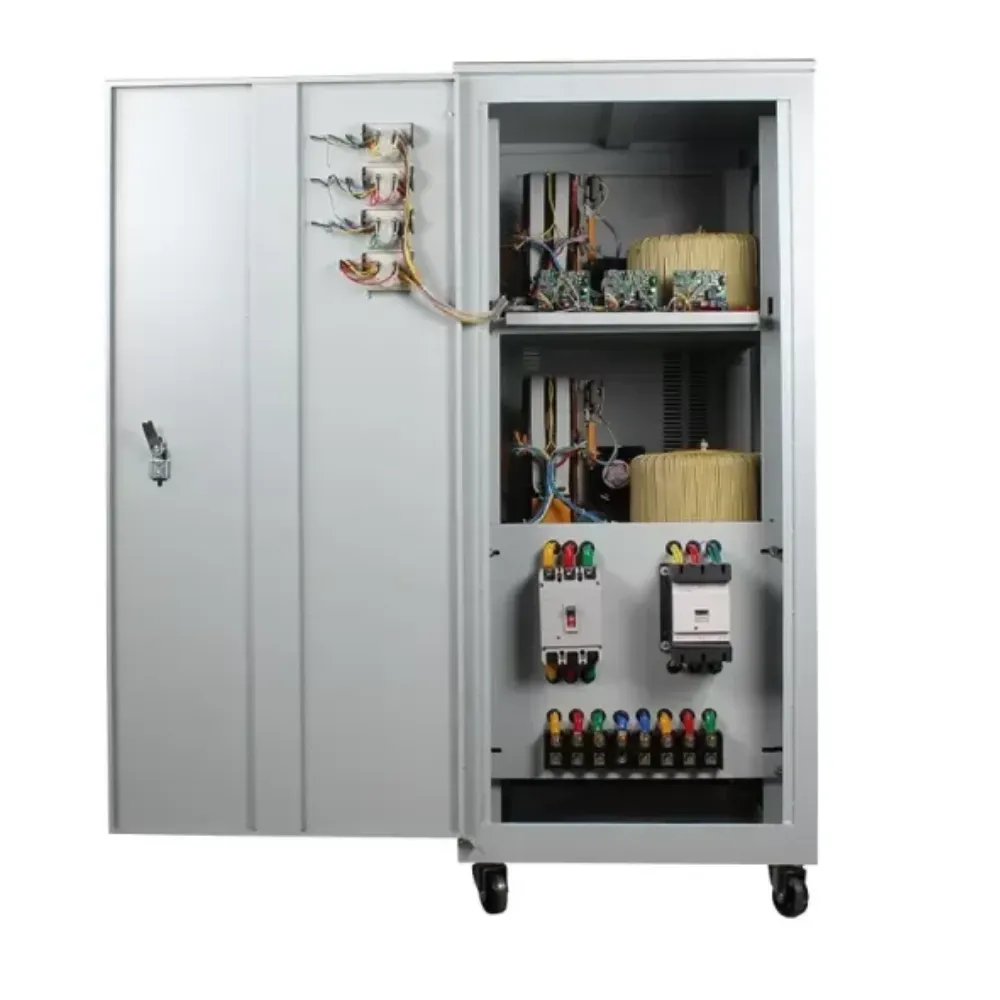
Record the voltage at the affected load during the problem and check it against the equipment maker’s permitted input. Note which other loads were running, and ask the electrical team whether the supply or distribution needs work. A voltage stabilizer vs UPS review may point to a standalone regulator when the site needs correction during sustained variation and has no backup requirement for that load.
Illustrative scenario. A workshop sees low supply voltage through part of the afternoon. Its noncritical production branch can stop during a power cut. The team checks the loaded voltage range and asks suppliers how much capacity each regulator can deliver at the low end. It also asks the site electrician to check the feeder before approving a purchase.
The Banatton voltage stabilizer range gives you product categories to discuss once the required correction window and load are known.
A short event trips a drive or controller
The voltage stabilizer vs UPS decision becomes harder when an alarm follows a brief dip. A shift minimum alone can’t tell you whether the event lasted long enough to cause the trip. Ask for the time, depth, and duration of the event and match those details to the alarm. Record where each measurement was taken and what the load was doing.
Compare the event with the equipment’s allowed input behavior. A stabilizer’s steady tolerance does not describe the output during the dip. A UPS transfer figure applies to a specific operating path, and the UPS still has to support the connected load. Ask for evidence that represents the event you need to address.
The site loses power and some loads must stay on
Start with the task that must continue. It might be keeping a network link up, saving data, or allowing a process to reach an approved stop. Write down how long the task takes and which devices need power for it. A voltage stabilizer vs UPS comparison based on the whole panel can hide the smaller group of loads that needs backup.
Illustrative scenario. A site loses power and its monitoring computer restarts before it saves a production log. The team identifies the computer and network gear that must stay on for a controlled shutdown. It records their load and asks for a UPS runtime curve at that demand. The required run time comes from the shutdown sequence rather than the size of the room.
For projects with demanding or mixed loads, see the industrial UPS selection guide.
When to evaluate a stabilizer and UPS together
Check whether one device meets the duty
Before adding hardware, review the event history and the existing UPS settings with the supplier. Find out why the UPS went to battery and whether the input at its terminals was outside the specified range. The alarm might identify a voltage event, a supply loss or another condition that needs investigation.
If the chosen UPS already meets the input, output and backup duty, record how you verified that result. If it falls short, a voltage stabilizer vs UPS review should compare the options against the same load and voltage records. The next step could be supply work, a different UPS, a separate load branch, or review of a combined system.
Get written confirmation for a combined proposal
Treat a stabilizer feeding a UPS as a design for the specific models and site. Ask both suppliers and the electrical designer to review the operating window, correction response and maximum UPS input.
Include input demand during recharge and during startup or transfer. Ask the designer to confirm phase and neutral requirements and how the protection devices work together. Request the bypass path and the supply conditions the load would see in each mode.
A voltage stabilizer vs UPS proposal should also state what happens after the utility returns. Check whether the proposed equipment can support the agreed load and recharge duty at that point. If a limit is unknown, make it an open item in the offer and name who will provide the evidence.
For plug-in units, follow the installation instructions for the exact equipment. Schneider Electric gives specific guidance for surge strips used with APC Back-UPS and Smart-UPS. That guidance shows why accessories should be checked against the actual product documentation.
Share your existing model numbers and proposed load with Banatton if you need to discuss a voltage stabilizer vs UPS project. Include the modes and input events that still need review.
Voltage stabilizer vs UPS load and acceptance checklist
Specify the load and the required outcome
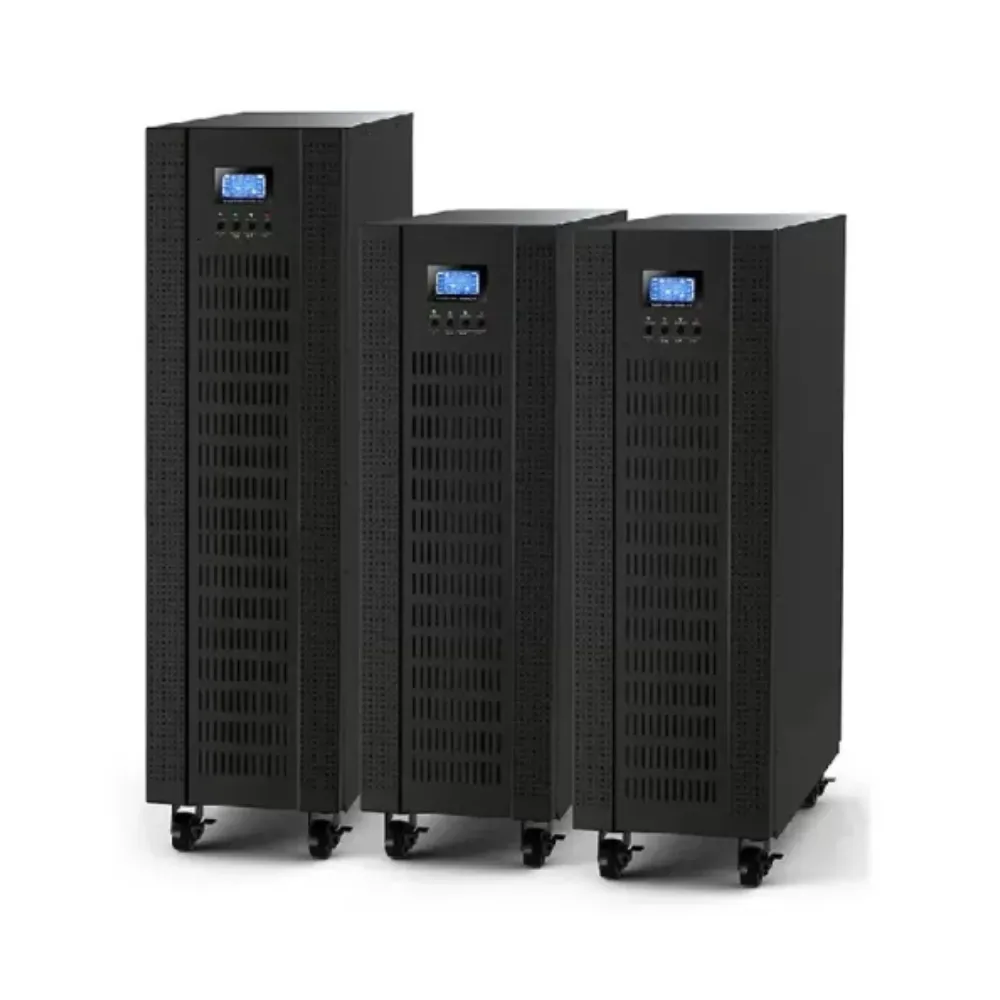
For the voltage stabilizer vs UPS comparison, list the equipment that must remain powered and the equipment that can stop. Use measured or documented watts and volt-amperes for the relevant operating state. Note the phase configuration, peak demand and duration. For a UPS, check both its watt and VA limits and confirm runtime for the planned load and battery setup.
For example, the AVR550U data sheet lists 2 minutes at 300 W and 9 minutes at 150 W. Halving the watts does not give a simple multiplier for runtime. Use the specified curve or table for the actual model and ask about the conditions behind it. See UPS runtime calculation with battery discharge curves for the next step.
For the voltage stabilizer vs UPS shortlist, give each supplier the same load list. If the planned load changes between a normal shift and a shutdown, record both states. Ask which state controls the rating and which one controls runtime. This keeps quotes comparable when one supplier assumes the full process stays on and another assumes only the controls stay powered.
Agree on how the site will verify the offer
A voltage stabilizer vs UPS quotation becomes easier to review when the supplier gives a test or document for each key requirement. Agree on the operating states, which readings to retain, and who signs off. Have qualified personnel run the checks under an approved procedure.
| What to bring | What to ask the supplier for | What to record at acceptance |
|---|---|---|
| Loaded voltage range and event log | Model limits and conditions for the offered input range | Input and output records at agreed states |
| Load list and highest demand | Continuous limits and timed overload data | Load, phase current and operating state |
| Required backup task and duration | Runtime at the agreed load and battery setup | Test conditions and whether the task can finish |
| Proposed bypass and recovery sequence | Written mode and protection details | Approved checks for bypass, recovery and alarms |
Illustrative scenario. A plant plans to restore a critical branch after a utility interruption. The team asks how the UPS charger and connected loads affect input demand during recovery. It adds that operating state to the test plan and asks the suppliers to state which evidence they will provide. The review also assigns someone to check which protections remain active in bypass.
Keep a copy of the approved model data, event logs, settings and acceptance record. When loads change later, those documents give the next voltage stabilizer vs UPS review a baseline.
Frequently asked questions
Will a voltage stabilizer work during a power cut?
A standalone regulator needs an available input source to correct voltage. In a voltage stabilizer vs UPS decision about a complete outage, specify the backup duration and load. A battery UPS can support that duty when its ratings, configuration and runtime meet the requirement.
Does every UPS have automatic voltage regulation?
UPS behavior depends on its design and mode. Many line-interactive models use AVR to correct voltage within a specified window. An online double-conversion model regulates output through its conversion path in normal operation. Read the data sheet and confirm which mode the unit will use on site.
Do I need both devices if the UPS goes to battery often?
Check the event log, measured input and UPS settings first. Find the cause and compare it with the equipment limits. If the voltage stabilizer vs UPS review leads to a combined proposal, get written compatibility and agree on tests for the actual load and operating modes.
Can a UPS support a motor or an entire factory?
For a voltage stabilizer vs UPS comparison on a motor circuit, record starting demand, operating duty and required backup time. Ask the suppliers to assess those conditions for the specific design. Identify the critical loads early so the backup plan covers what needs to keep working.
What if the load changes after installation?
Repeat the voltage stabilizer vs UPS checks with the new operating states. An added load can change the current needed during normal power and the time available during battery operation. Review the limits with the supplier before relying on the original acceptance results for the expanded load.
Does either device replace a surge protector?
Check the transient protection required for the installation and the protection stated for the proposed equipment. Regulation, backup and surge protection address different requirements. Ask the designer to review how the site’s protection works together.
Make the decision from the site record
A voltage stabilizer vs UPS decision defines what happens to the supply, which loads need help, and how the site will verify performance. Put those details on one page before requesting offers. Contact Banatton with your event log, load list and required backup task.