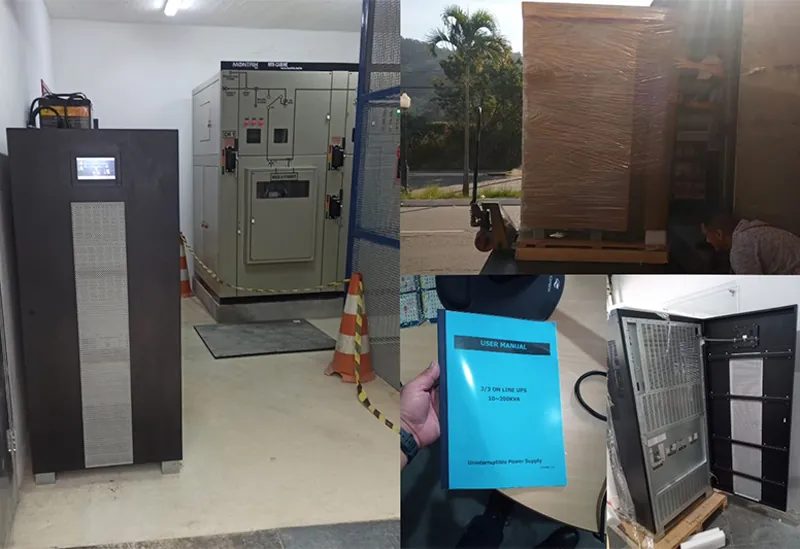
Industrial power supply project Low-Frequency UPS for a Hospital Computer Room in Brazil
Quick Facts
Industry: Computer Room
Location: Brazil
Products Deployed: 200KVA UPS、12V 200AH Lead Acid Battery and Full Set of the Solution.
Time: June 2025
The Challenge
In 2025, a prestigious hospital in Brazil procured a UPS system for its computer room, establishing it as a critical component for ensuring the stable operation of life support equipment, medical imaging systems, and the IT infrastructure.
Banatton’s Solution
Based on the specific requirements of the hospital, we supplied a comprehensive 200 kVA low-frequency UPS system for its computer room. The hospital’s power grid environment is complex, characterized by high equipment inrush currents and strong electromagnetic interference. Designed with SCR rectification and isolation transformers, this low-frequency unit demonstrates exceptional resilience to voltage fluctuations; it delivers a pure output waveform with low total harmonic distortion, thereby meeting the rigorous power quality standards required by medical equipment.
Suitable for Inductive Loads; Minimal Startup Impact
Large-scale medical equipment—such as DSA interventional systems and ultrasonic diagnostic devices—typically constitutes an inductive load characterized by high startup currents. The SCR rectifier within a low-frequency UPS possesses surge-withstanding capabilities more than four times greater than those of IGBT-based devices; this effectively suppresses startup surges, thereby safeguarding both the power grid and the connected equipment.
Protects the Hospital Power Grid and Extends Equipment Lifespan.
A low-frequency UPS not only protects the connected load but also provides reverse protection for the hospital’s power grid. By mitigating the impact that equipment places on the grid, it reduces grid maintenance costs and extends the operational lifespan of both the power infrastructure and the connected equipment.
Business Impact
The equipment has been in operation for nearly a year, and customer feedback indicates a high level of satisfaction. The core advantages of this low-frequency UPS lie in its robust electrical isolation, high immunity to interference, suitability for inductive loads, and its ability to safeguard both the power grid and equipment longevity—thereby providing a powerful electrical lifeline for the client’s medical power assurance system.
 16Sep