Quick Facts
- Industry: Cement Plant
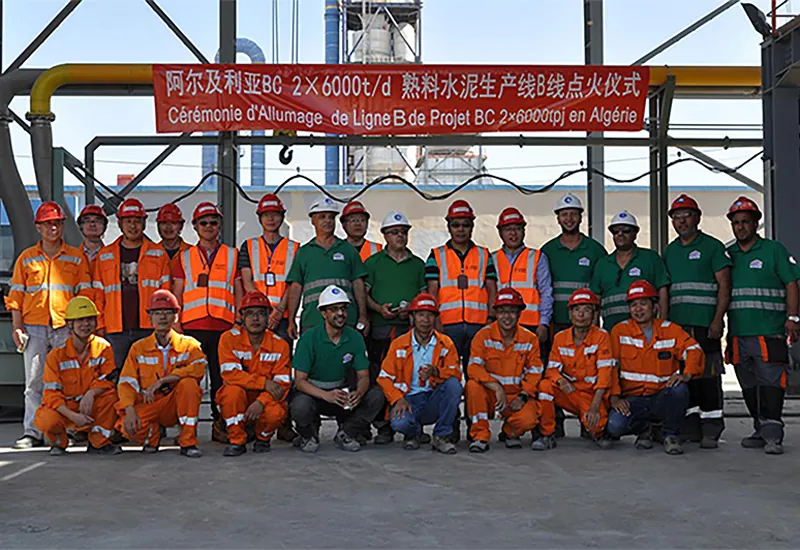
- Location: Algeria
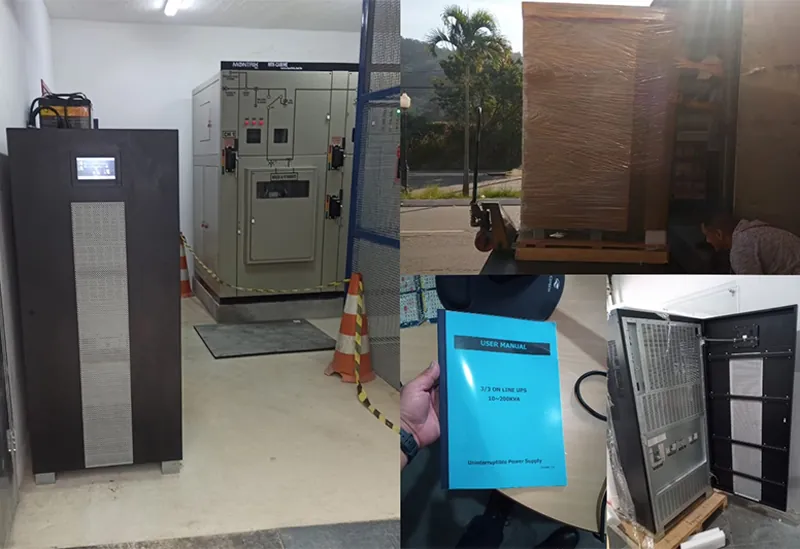
- Products Deployed: High Frequency 80KVA Uninterruptible Power Supply、12V120AH VRLA Battery and Full Set of the Solution.Time: July 2016
The Challenge
The owner of the Algeria BC 2×6000-ton project is the BISKRIA Cement Group (SPA BISKRIA CIMENT). This cement group was jointly established by two prominent local family-owned companies in Biskra: HOGGUI and AMOURI. The project site is located approximately 20 kilometers north of the city of Biskra and 400 kilometers southeast of Algiers. It is situated approximately 390 kilometers from the Port of Bejaia and 430 kilometers from the Port of Annaba, and lies about 30 kilometers away from the Lafarge CILAS project. This project is executed under an EPEC (Engineering, Procurement, Erection, and Commissioning) contract scope; it encompasses two complete cement production lines, spanning the entire process from raw material crushing through to cement packaging and dispatch. Each electrical room shall has a UPS system for the supply of power to control system devices, sensors, drives control circuit, safety equipment and all other devices were protection from excessive voltage drop or loss of supply is required. The UPS system shall have an automatic by-pass system that in case of UPS or battery failure the system will switch automatically and with no interruption to the power supply. Battery shall be sized for 30minuit backup.
Banatton’s Solution
In accordance with the technical specifications issued by the Owner in January 2016, the system shall comply with the following standards: IEC 62040-1 (Uninterruptible power systems — Part 1: General and safety requirements) and IEC 62040-2 (Uninterruptible power systems — Part 2: EMC requirements), as well as EN 50091-2. Furthermore, the UPS shall provide a backup duration of 2 hours and, under conditions where the batteries are fully charged, be capable of delivering 100% of its rated active power output. We deployed our High Frequency 3-Phase 80kVA UPS.
1. High Reliability and Long-Life Design
Cement plants present harsh operating environments characterized by wide temperature ranges (-25°C to 55°C), high humidity, heavy dust, and significant salt mist. Consequently, industrial-grade UPS systems typically utilize industrial-grade—or even military-grade—components. These systems feature high levels of redundancy and boast a designed service life of up to 20 years—far exceeding the approximately five-year lifespan typical of commercial-grade UPS units.
2. Robust Immunity to Disturbances
To effectively counter power quality issues within the utility grid—such as voltage sags, surges, harmonic distortion, frequency drift, and transient spikes—industrial UPS systems must possess a high level of electromagnetic compatibility (EMC) immunity. This includes demonstrated resilience against radiated susceptibility, power-frequency magnetic fields, RF conducted disturbances, electrical fast transients (EFT) bursts, surges, voltage dips and interruptions, and electrostatic discharge (ESD), in full compliance with the IEC 62040-2:2005 standard.
3. High Protection Ratings and Anti-Vibration Design
These systems offer optional Ingress Protection (IP) ratings ranging from IP21 up to IP54+, enabling them to withstand harsh environmental conditions involving high temperatures, high humidity, heavy dust, and salt mist. Furthermore, select product models incorporate specialized anti-vibration designs to ensure stable and reliable operation within the vibration-prone environments typical of cement manufacturing facilities.
Business Impact
Stable Operation: Since its installation in July 2016, the UPS system has been running smoothly, enabling it to operate stably in harsh environments characterized by high temperatures, high humidity, dust, salt spray, and other adverse conditions.
Reduced Maintenance Costs: Preventing emergency shutdowns, equipment damage, and data loss caused by power-related issues can significantly reduce production losses and maintenance costs.
 16Sep
16Sep