 10Dec
10Dec

When your business expands from a small office to a data center, industrial facility, or medical environment, a UPS that used to work well may no longer be sufficient to meet your needs. Power outages, voltage fluctuations, and frequency drift can all cause serious damage. For a small office, a power outage may only mean a few minutes of lost work time; but for a data center, factory or hospital, the same power outage could lead to server crashes, production interruptions, or even endanger patient safety.
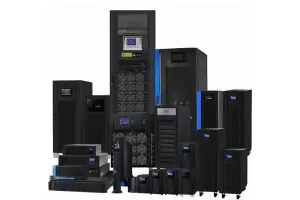
So, how should you choose between a single-phase and a three-phase UPS? The answer depends on three factors: total power requirements, equipment type, and uptime requirements. Single-phase UPS systems typically handle loads below 10kVA. Three-phase UPS systems, like the Banatton BT900-33 series (10-200kVA), are designed for high-power applications that demand continuous, reliable power.
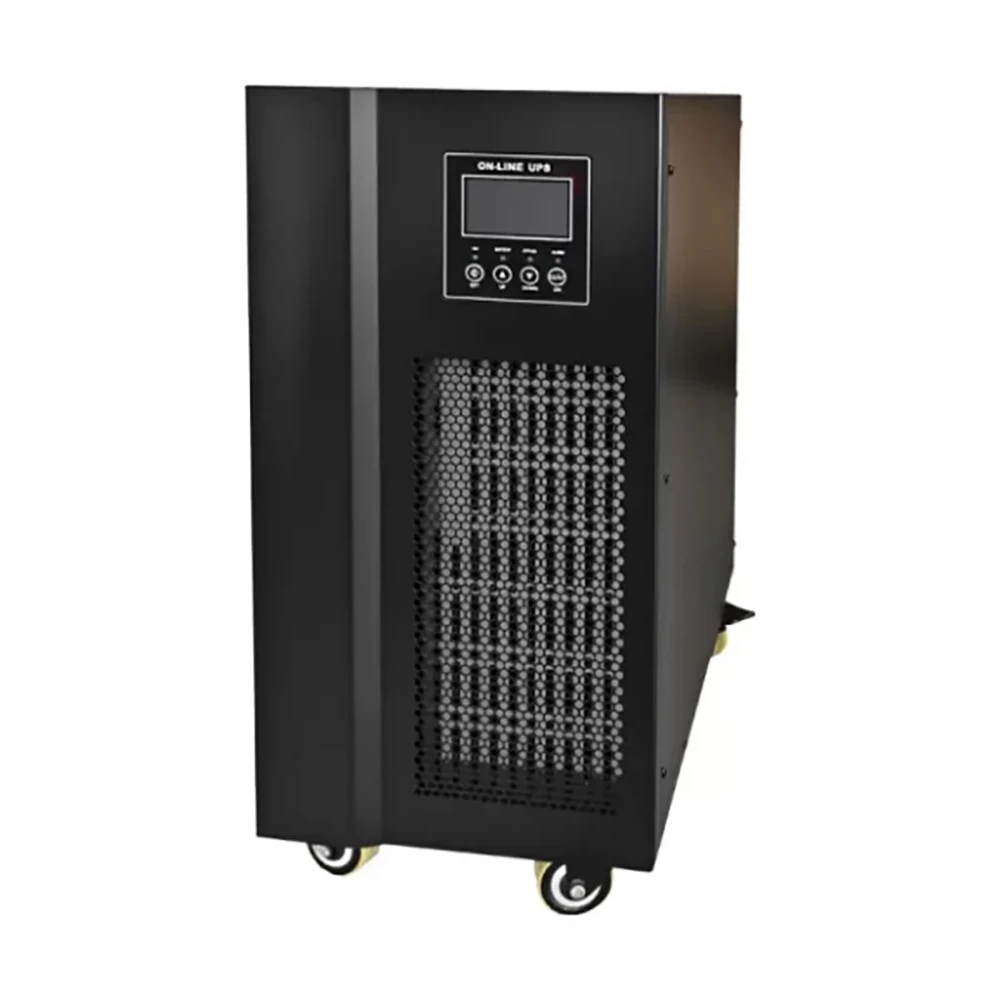
1.Introduction to Single Phase and Three Phase UPS Systems
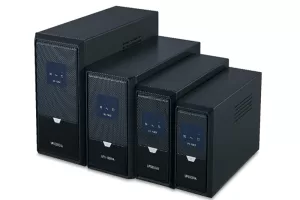
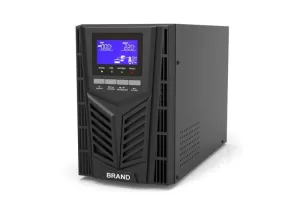
Single-phase UPS: Its power range is typically between 1 and 10 kVA. Common applications include personal computers, network switches, POS systems, and other small office equipment.
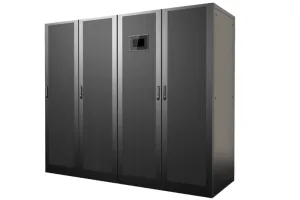
Three-phase UPS: It’s design can more evenly balance the load, improve operating efficiency, and provide significantly higher power capacity. With a rated power range from 10kVA to over 200kVA, three-phase systems are primarily used in data centers, industrial automation, medical equipment, telecommunications networks, and other mission-critical environments.
2. Advantages of Using a Single Phase UPS System
First, they are reliable. Single-phase UPS can provide reliable backup power for computers, routers, POS systems and other small devices during power outages.
Secondly, they are cost-effective. Compared with three-phase systems, its initial purchase cost and subsequent maintenance costs are both lower. This makes them extremely attractive to businesses with limited budgets.
Third, they are easy to install and maintain. Single-phase UPS units are compact, require minimal space, and often feature hot-swappable batteries. This means you can change the battery without turning off the connected device.
Finally, they offer wide compatibility. Most small office devices are designed to work with single-phase power, making these UPS systems a plug-and-play solution.
However, single-phase systems are best suited for total loads under 10kVA and fewer than 10 devices.
3. Advantages of Using a Three Phase UPS System
Three-phase UPS systems provide major benefits for high-power applications.
More efficient. Three-phase systems can distribute power more evenly across all three phases, thereby reducing energy waste. For example, the Banatton BT900-33 series has an efficiency of up to 95.5% in AC mode and can reach 97% to 98% in ECO mode.
Greater Scalability. As your business grows, your power needs will too. Three-phase UPS systems support N+X parallel redundancy (up to 3 units), adjustable battery banks (32-40 batteries), and expandable charging current up to 48A.
Larger Load Capacity. These systems are capable of handling far greater loads. The BT900-33 series has a power range from 10KVA/9KW to 200KVA/180KW, and is suitable for data centers, factories and hospitals.
True Double Conversion. With 0ms transfer time and pure sine wave output, three-phase UPS systems provide the highest level of power protection for sensitive equipment.
4. Cost Comparison: Single Phase vs Three Phase UPS
The initial purchase cost of a single-phase UPS system is relatively low. In addition, due to its simpler design, maintenance and repair costs are also lower.
Three-phase UPS systems require a higher initial investment. However, they often prove more cost-effective in the long run. Higher efficiency (up to 95.5% in AC mode) helps save on electricity bills in the long run. Excellent scalability means you can expand capacity without replacing the entire system. In addition, the reduction in unplanned downtime also means a decrease in losses caused by downtime.
The Banatton BT900-33 backup UPS offers both standard and long-run models, allowing you to choose the configuration that best fits your budget and runtime needs.
5. Scalability and Redundancy Considerations
The scalability of single-phase UPS systems is relatively limited. Once your power demand exceeds the rated capacity of your equipment, you will typically need to replace the entire system and upgrade to a higher-powered model. You usually cannot add redundancy to a single-phase UPS. If it fails, your equipment is unprotected.
In contrast, three-phase UPS systems are designed specifically for business growth needs. The Banatton BT900-33 series supports N+X parallel redundancy configuration, enabling up to three devices to work together. If one of the devices fails, the remaining devices can continue to provide uninterrupted power to your critical equipment.
In addition, the system features flexible battery pack configurations (supporting 32 to 40 cells) and scalable charging current (up to 48A). Its built-in maintenance bypass function allows you to perform maintenance and repairs on the UPS without shutting down the connected load.
6. Maintenance Needs Comparison
Maintenance requirements differ significantly between single-phase and three-phase UPS systems.
Maintenance of single-phase UPS systems is simpler. It has fewer internal components and allows battery replacement without turning off the connected device. Basic troubleshooting can usually be handled by internal staff.
Three-phase UPS systems are more complex. They require professional installation and regular maintenance from qualified technicians. With multiple power modules and battery strings, repairs take more time and expertise.
However, the Banatton BT900-33 pure sine wave UPS includes a maintenance bypass. This lets technicians service the UPS without shutting down your equipment. Regular maintenance is recommended every 6 to 12 months.
7.FAQ
Q1. How often should a UPS system be maintained to ensure optimal performance?
A: A UPS system should be inspected and maintained at least twice a year; however, for businesses with critical operations, more frequent inspections may be required to ensure continuous reliability and efficiency.
Q2. Could neglecting UPS maintenance lead to business disruptions in 2026?
A: Yes, neglecting UPS maintenance can result in system failures, unexpected downtime, and disruptions to business operations. These consequences are particularly severe in 2026, as businesses increasingly rely on uninterrupted power to support their digital and automated processes.
Q3. Which key components are checked during UPS maintenance?
A: The key components inspected during the maintenance process include batteries, capacitors, cooling fans, electrical connections, and software. Regular testing ensures that all components are functioning correctly and are capable of effectively handling power outages.
8.Conclusion
Choosing between a single-phase and a three-phase UPS comes down to your specific needs.
Choose a single-phase UPS if:
Your total power load is under 10kVA
You have fewer than 10 devices to protect
You are a small office, retail store, or home office
Budget is your primary concern
Please select a three-phase UPS such as the Banatton BT900-33 series if the following conditions are met:
Your power demand is 10kVA to 200kVA
You run a data center, factory, hospital, or telecom network
You need N+X redundancy and zero downtime
You want scalability for future growth
While three-phase UPS systems require a higher initial investment, they offer superior efficiency, reliability, and long-term value.
Contact us today for a quote or technical consultation.