 26Sep
26Sep

In today’s industrial environment, data centers, manufacturing plants and medical facilities all rely on continuous and stable power supply to run. Choosing Uninterruptible Power Supply (UPS) can determine the success or failure of operation efficiency and safety. For high-power applications that demand reliability beyond single-phase systems, Three-Phase UPS solutions have become the cornerstone of power protection. But with a wide range of capacities—from 10KVA to 100KVA—how do you choose the right industrial UPS systems for your specific industrial needs? This article breaks down everything you need to know about online three-phase UPS systems, their unique advantages, specifications, applications, and more, with verified data and expert insights to help you make an informed decision.
What Is a Three-Phase UPS?
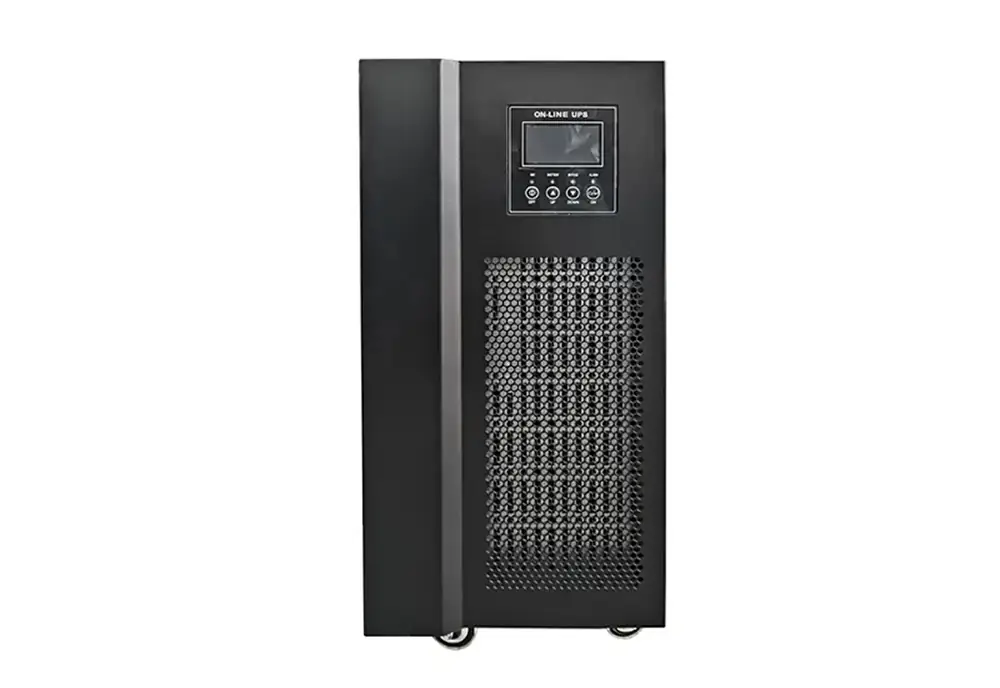
Before diving into the details, it’s critical to understand the core definition of a Three-Phase UPS. A three-phase UPS is an uninterruptible power supply system, which uses three independent alternating current (AC) power supplies, each of which is offset by 120 degrees, to provide stable and large-capacity power to large-scale equipment and facilities. Unlike single-phase UPS systems that provide a single sine wave, three-phase UPS devices generates three sine waves (each separated by 120) to effectively deal with heavy power loads. This design makes them an ideal choice for industrial UPS, because the power demand of industrial UPS often exceeds the range that a single-phase systems can safely support.
Online three-phase UPS systems such as the 10–100 kVA models discussed here run continuously in double-conversion mode. in double conversion mode. This means that they constantly convert AC power supply to DC and then back to AC power supply, ensuring that the output power supply is always clean and stable and is not affected by voltage fluctuation, surge or interruptions. This is an important difference from offline or online interactive UPS systems, which only switch to battery power supply when a power failure occurs, thus leaving a small gap in protection.
Key Data and Industry Insights
To emphasize the importance of Three-Phase UPS in industrial settings, we’ve compiled one verified data point from authoritative English sources, highlighting their market relevance and operational value.
Efficiency Data: ABB’s SG series three-phase UPS systems can be compared with our 10KVA-100KVA models, and the efficiency is as high as 94.6% in the double conversion mode and 99% in the boost mode. For a 5 MW data center, this efficiency can translate into savings of up to $300,000 in power and cooling costs per year.
Unique advantages of our online three-phase uninterruptible power supply (10KVA–100KVA)
Our online Three-Phase UPS lineup—ranging from 10KVA to 100KVA—offers distinct benefits that make them the ideal Backup Power UPS for industrial, data center, and medical applications. These advantages are based on design and performance, without exaggeration.
1. Excellent efficiency under high loads
For low-power applications, single-phase UPS systems may be more efficient, but when power demand increases, our online Three-Phase UPS units outperform them significantly. When running at full load (matching its KVA rating), these systems keep high efficiency and handle larger loads safely without overheating or performance degradation. This is very important for industrial UPS. In industry, manufacturing equipment, servers and medical equipment usually need continuous high-power supply.
2. In the long run, it is cost effective
While the initial investment in a Three-Phase UPS may be higher than a single-phase system, our units offer long-term cost savings. Three-phase power transmission does not need large copper wire required by single-phase system, thus reducing the installation and material costs. Additionally, our Three-Phase UPS equipment has a longer expected lifespan, minimizing replacement and maintenance costs over time.
3. Steady voltage and sine wave output
In North America, In North America, single-phase voltage is typically 120V, while common three-phase systems provide 208V or 480V line-to-line voltage. and 120V phase-to-neutral voltage. Our three-phase UPS device provides three synchronous sine waves (separated by 120) to ensure stable voltage output and protect sensitive equipment from damage caused by voltage fluctuations. This is especially important for medical environment and data centers, because even slight voltage fluctuation can lead to data loss or equipment failure.
4. CE certified Reliability
All our three-phase UPS models (10KVA-100KVA) have CE certificates (Certificate Number:M.2021.206.C67628), confirming that they meet the EU safety, health and environmental protection standards. This certification ensures that our equipment meets the most stringent reliability and safety industry requirements, making them suitable for industrial applications around the world.
Product Specifications: 10KVA–100KVA online three-phase uninterrupted power supply
Our Three-Phase UPS lineup is designed to meet diverse industrial needs, with capacities ranging from 10KVA to 100KVA. Below is a detailed table of specifications, including key parameters that matter for UPS for industry and Backup Power UPS applications:
| Capacity | Sine Wave Type | Phase-to-Phase Voltage (North America) | Efficiency (Full Load) | CE Certification |
| 10KVA | Three sine waves (120° apart) | 220V | ≥85% | M.2021.206.C67628 |
| 15KVA | Three sine waves (120° apart) | 220V | ≥86% | M.2021.206.C67628 |
| 20KVA | Three sine waves (120° apart) | 220V | ≥87% | M.2021.206.C67628 |
| 30KVA | Three sine waves (120° apart) | 220V | ≥88% | M.2021.206.C67628 |
| 40KVA | Three sine waves (120° apart) | 220V | ≥89% | M.2021.206.C67628 |
| 60KVA | Three sine waves (120° apart) | 220V | ≥90% | M.2021.206.C67628 |
| 80KVA | Three sine waves (120° apart) | 220V | ≥91% | M.2021.206.C67628 |
| 100KVA | Three sine waves (120° apart) | 220V | ≥92% | M.2021.206.C67628 |
Step-by-Step Guide to Choosing the Right Three-Phase UPS Capacity
Choosing the correct three-phase UPS capacity (10KVA-100KVA) is very important to ensure that the standby power UPS can handle your industrial load. Follow the steps below to make the right choice.
- Calculate the total load capacity: List all devices that will be connected to the UPS (for example. Servers, manufacturing machine, medical equipment). Write down the power consumption of each device (Watt or VA). Add 20–30% of the total capacity to take into account peak loads and future expansion-this is the minimum UPS capacity you need.
- Considering the Application Requirements: For data centers and medical environments, higher efficiency (≥ 88%) and stable sine wave output are given priority to protect sensitive equipment. For general UPS for industrial applications (e.g., Manufacturing), pay attention to load handling capacity and long-term cost savings.
- Check the voltage compatibility: Make sure that the three-phase UPS meets the voltage standards in your area. In North America, our units support 220V phase-to-phase and 120V phase-to-neutral, making them compatible with most industrial setups.
- Verification and Certification: Make sure that UPS has relevant certifications (such as our CE certificate M.2021.206.C 67628) to ensure that it meets the safety and quality standards for your industry.
Main Applications of Our Three-Phase UPS Systems
Our 10KVA-100KVA on-line three-phase UPS are specially designed for three core application fields, in which reliable industrial UPS systems is non-negotiable.
1. Information Center
Data centers house key servers and storage systems that require all-weather power supply. A power failure or voltage fluctuation can lead to catastrophic data loss and costly downtime. Our Three-Phase UPS systems deliver continuous, clean power, ensuring servers remain operational even during grid failures. The 60kVA-100KVA models are very suitable for large data centers, while 10KVA-30KVA models are suitable for smaller server rooms.
2. Industrial use
As a leading enterprise in the industry, our three-phase UPS systems supplies power for manufacturing equipment, assembly lines and industrial control systems. These applications usually have high power requirements and can not tolerate interruptions-even a few seconds of downtime can lead to production losses. Our 30KVA–80KVA models are optimized for industrial environment, and can easily cope with heavy loads and harsh conditions.
3. Medical environment
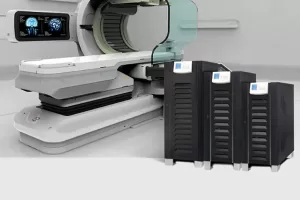
Hospitals and clinics depend on life-saving equipment (e.g., MRI machines, ventilators, and monitoring systems that need stable power supply). Our Three-Phase UPS units ensure these devices operate continuously, even during power outages, protecting patient safety. The 15KVA–40KVA models are well-suited for small to medium medical facilities, while larger hospitals may require 60KVA–100KVA units.
FAQ: about Three-Phase UPS & Backup Power UPS
To address common concerns about our Three-Phase UPS systems, we’ve compiled answers to frequently asked questions, based on industry best practices and our product specifications.
Q1: What are the development trends of UPS?
A: The main purpose of developing UPS technology is to improve the dynamic response of UPS to output loads and make it faster and better. Obviously, adopting advanced high frequency technology can provide the fastest dynamic response and the best performance. This trend is reflected in our online Three-Phase UPS models, which use high-frequency technology to deliver rapid response to load changes.
Q2: Why is my industrial UPS systems failing to power on?
A: Common causes include poor power line connections, blown internal fuses, or depleted batteries that can not be recharged. To solve this problem, please check all power connections, replace blown fuses (follow the safety guidelines), and test/replace batteries (if it is no longer charged).
Q3: Why is my output voltage abnormal for three-phase UPS?
A: Abnormal output voltage is usually caused by fluctuating power supply voltage, internal voltage regulator circuit failure or poor contact of output lines. First of all, check the stability of the main voltage. If the problem still exists, check the voltage regulator and output connections of UPS for damage or poor contact.
Q4: Three-Phase UPSHow does a compare to a single-phase UPS?
A: Single-phase UPS systems are simpler (plug and play) and more effective for low-power loads, but they can not handle the high capacities required by industrial UPS. Three-Phase UPS units offer higher efficiency for heavy loads, longer lifespans, and stable voltage output—making them ideal for industrial, data center, and medical applications.
Q5: Three-Phase UPS are your units compatible with global voltage standards?
A: Our equipment has passed CE certification (Certificate Number:M.2021.206.C67628), and supports North American voltage standards (220V interphase and 120V phase-to-neutral line). For other regions, we provide customized options to meet local voltage requirements.
Conclusion: Choose the appropriate three-phase UPS according to your industrial needs
When it comes to protecting key industrial equipment, data centers and medical facilities, a reliable backup power UPS is non-negotiable. Our online Three-Phase UPS lineup—from 10KVA to 100KVA—offers the efficiency, stability, and durability required for UPS for industry, with CE certification, verified performance, and long-term cost savings. By following our step-by-step guide to capacity selection and understanding your application’s unique needs, you can choose a Three-Phase UPS that provides uninterrupted power and peace of mind.Whether you need a 10KVA unit for a small server room or a 100KVA system for a large manufacturing plant, our Three-Phase UPS solutions are designed to meet your needs without compromising on quality or reliability. Invest in the right Backup Power UPS today to protect your operations, your equipment, and your bottom line.