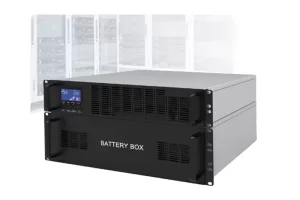
What is an Uninterruptible Power Supply (UPS)?——Why do all critical equipment need a UPS?
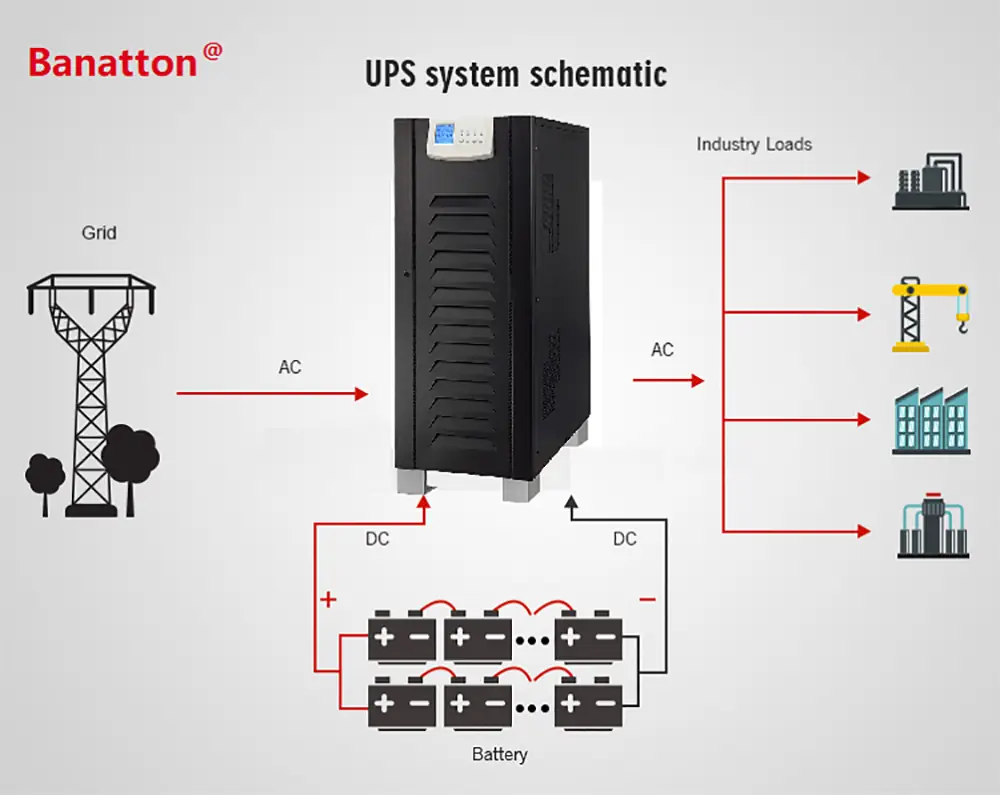
An uninterruptible power supply (UPS) is an electrical device that provides emergency power to loads when the main power source (usually utility power) fails. When utility power is available, it automatically adjusts the input power to ensure a stable supply to equipment, protecting it from power issues. During a complete power outage, it also provides uninterruptible system transfer, automatically drawing power from batteries to supply equipment.
With an aging power grid, growing electricity demand, severe weather, wiring faults, and disruptive devices connected to the AC line, equipment is constantly under threat of power problems, making a UPS system a critical investment. UPS systems are particularly useful for network equipment and other devices that could lose data in the event of an unexpected power outage. With a variety of cost-effective models available, UPS systems are a valuable investment in preventing damage, data loss, and downtime caused by power issues.
1. UPS uninterruptible power supply system is reliable:
UPS systems power equipment while keeping their internal batteries charged and protecting them from power issues. In the event of a power outage, a UPS uses batteries to keep connected devices running for a specified period of time, depending on factors such as battery size, wattage, efficiency, temperature, and lifespan. If the outage lasts longer than the backup runtime, battery backup helps properly shut down computers to prevent data loss and provides automatic shutdown for unattended devices. For longer outages, network and mission-critical UPS systems can increase battery capacity to maintain several hours of runtime or rely on backup generators. During generator operation, the UPS system continues to condition power before it reaches connected devices.
2. Differences between single-phase, three-phase, and split-phase UPS:
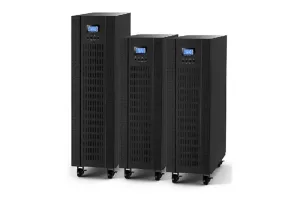
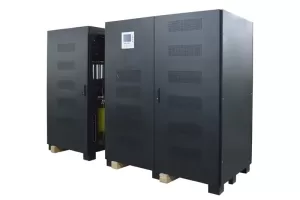
The number of phases in a UPS describes the number of phases of power it receives and transmits. Utilities generate three-phase power because it is the most efficient way to transmit power over long distances. For larger power users, such as large data centers, industrial manufacturing, and hospitals, the power remains three-phase and requires a three-phase UPS. For smaller power users, including residential and office buildings and most schools, the power is converted to single-phase. Some applications use a mix of single-phase and three-phase equipment, requiring a UPS capable of protecting both. For these deployments, a split-phase UPS that provides both 120V and 208V outputs is often the best choice.
3. Does the UPS provide surge and noise protection?
Uninterruptible power supply (UPS) systems feature built-in surge suppression and noise filtering to fully protect electronic equipment from transient voltages and electromagnetic radio frequency interference (EMIRF) line noise. This eliminates the need for separate surge protectors, simplifying setup and saving space. By providing all these features in a single package, UPS systems offer a cost-effective solution for protecting valuable equipment from power-related damage.
In an era when enterprises rely on continuous power supply, blackouts, voltage fluctuations and surges will pose costly threats. From data centers to medical equipment,...
Digital era: Sudden power failures cause data loss, production/communication disruptions — downtime carries massive costs. Uninterruptible Power Supplies (UPS) are thus the cornerstone of continuous...
In today’s digital drive world, power interruptions is not only an inconvenience, but also leads to data loss, hardware damage and long-term operation downtime. According...
In the fields of modern industry, medical treatment and IT, the stability and reliability of the power supply directly determine the normal operation of equipment,...