 26Sep
26Sep

Within today’s digitally operated, automated manufacturing era, unforeseen grid disruptions create major risks to consistent business operations. Minor voltage deviations, harmonic interference or brief power outages can cripple core network infrastructure, halt assembly production workflows and damage costly medical diagnostic hardware. Enterprises deploy robust backup power infrastructure to avoid such financially damaging operational shutdowns. And a high-specification 3 Phase Online UPS provides industry-leading power reliability for industrial engineering deployments. People can distinguish entry-level residential backup battery units from commercial power safeguarding equipment by evaluating their internal circuit architectures and quality benchmarks recognized across the power industry.
Defining the High-Quality Baseline: True Online Double-Conversion
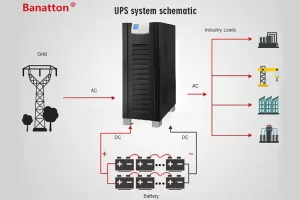
To judge the performance of industrial power protection gear, engineers first examine its internal circuit design. Premium UPS equipment adopts online double-conversion topology. This core structure fully isolates expensive electrical loads from all kinds of grid power interference.
Step 1: Rectification & Power Factor Correction (PFC)
Raw alternating current from the grid flows into the rectifier unit first. This module filters power surges, voltage drops and harmonic noise, then converts unstable AC power into smooth, regulated direct current.
Step 2: Continuous Battery Float Integration
The purified DC power connects to the shared internal DC bus. The bus handles two tasks at the same time: it keeps the built-in battery bank under float charge, and supplies steady DC power to the next working module.
Step 3: Precision Inverter Regeneration
Filtered DC power enters a high-precision inverter. The unit reconstructs direct current into stable, fully isolated pure sine-wave AC power to supply key load devices.
Step 4: True Zero-Transfer Time Security
The inverter runs continuously and outputs standard sine waves under stable grid supply. This setup delivers a true 0-millisecond switchover the instant mains power cuts out.
Precision equipment including medical imaging devices, high-density servers and telecom routing hardware cannot stand voltage dips lasting only 4ms. For this reason, 0ms transfer performance becomes a mandatory standard for complex industrial power systems.
The Core Technical Standards of Top-Tier Systems
There are three key factors that determine whether a power protection system qualifies as high-end. They are internal circuit topology, load balancing capacity and input power efficiency.
High-Frequency Topology vs. Low-Frequency Design
Traditional industrial power equipment relies on bulky low-frequency copper transformers. Modern power infrastructure instead adopts a High-Frequency UPS. These new units incorporate high-speed IGBTs within rectifiers and inverters. They process power signals at tens of kilohertz, far higher than the standard 50/60Hz grid frequency. This design removes heavy built-in copper transformers. It cuts overall equipment footprint, lowers running noise and optimizes heat dissipation at the same time.
Advanced Load Balancing Across Three Phases
Large corporate sites need power equipment capable of sustaining heavy input and output power loads. A dedicated 3–phase UPS distributes substantial power loads evenly across three separate power circuits. Premium models feature wide input voltage tolerance ranges. This broad voltage operating window cuts down unnecessary battery discharge cycles and extends the usable lifespan of built-in battery assemblies.
High Input Power Factor and Efficiency Standards
Premium power systems stand out for their efficient energy utilization with minimal power loss. Older power equipment runs at low power factors such as 0.8. This condition inflates input current demand unnecessarily and wastes large amounts of energy through excess heat dissipation. High-quality configurations feature a high input power factor (typically $\ge 0.99$) and an output power factor of 0.9 to 1.0. According to industry data, the total cost of electricity over a three-phase system’s typical 10 to 15-year lifecycle can end up being 2 to 5 times its original capital expenditure. Opting for a top-tier High-Frequency Online UPS operating at high eco-mode efficiencies (up to 97%–99%) minimizes total cost of ownership (TCO) and lowers facility PUE (Power Usage Effectiveness) metrics (Schneider Electric FAQ).
Product Capacity Specifications and Scenario Mapping
Industrial power requirements fluctuate heavily depending on the size of the infrastructure. To ensure optimal load protection without over-specifying equipment, high-quality power architectures provide a highly scalable capacity spectrum.
| Model Capacity Range | Core Common Applications | Key Critical Protection Features |
| 10kVA to 20kVA | SME server rooms, laboratory instrumentation, edge computing nodes, automated security hubs | Compact tower footprint, simple installation, integrated battery modules |
| 30kVA to 60kVA | Mid-sized data centers, automated manufacturing production lines, hospital CT/MRI machines | DSP digital controls, customizable internal/external battery configuration, high overload capacity |
| 80kVA to 100kVA | Large corporate headquarters, modular cloud data centers, heavy-duty railway signaling networks | N+X parallel redundancy compatibility, advanced SNMP remote management, hot-swappable bypass |
Key Implementation Steps for Deploying a Commercial UPS System
Installing large-scale backup power equipment follows a set of standardized engineering procedures. This orderly planning fully meets safety rules and local electrical regulatory standards.
Load Profile Auditing
Technicians calculate steady power consumption and peak startup current across all attached devices. The chosen UPS power rating keeps a 20% to 30% spare capacity to accommodate later hardware additions.
Environmental & Spatial Assessment
The dedicated equipment room must maintain a steady temperature between 20°C and 25°C to lengthen battery operating lifespan. Floor bearing capacity must support the full weight of the UPS host and supporting battery groups.
Electrical Infrastructure Upgrades
Wired power cables and matched circuit breakers need to satisfy regional electrical codes, especially for high-amperage three-phase power wiring.
Redundancy and Communication Integration
Facilities that cannot afford power outages during maintenance adopt parallel N+X module layouts. Built-in SNMP communication boards link all power units to unified DCIM management platforms for real-time fault warning tracking.
Industrial Applications: Where High-Quality Protection is Vital
Premium power backup infrastructure is critical across several demanding fields:
Medical Facilities: Operating rooms and intensive care units require ultra-clean power. A sudden voltage drop can recalibrate delicate life-support equipment or compromise real-time patient data streams.
Automated Smart Factories: Modern manufacturing lines run on precision PLCs (Programmable Logic Controllers) and robotic arms. A power flicker lasting a fraction of a second can desynchronize automated workflows, halting operations and ruining product batches.
Telecommunications and Data Hubs: Cloud computing centers process enormous quantities of real-time transactions. The true double-conversion mechanism shields solid-state hard drives and high-density servers from premature hardware degradation caused by underlying harmonic grid noise.
Realizing Premium Power Standards with Banatton
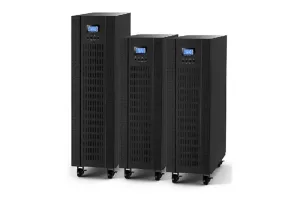
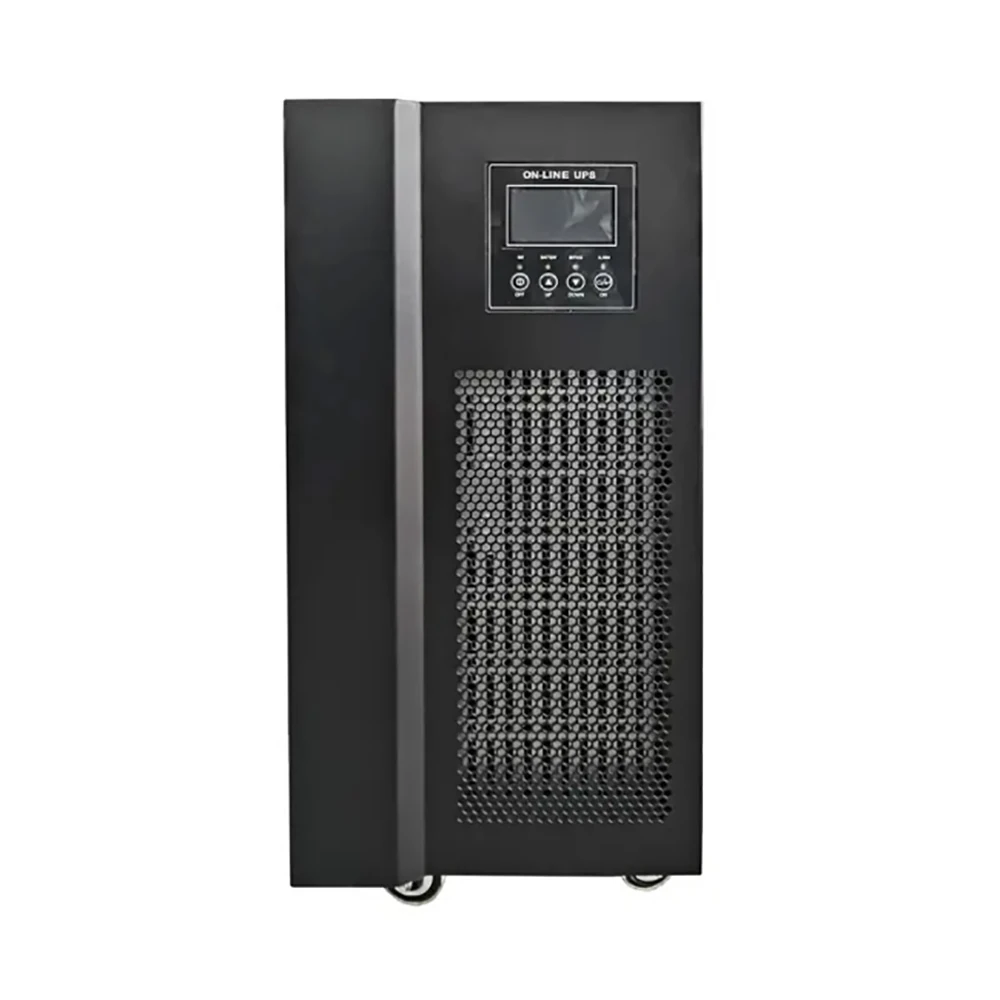
Facilities can match their power demands to market-ready hardware through the Banatton 10kVA – 100kVA Three-Phase Online High-Frequency UPS Series, which supports expansion up to 200kVA. This product line fully meets all the strict technical standards covered earlier. All Banatton units adopt advanced high-frequency double-conversion architecture. They deliver a 0.9 output power factor and transfer stable power to dense modern computing loads efficiently.
The series integrates complete safety protection functions. Short-circuit prevention, overvoltage suppression and reverse wiring protection shield both internal components and downstream connected devices from damage.
Built-in DSP control and smart battery management systems extend battery service life and track routine maintenance data accurately. For businesses with long-term expansion plans, the system supports modular capacity expansion. Remote monitoring is available via SNMP or Modbus communication cards. It delivers stable, highly expandable power support for all industrial digital upgrade projects.
Conclusion: Balancing Technical Rigor with Sustainable Growth
For companies, investing in three-phase power hardware is a long-term strategic decision. It helps businesses stabilize daily operations and lower power failure risks. Enterprises can fully shield data servers and automated production lines from power faults if they follow strict technical standards. These core standards include true double-conversion circuit design, high-efficiency high-frequency structure, reliable three-phase balance and intelligent digital control. Modular power solutions such as Banatton’s full product line bring clear long-term benefits. They help firms control present operating costs while reserving room for capacity upgrades. This creates stable, low-maintenance power support to match constant digital business expansion.
Frequently Asked Questions
Q: What is the core difference between online UPS and offline/line-interactive UPS?
A: Standby and line-interactive UPS units run on bypass wiring when grid power operates normally. Such devices take 4 to 10 milliseconds to shift to battery power once mains supply cuts off. Online power protection equipment adopts a different working logic; it channels power through rectifier and inverter modules nonstop even under stable grid supply. This circuit layout delivers true zero-millisecond transfer latency and offers full isolation for attached hardware against power noise and voltage drops.
Q: Why is high-frequency topology more popular than low-frequency transformer-based UPS solutions?
A: High-frequency UPS units adopt IGBT semiconductor switches to process power at elevated operating frequencies. This structural change eliminates the bulky, heavy built-in isolation transformers found in low-frequency variants. The finished products occupy far less floor area, achieve superior energy utilization rates, and generate lower waste heat, which makes them perfectly suited for compact server zones and contemporary business premises.
Q: What does N+X parallel redundancy mean for three-phase power system planning?
A: N+X parallel redundancy architecture links several power modules to a shared electrical busbar. The parameter N stands for the quantity of modules needed to support regular basic operating loads, while X denotes the quantity of standby redundant modules fitted into the setup. When a single module breaks down or requires offline servicing, the remaining units can instantly shoulder the entire load, ensuring uninterrupted operation of the whole power supply system.
Q: How does an extended input voltage range extend the service life of UPS batteries?
A: Conventional UPS systems will engage battery backup to stabilize output whenever the grid suffers voltage dips or spikes. Models equipped with a broad input voltage window can counteract such grid fluctuations on their own via internal rectifiers and power regulation circuits. This avoids frequent, unnecessary charge-discharge cycles for the battery bank, keeps the batteries fully charged for longer stretches, and greatly lengthens their total working life.