How Smart PDUs Improve Data Center Energy Efficiency
With the acceleration of digital transformation, data centers are facing increasingly severe challenges: they need to provide more powerful computing capabilities while controlling ever-increasing energy costs. Traditional power distribution units (PDUs) are only responsible for power distribution and cannot provide visibility into power consumption, making it difficult to identify energy-inefficient processes or optimize operations.
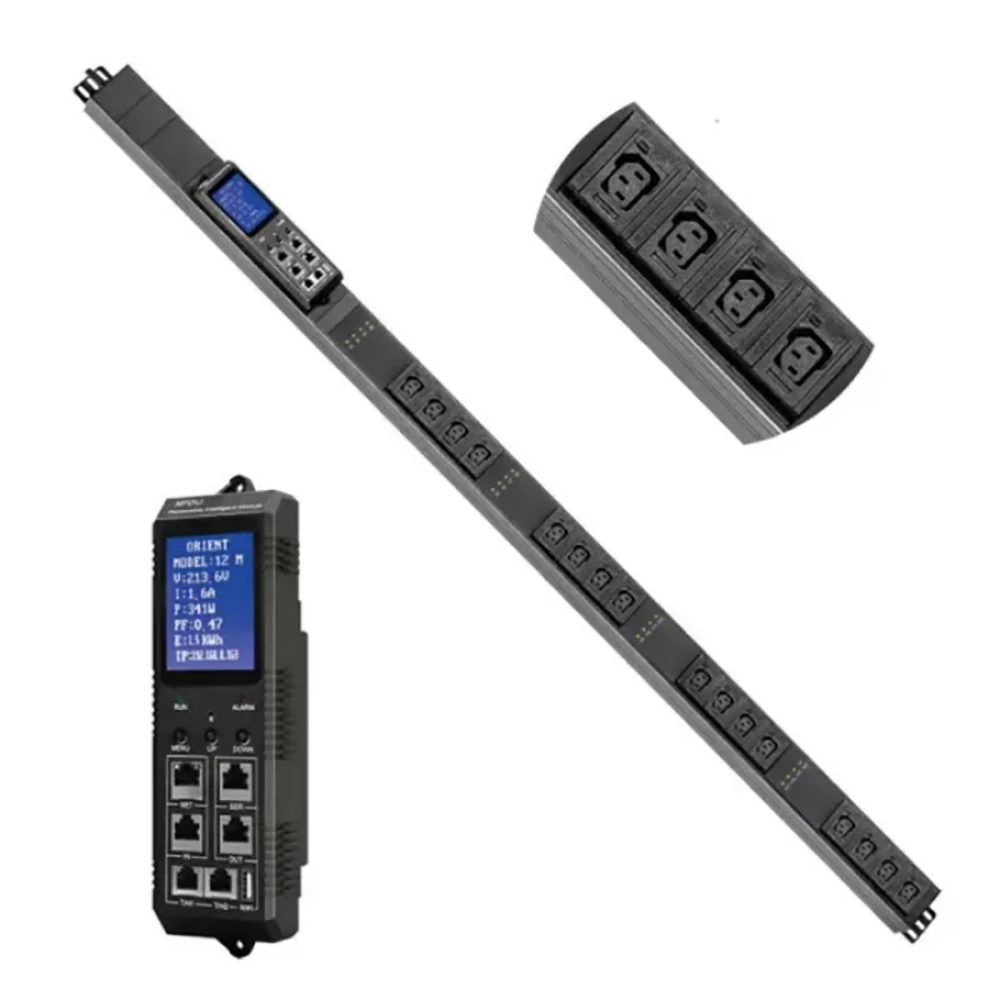
Intelligent PDUs (also known as “smart PDUs” or “data center PDUs”) seamlessly integrate power distribution with real-time monitoring, remote management, and outlet-level control capabilities. These capabilities help data center operators improve energy efficiency, reduce operating costs, prevent overloads, and maximize rack utilization. This article explains how Smart PDUs improve energy efficiency and what features to consider when selecting the right solution.
1. Why Energy Efficiency Matters in Modern Data Centers
Modern data centers support cloud computing, AI, enterprise applications, and edge computing, all of which require increasing amounts of electricity. As rack power density continues to rise, electricity and cooling costs have become significant operational expenses.
However, many facilities still experience unnecessary energy waste due to idle servers, uneven power distribution, oversized power allocation, and limited visibility into rack-level power consumption. Traditional PDUs cannot identify these problems because they simply distribute power without monitoring or control.
To improve operational efficiency, modern facilities are increasingly replacing conventional PDUs with Smart Power Distribution Units that provide real-time monitoring and intelligent management.
2. What Is a Smart PDU
A Smart PDU is a network-enabled power distribution unit that provides detailed monitoring and remote management capabilities in addition to power distribution.
Unlike a basic PDU, a Smart PDU can:
Monitor voltage, current, power, and energy consumption
Monitor each outlet individually
Remotely switch outlets ON or OFF
Generate alarms and historical logs
Support centralized management through network protocols
Compared with other PDU types:
PDU Type
Monitoring
Remote Control
Best Application
Basic PDU
No
No
Basic power distribution
Metered PDU
Rack-level monitoring
No
Basic power monitoring
Switched PDU
Yes
Yes
Remote outlet control
Smart/Intelligent PDU
Per-outlet monitoring & control
Yes
Modern enterprise data centers
By combining power monitoring and intelligent control, a Smart PDU provides the visibility required for efficient power management.
3. How Smart PDUs Improve Data Center Energy Efficiency
3.1 Real-Time Outlet-Level Power Monitoring
One of the biggest advantages of an Intelligent PDU is outlet-level monitoring. Instead of measuring only the total rack load, operators can monitor:
Voltage
Current
Power
Energy Consumption (kWh)
Power Factor
3.2 Remote Outlet Control and Power Scheduling
Intelligent PDUs allow administrators to manage power remotely via TCP/IP, eliminating the need for onsite visits.
Typical control functions include:
ON/OFF control for each outlet
Time scheduling for each outlet
Boot time delay setting
Current limit setting
Automatic overload protection
3.3 Environmental Monitoring for Better Cooling Efficiency
Cooling represents a large portion of data center energy consumption.
Smart PDUs equipped with temperature and humidity monitoring provide real-time environmental information that helps operators:
Detect hot spots
Optimize cooling strategies
Reduce unnecessary air conditioning
Improve equipment reliability
4. Key Features of Our Intelligent PDU
Our Intelligent PDUs are designed for data centers, IT rooms, industrial control rooms, and mining environments, with flexible configurations and comprehensive remote management.
4.1 Intelligent Monitoring and Remote Management
Our Intelligent PDU is built for enterprise-grade remote management, supporting standard network protocols and flexible deployment options. It integrates seamlessly with existing management platforms through SNMP V1, V2, and V3, while also offering SSH, Telnet, and Modbus-RTU access for advanced users. Connectivity options include TCP/IP and optional WiFi, and for large-scale deployments, cascade management allows multiple PDUs to be daisy-chained—reducing IP address consumption while centralizing administration.
The built-in web interface provides a graphical data display showing real-time power trends and historical logs. Administrators can visualize voltage, current, and power fluctuations across customizable time periods, making it easy to spot anomalies and plan capacity upgrades. User management features enable role-based access control, while multiple alarm modes—including email alerts, SNMP traps, and visual indicators—ensure operators are immediately notified of any abnormalities. All events are automatically recorded in historical logs for compliance auditing and troubleshooting.
Monitoring Functions
Input voltage monitoring
Total load current monitoring
Total power monitoring (kW)
Energy consumption monitoring (kWh)
Power factor monitoring
Outlet-level power monitoring
Energy consumption calculation for each outlet
Control Functions
ON/OFF control for each outlet
Time scheduling
Boot delay configuration
Current limit setting
Automatic overload protection
4.2 Industrial-Grade Safety and Certifications
To ensure reliable operation in demanding environments, our Intelligent PDU incorporates multiple protection features:
Fire-proof aluminum alloy housing
UL94V-0 flame-retardant materials
Automatic overload protection
Hydraulic breaker protection
UL-certified flame-retardant wiring
Our Intelligent PDU is certified to ISO, CE, RoHS, TUV, and UL standards.
4.3 OEM & ODM Customization
We offer flexible OEM and ODM services with customizable options including company logo, input connectors, socket types, current ratings, rack dimensions, horizontal or vertical installation, and single or dual-input configurations—enabling customers to deploy PDUs that match local standards and project requirements.
5. Typical Applications
Our Smart Power Distribution Unit is suitable for a wide range of industries and critical power environments, including:
Data Centers
IT Rooms
Cloud Computing Facilities
Financial Centers
Educational Institutions
Industrial Production Environments
Engine Rooms
Lighting Control Centers
Cryptocurrency Mining Farms
Whether supporting enterprise servers or high-density mining equipment, Intelligent PDUs provide reliable power distribution, real-time monitoring, and centralized management.
6. How to Choose the Right Smart PDU
6.1 Select the Appropriate Monitoring Level
Choose the PDU type according to your operational requirements.
Metered PDU – Basic rack-level monitoring.
Monitored PDU – Outlet-level monitoring without switching.
Switched Smart PDU – Full monitoring, outlet control, and remote management.
For most modern data centers, a switched Smart PDU offers the best long-term value.
6.2 Match Your Power and Outlet Requirements
Consider:
Single-phase or three-phase input
Required voltage (110V, 220V or 380V)
Current capacity up to 125A
Number of outlets
C13 or C19 socket configurations
Horizontal or vertical installation
Choosing the correct configuration ensures efficient power distribution while allowing future expansion.
6.3 Evaluate Remote Management Capabilities
A modernData Center PDU should support remote monitoring and centralized management through standard communication protocols such as SNMP, TCP/IP, SSH, Telnet, and Modbus. Features such as cascade management, graphical reporting, historical logs, and alarm notifications simplify daily maintenance and improve operational efficiency.
7. FAQ
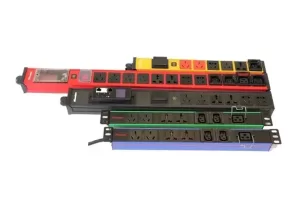
1. What is a PDU? A PDU (Power Distribution Unit) is a rack-mounted power outlet designed to distribute electricity to network and server equipment in data centers. It offers better organization, safety, and reliability than standard power strips, with various configurations for different power environments.
2. What input types are available for PDUs? PDUs come with three main input types:
Single-wire input
Two-wire input
IEC320 input (standard detachable power cord)
3. How does a rack-mount PDU differ from a regular power strip? PDUs outperform regular strips in:
Design & quality – stricter standards and durable construction
Safety – built-in leakage, overcurrent, and overload protection
Reliability – resistant to frequent plugging/unplugging, lower heat, longer lifespan
Installation – flexible mounting options for racks
They eliminate common issues like outages, burnouts, or fire risks from poor contact or low load capacity, making them ideal for mission-critical environments.
8. Conclusion
As data centers continue to grow in size and power density, improving energy efficiency has become essential for reducing operating costs and maintaining reliable operations. Compared with traditional PDUs, Smart PDUs provide comprehensive monitoring, remote control, environmental management, and overload protection that enable operators to optimize power usage and maximize rack performance. Our Intelligent PDU combines flexible voltage options, outlet-level monitoring, advanced network management, industrial-grade safety, and comprehensive OEM/ODM customization, making it an ideal solution for data centers, IT infrastructure, industrial facilities, and mining applications. Whether you are upgrading an existing facility or designing a new infrastructure, deploying a Smart Power Distribution Unit is an effective investment in long-term energy efficiency, reliability, and operational performance.
Today, businesses rely heavily on uninterruptible power to protect their critical infrastructure. To meet this demand, modular uninterruptible power supply (UPS) systems are becoming increasingly...
In an increasingly digital world, the operational continuity of enterprises, hospitals and basic services depends on a basic resource: a clean and continuous power supply....
Key Takeaways In the era of rapid digital transformation, the demand for stable and efficient power supply is increasing in industrial environments such as data...
Introduction: Why Your Networking Room Demands a Rack Mount UPS In today’s digital priority environment, the networking room is the central nervous system of any...