 20Nov

Power distribution is one of the most overlooked yet consequential layers of a modern data center. A single miscalculated load, an unnoticed circuit nearing its rated limit, or one locked-up server in an unattended facility can cascade into downtime that no amount of redundancy can fully absorb. At the center of this challenge is the Data Center PDU, which helps distribute power and monitor power usage across server racks.
As racks grow denser and power budgets climb past 20kW per cabinet, the question is no longer whether to use a smarter PDU, but which kind. The two categories that come up most often are the Metered PDU and the Switched Rack PDU. They sound similar, sometimes look similar, but serve fundamentally different goals. This guide explains what each does and how to decide.
Why Rack-Level Power Intelligence Matters
For decades, a basic PDU was little more than a power strip bolted to a rack: it delivered electricity and nothing else. That model leaves three blind spots modern operations can no longer tolerate.
First, visibility: without metering, an operator cannot know how much of the circuit’s capacity is actually used. Second, safety margin: a circuit can drift toward its breaker limit for weeks before anyone notices. Third, remote control: in distributed, lights-out, or edge facilities, sending a technician on-site just to reboot a hung device is slow and expensive.
The broad family of Intelligent PDU products exists to close exactly these gaps, adding measurement and, in some models, control on top of basic distribution.
Understanding the Three Tiers of Rack PDUs
It helps to think of rack PDUs as a three-tier progression. The distinction is not about build quality — all three tiers can be rugged, safe, and reliable — but about how much information they report and how much action they can take.
Basic PDUs
A basic PDU distributes power to multiple outlets with no metering and no network interface. It is a pure distribution device, inexpensive and simple, and remains a sensible choice where monitoring is handled elsewhere.
Metered PDUs
Building upon the basic PDU, the metered type adds local LCD or remote digital metering for total input current, voltage, power (kW), and energy consumption (kWh). The defining value is data — the granular, rack-level data that supports accurate PUE calculation and capacity planning.
Switched PDUs
The switched type adds a layer of control on top of measurement: remote on/off control of individual outlets or groups of outlets, with some models also supporting power sequencing to prevent the high inrush currents that occur when several devices start up at once.
Note that the terms are not always mutually exclusive. A Monitored PDU and a metered PDU are often used interchangeably, both referring to units that report electrical parameters. Many switched models also meter, which is why understanding each capability — rather than the label — drives a sound purchase.
What a Metered PDU Actually Delivers
The metered type is best understood as a measurement instrument first and a power strip second. Its job is to answer one question with precision: how much power is this rack actually using?
Real-Time Local Metering
Electrical parameters for the total power input — current, voltage, power, and energy — are displayed directly on the unit. Operators can read the load without any network connection, useful during commissioning or wherever a network drop is not yet available.
Overload Early Warning
Some models feature local audible and visual alarms that trigger when the current approaches the circuit breaker’s rated limit, converting a sudden, expensive trip into a gradual warning that staff can act on before anything fails.
A Deliberate Limit: No Remote Capabilities
The defining constraint here is that the data is displayed only locally, with no support for network transmission or remote access. For teams that monitor racks from a central NOC or remote dashboard, this is a real limitation — and the main reason a metered unit is not automatically the right fit everywhere.
Moderate Cost
These units are priced between basic and fully intelligent models — the sensible middle step for facilities that need visibility but not yet per-outlet control.
In practice, the metered type is ideal where granular, rack-level PUE data is required — such as a colocation facility that bills by measured usage, or an engineering team that needs to right-size capacity.
What a Switched Rack PDU Adds
If a metered unit answers “how much,” a Switched Rack PDU answers “what can I do about it right now.” The switched layer turns each outlet into an individually addressable switch, unlocking capabilities a metered unit cannot offer.
Remote Reboot
The most immediately valuable feature is remote reboot — power-cycling a device by turning it off and back on from anywhere. When a server crashes or a network device freezes, this eliminates on-site intervention, saving hours of technician travel and sharply shortening recovery time.
Power-Up Sequencing
Switched units can power devices on in a specific, preset order. This prevents the inrush current surges that occur when multiple devices start simultaneously — a common cause of breaker trips in high-density AI and high-performance racks.
Prevention of Unauthorized Equipment
Unused outlets can be kept powered off, preventing the connection of unauthorized devices that could lead to overloads — a quiet but meaningful security benefit in shared colocation and multi-tenant environments.
Energy Management
Operators can remotely shut down idle equipment during non-operational hours, reducing energy consumption. Combined with metering, this supports the cost accounting and carbon management that financial institutions and cloud providers increasingly require.
The switched type is ideal for high-density racks that require remote power cycling — the environments where downtime is measured in seconds and a technician is never close enough.
Metered vs. Switched: A Side-by-Side View
| Capability | Metered PDU | Switched Rack PDU |
| Local metering (current, voltage, kW, kWh) | Yes | Yes (on monitored models) |
| Remote network access | No | Yes |
| Per-outlet on/off control | No | Yes |
| Power-up sequencing | No | Yes |
| Overload early warning | Yes (local alarm on some models) | Yes |
| Typical cost position | Moderate (500–2,000 RMB) | Higher |
| Best-fit scenario | Rack-level PUE and capacity data | Remote reboot and high-density control |
The table makes the framework clear: if your primary need is visibility, a metered unit is usually enough. If your primary need is remote action, you need a switched unit — and you will typically get metering as part of the package.
Banatton Intelligent PDU: Metering and Control in One Unit
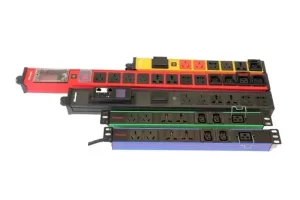
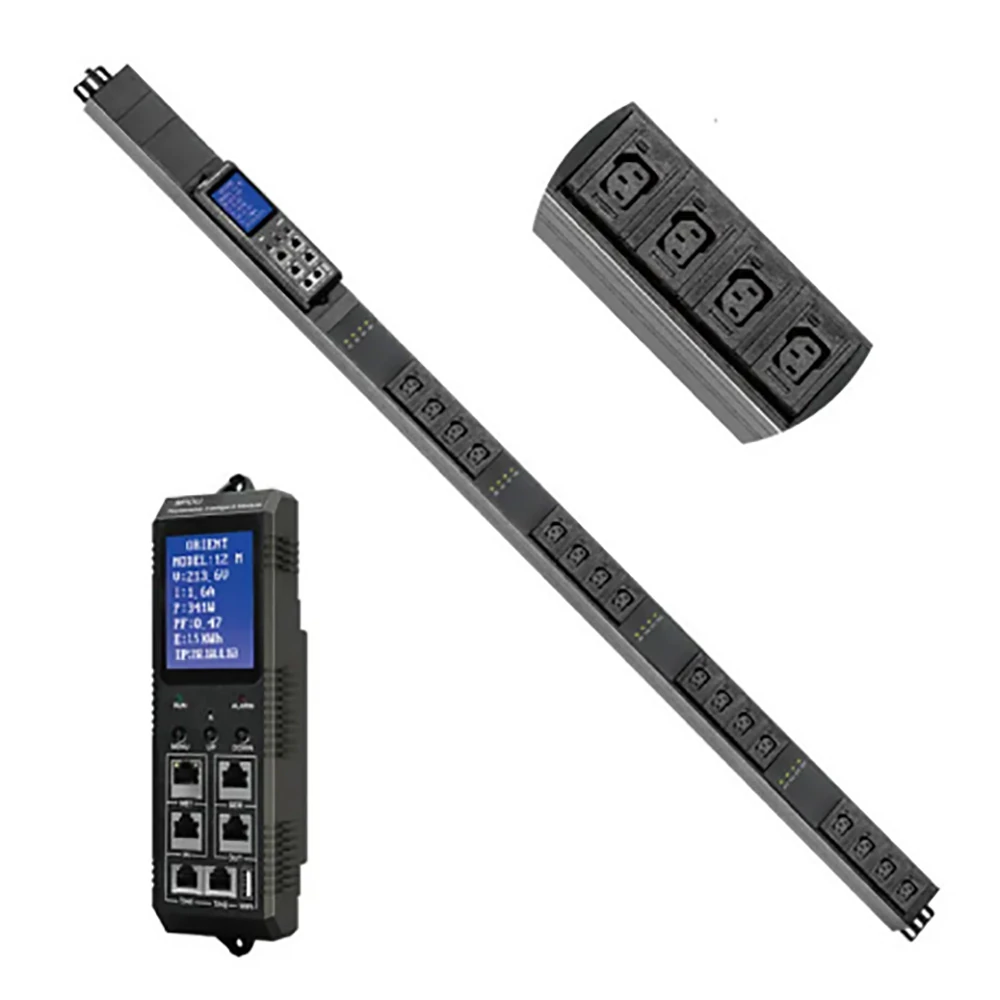
This is the gap Banatton Intelligent PDU is built to close. Banatton manufactures Data Center PDU and Monitored PDU solutions that combine metering and, where required, switched control in a single aluminum-alloy unit — so you get visibility and remote action in one device, not two.
That also means the metered-vs-switched question does not apply the same way here. Banatton units can be configured as a metering-only Monitored PDU for rack-level PUE data, or as a fully switched unit with per-outlet control — you decide what each rack needs, and the same platform covers both.
Built for Rack Reality
A slim 1–2U height keeps vertical space available for equipment, while horizontal or vertical installation fits both open racks and enclosed cabinets. The aluminum-alloy construction is light yet strong for long service life, and the fire-proofing materials effectively help prevent fire damage.
Configurable Input and Output
Input is single by default with optional dual-input support, and the input interface can be selected from more than ten options. On the output side, 2–40 outlet jacks are available with output interface options reaching up to ten, so the unit matches the connector mix of your equipment. Both C13 and C19 sockets are supported, with other options on request.
Rated for Real Loads
Electrical specifications cover a broad envelope: voltage range of AC110V/AC220V/AC380V, and rated current options spanning 10A, 13A, 15A, 16A, 20A, 25A, 32A, 50A, 64A, and 125A. Output quantities from 8 to 32 ways are available, with maximum output current per jack of 10A, 16A, 32A, 63A, or 125A — serving everything from a modest IT room to a dense, high-current AI cabinet.
Monitoring, Control, and Remote Management
The monitoring function covers input voltage, total load current, total power (kW), energy consumption (kWh), total power factor, and per-outlet power, with energy consumption calculated for each unit. The control function adds per-outlet on/off control, on/off time settings, boot-time delay, per-outlet current limits, and overload protection with automatic power-off.
Remote network management supports cascade management via SNMP V1, V2, and V3, plus WiFi connectivity, graphical data display, user management, saved logs, and multiple alarm modes. Access management is available via Telnet, SSH, or Modbus-RTU. Every unit carries ISO, CE, ROHS, TUV, and UL certification, and OEM/ODM customization — including your logo — is supported. A 19-inch network switch can be held directly, and units can be stacked to create any rack size.
Where Banatton PDUs Fit
Banatton units are specified for IT rooms, data centers, industrial sites, and mining operations, and are used across lighting centers, engine rooms, financial centers, educational institutions, production environments, and mining farms.
Conclusion
Metered and switched units are not competing answers to the same question — they are complementary answers to different questions. A metered unit gives you the rack-level visibility to plan capacity, protect circuits, and bill accurately. A switched unit gives you the remote control to reboot, sequence, and shed load without stepping foot in the facility. For high-density AI racks, unattended edge sites, and SLA-driven environments, the strongest configuration delivers both.
Before buying, define the problem you are solving. If it is visibility, start with metering. If it is remote action, a Switched Rack PDU is the tool for the job — and in most modern deployments, it carries the metering you need as well. Contact Banatton to explore metered and switched PDU solutions tailored to your rack power monitoring and control needs.
Frequently Asked Questions
What is the difference between a metered PDU and a switched PDU?
A metered PDU measures and displays electrical parameters such as current, voltage, power, and energy, typically on a local display or via metering output. A switched PDU adds the ability to turn individual outlets on or off remotely, enabling remote reboot and power sequencing.
Is a monitored PDU the same as a metered PDU?
In common industry usage the two terms are interchangeable, both referring to PDUs that report electrical parameters. The key thing to check is whether the unit also offers per-outlet switching, which moves it into the switched category.
Which PDU is best for a high-density AI rack?
High-density racks drawing 20kW or more benefit most from a switched unit with monitoring. Precise metering protects the circuit from overload, while power sequencing prevents inrush current trips when multiple high-power servers start at once.
Can a switched PDU help reduce energy costs?
Yes. Switched units allow idle equipment to be powered down remotely during non-operational hours, and combined metering supports the cost accounting and carbon management that many organizations now require.