 26Sep
26Sep
1.Introduction
Bad power quality shortens the life of your equipment. Voltage sags, surges, and overvoltage are common in factories and commercial buildings. These problems can lead to system crashes, data loss, hardware damage, etc. An automatic voltage regulator (AVR) helps by keeping the output voltage steady.
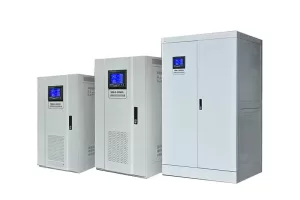
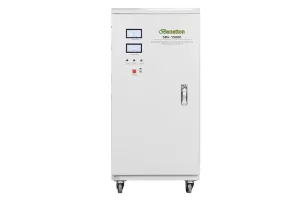
This article covers how AVRs work, their benefits, specs, and key features. We will use our SDV-3 series products as an example to introduce the regulator for three-phase servo motor control.
2.Definition and Purpose
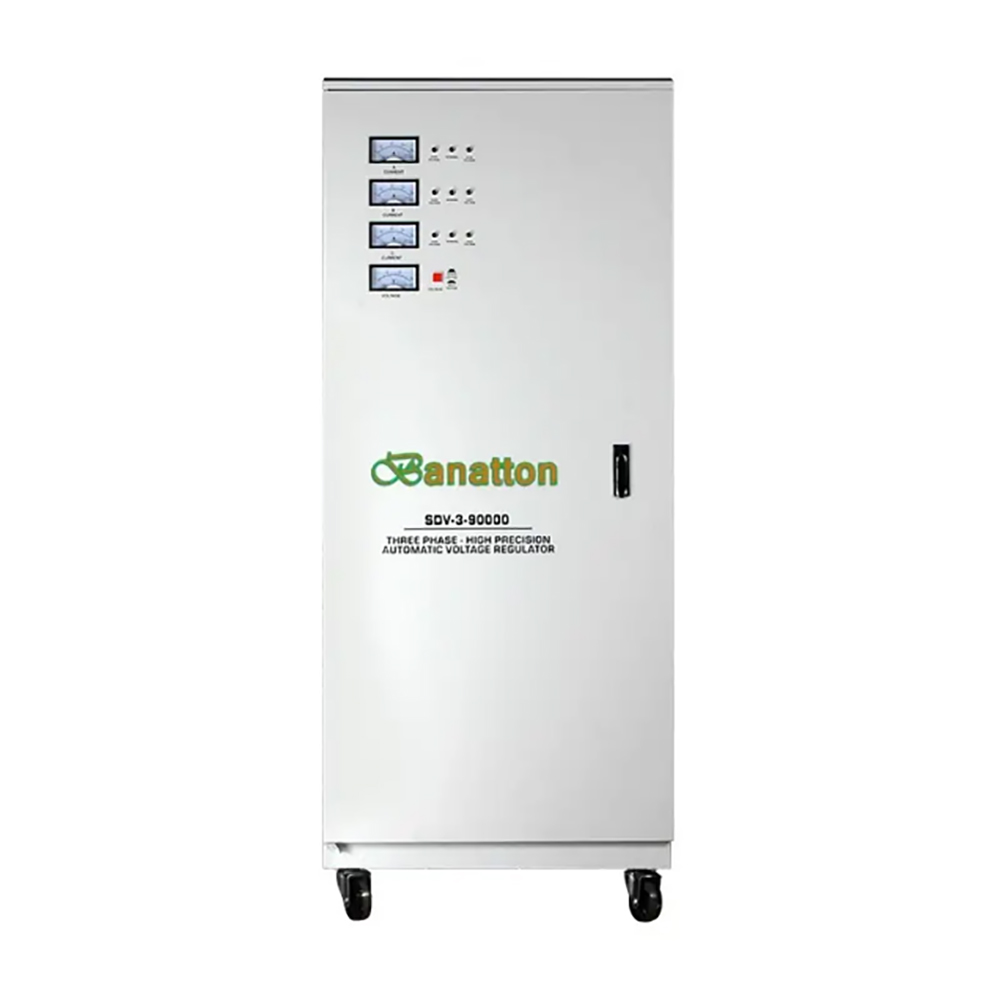
An automatic voltage stabilizer is an electronic device that can automatically adjust the voltage. It can protect sensitive electronic devices from damage caused by voltage fluctuations. The device can provide a stable output voltage using an internal calibration mechanism. These regulators ensure that the three-phase voltage commonly used in industrial machinery, medical equipment, and commercial facilities remains balanced, preventing equipment damage.
3.How Automatic Voltage Regulators Work
Mechanisms of Voltage Regulation
Modern automatic voltage regulators can achieve precise voltage stability. For example, the SDV-3 series servo motor control AC voltage regulator is combined with an intelligent CPU for centralized voltage control. It mainly consists of three parts:
Servo motor – rotates, driving the voltage regulation section.
Control circuit – monitors the voltage and instructs the motor on how to adjust it.
Autotransformer– adjusts the voltage up or down.
4.Advantages of Using Automatic Voltage Regulators
Improved Equipment Longevity
When the voltage is too high or too low, the internal components of the device will operate abnormally and are prone to failure.
Too high voltage → parts get too hot, capacitors swell and pop, electronics fail.
Too low voltage → current goes up, motors stall, wires overheat.
Automatic voltage regulators eliminate these stress conditions by maintaining the output voltage within ±2% of the nominal value.
Enhanced System Efficiency
Efficiency is a key indicator for power conditioning equipment. The SDV-3 series products have an efficiency of ≥95%, which means that less than 5% of the input energy is lost as heat, making them the best among similar products.
Built-in security features
Many modern voltage regulators have built-in surge protection – which is especially important in areas prone to lightning strikes or frequent surges. The SDV-3 series offers comprehensive protection.
- Overvoltage protection: Activates when the output voltage reaches ≥420V ±4V
- Undervoltage protection: Activates when the output voltage drops to ≤325V ±4V
- Overtemperature protection: Shuts down when the internal temperature reaches 120°C ±10°C
- Short circuit protection: It will respond quickly in the event of a fault.
Real-Time Monitoring with Digital Display
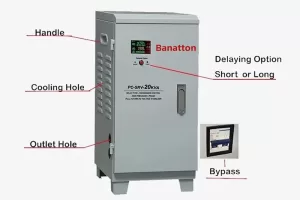
A clear digital display enables real-time voltage monitoring and provides various information. The SDV-3 series displays can show the following information.
Input voltage
Output voltage
Load percentage
Operating status (normal/protection)
Time delay countdown
5.Automatic Voltage Regulators for AC Systems
Importance in AC Power Stability
AC power systems are inherently susceptible to fluctuations. Unlike DC power, which can be easily filtered and regulated, AC voltage varies with grid load, transformer performance, and line impedance. In three-phase AC systems, additional problems include phase imbalance and harmonic distortion.
A three phase voltage regulator addresses these challenges by:
When the grid load, transformer performance, or line impedance changes, the AC voltage will also change. In three-phase AC systems, problems such as phase imbalance and harmonic distortion may also occur. Three-phase voltage regulators address these issues by:
- Maintaining phase voltages within specified tolerances
- Balancing phase voltages
- Does not actively filter harmonics, but does not introduce additional waveform distortion either.
- Providing electrical isolation (depending on design)
The SDV-3 series does not add additional waveform distortion to the output, thus maintaining the quality of the original sine wave—crucial for medical imaging equipment, precision measuring instruments, and audio systems.
6.Top Three Customer Industry Applications
According to real-world usage data, the three largest customer segments for three-phase automatic voltage regulators are:
Sensitive electronic equipment (computers, medical devices, test equipment): Approximately 35-40% of deployments. These applications cannot tolerate even brief voltage excursions outside ±5% of nominal.
Industrial automation and heavy machinery (numerical control machine tools, industrial automation equipment, color drying equipment): Approximately 30-35% of deployments. Motors, drives, and PLCs all benefit from stable voltage.
Commercial and residential systems: accounting for approximately 25-30% of deployments. Three-phase voltage regulators are used in large commercial buildings and apartment buildings.
Other notable applications include: copy machines, safe alarm systems, ray equipment (X-ray and similar), and medical diagnostic systems.
7.Key Features to Look For
When selecting an automatic voltage regulator, consider the following features:
Wide Input Voltage Range
The SDV-3 series accepts three-phase input voltages from 240V to 450V. A narrow input voltage range may leave your device unprotected when there are severe voltage fluctuations.
Adjustable Output Voltage
Different countries and applications require different nominal voltages. The ability to select 380V, 400V, or 415V output makes the regulator suitable for international use.
Certifications
Please select products that have received recognized safety and quality certifications. SDV-3 series products have CE certification, ISO certification, and comply with quality management system standards and RoHS certification.
Robust Build Quality
Voltage regulators should be made of durable materials and have a long service life.
High-power copper winding transformer, high efficiency and low heat generation
Ventilated enclosure for heat dissipation
OEM/ODM Availability
SDV-3 series suppliers offer customization options for colors, labels, and packaging.
8.FAQ
Q1. What happens if I choose a voltage stabilizer with insufficient capacity?
Choosing a voltage regulator with insufficient capacity will result in inadequate voltage regulation. This could cause power outages and potentially damage connected devices.
Q2. How often should I perform maintenance on my automatic voltage stabilizer?
It is recommended to perform a regular maintenance check every six months. In addition, it is recommended to have a professional maintenance performed once a year.
Q3: Why choose Banatton as your voltage stabilizer supplier?
Banatton is a high-tech enterprise focused on power electronics, serving customers in over 100 countries. We hold ISO9001, ISO14001, and ISO45001 certifications and follow ROHS directives. Our manufacturing and R&D base in Guangdong ensures fast production and strict quality control, from raw material testing to finished product delivery. With decades of experience in smart power, data centers, and clean energy, Banatton delivers reliable, traceable, and compliant voltage stabilization solutions for industrial and commercial customers worldwide.
9.Conclusion
Automatic voltage regulators can protect your equipment from power instability. The SDV-3 series effectively solves this problem by stabilizing the output voltage within ±2% and achieving an efficiency of over 95%. It features a wide input voltage range of 240V to 450V, 120°C over-temperature protection, and is CE certified. Hospitals, factories, and offices all use these voltage regulators to ensure the safe operation of their equipment. If your power supply is unstable, purchasing a high-quality voltage regulator is undoubtedly a wise move.